
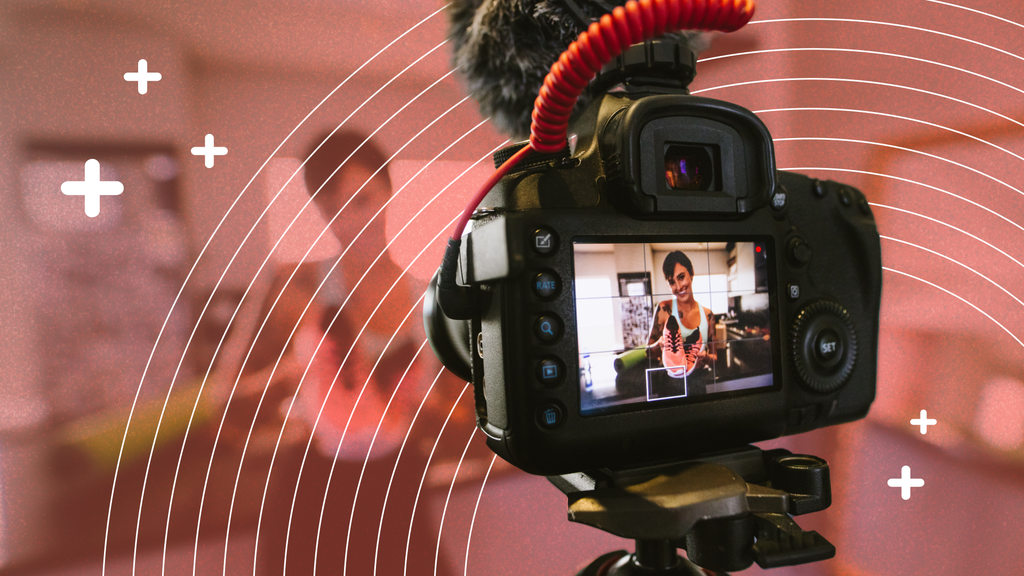

Many marketing professionals will tell you that video is the type of content that helps them achieve the best return on investment. So when you consider that—along with the fact that two out of three consumers say they’d rather watch a video to learn about new products or services as opposed to reading about them in an article or presentation—it’s easy to see why marketers are optimizing their social strategy around a video-centric mindset.
TikTok has reshaped how people consume video online. From a certain perspective, TikTok is the platform we’ve been working toward for years. Its content is shorter, faster, easier to consume, more personal and raw. All of this makes it easy to get “lost in time,” and in doing so, it’s a great space for brands to meet their consumers with relevant and helpful information.
Another trend is that Instagram, TikTok, and similar platforms embrace longer video lengths, live feeds, and more. People have more choices than ever when it comes to their video content.
This is where influencer marketing comes in. Last year, my company researched YouTube’s ability to drive commerce. We found a 0.75% and 4.3% post-conversion rate for influencer content in particular. We also see signals that commerce occurs after TikTok exposure—and the recent Shopify integration on that platform is further evidence that the worlds of commerce and social are colliding.
Another trend that is worth keeping an eye on is how Amazon is looking to augment its e-commerce prowess with social engagement, user-generated content, and influencer programs. That positions Amazon to go head-to-head with companies like Facebook and YouTube as everyone races toward the winning solution.
USE INFLUENCER MARKETING TO ESTABLISH A DEEPER CONNECTION
So why are all these companies trying to crack this social commerce nut? Part of the reason influencer marketing is so popular is that it can allow brands to make a deeper and more meaningful connection with their audience. Products and services come and go, but those connections stand the test of time.
In particular, teens say they actually trust influencers more than they do “regular” celebrities, and half of women say they’ve purchased something in the past that was the direct result of an influencer post. One way to use influencer marketing to establish these kinds of connections is to pair it with video. That way, people can see the expression on someone’s face when they talk about a product or service—they can read the look in their eyes and hear the tone and enthusiasm in their voice. In our experience, this makes a tangible difference. Your goal should be to provide a frictionless experience that embraces inspiration, a rich media experience, and an easy path to purchase.
THE AMAZON CONUNDRUM
When most people think about this new trend of “social commerce,” they think about all the obvious candidates: Facebook, YouTube, Instagram, and Twitter. Some allow consumers to buy products after clicking on a link at the end of a video. Some let people buy directly within the app. But a dark horse has emerged that has the potential to change everything moving forward—and that’s Amazon.
Amazon Livestream has quickly found a way to bring the e-commerce experience together with the social experience people want more of. The thing that makes Amazon unique is that the buying experience is frictionless. People can view the content they want and buy the products they want without ever leaving the platform. They don’t have to go somewhere else to complete a purchase. They don’t even have to work very hard to make that purchase at all, as everything is tied to the Amazon account they’re already logged into.
That’s not to say that it’s difficult to leverage influencer content on other channels. You can go from a Facebook ad attached to influencer content to a brand’s website with one click. Sponsored content on Instagram and Twitter is everywhere. Ads run during just about every YouTube video you’ll ever watch.
But Amazon’s frictionless experience—its position as a “one-stop shop” for all your consumer needs—really does make it a potential force to be reckoned with if their current trajectory continues.
Jessica Thorpe is President of gen.video – influencer marketing platform. Shining a light on the convergence of social media, advertising & commerce.