

My decision to go into the beauty industry was driven by my deep and sincere fascination with its power to transform. But more than that, I wanted to play a meaningful role in shifting the narrative of what was beautiful through the imagery that the industry portrayed to the world.
Today, there are many beauty and fashion brands that prioritize representation, largely created by founders like Diarrha N’Diaye of Ami Colé and Deepica Mutyala of Live Tinted who know what it feels like to be excluded and who have channeled their personal lived experiences to create products, services, and content for those who have been historically marginalized.
At its core, the fundamental human experience centers around a need to be seen and understood. Human beings are tribal by nature, so to have or to lack a sense of belonging is integral to one’s state of happiness and well-being.
This alone should serve as a sufficient rallying cry to business leaders, product developers, marketers, and anyone whose business aims to do good in the world. For the past decade, countless studies have articulated the outsized revenue impact of diverse organizations, often citing best-in-class DEI (diversity, equity, and inclusion) programming, employee engagement, and retention strategies. Having equal, or at least more balanced, representation of women and people from underrepresented populations provides a greater diversity of thought, a key ingredient of innovation.
Few have explored the neuroscience of visualization, however, which seems particularly relevant in light of the Great Resignation and the consumer shift to investing their dollars in ESG-led organizations (environmental, social, and governance).
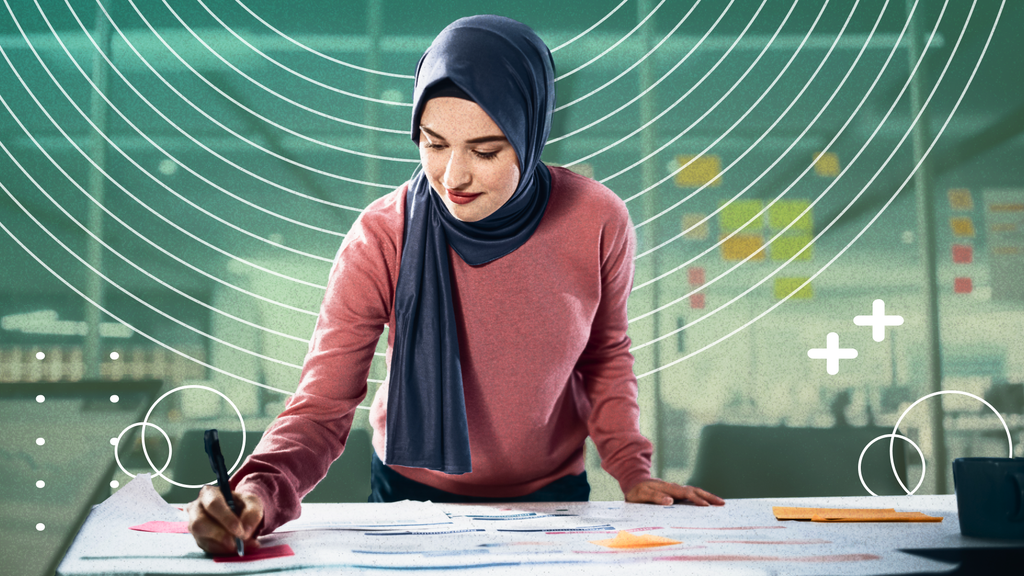
Why does this matter? The more people can see a version of themselves in a positive light (being successful, healthy, valued, respected, and considered), the more likely they are to achieve that same thing and model the behavior for others. It matters that people can find a foundation to match their skin tone and stylish, quality clothing regardless of their dress size. It matters even more that your current and prospective employees and consumers see women, ethnically-diverse, and differently-abled leaders, brand ambassadors, and talent. In this range of representation, they are more likely to connect with a version of themselves and, therefore, see, believe, and ultimately become that which they observe.
As much as the advice to “fake it ’til you make it” may seem overused and like the sort of thing a person who has already “made it” says to an up-and-comer, it is, in fact, a concept backed by science. The subconscious mind does not know the difference between past and future, dream and reality. But as it looks for patterns and binary data to enable swift, “reliable” decision-making, it relies on the images that have been presented frequently, recently, and most vividly.
There’s a reason we say “prime and remind” in advertising. Vivid, frequent, recent images and messages feel familiar, common, likely, good, and true. This explains why many people struggle to believe that an overweight person can also be healthy or that the Black woman in a group of white male colleagues is likely the boss. These are not images we see often enough, unfortunately. The brain must work harder to believe these images are possible.
But it is possible, and it underscores the importance of seeing yourself or your lived experience represented. The more vivid the description or depiction, the more context you give your mind to draw upon. Furthermore, the more vivid the depiction, the more likely it will elicit an emotional response, which taps into the limbic system, making visualizations even more powerful.
Real or imagined, visual impressions are more likely to stick because they evoke stronger emotional reactions and appeal to the subconscious. This phenomenon underpins imagery training (also known as mental rehearsal), a neurolinguistic programming (NLP) technique in which you picture yourself achieving a desired outcome over and over as if it has already happened.
Like the brain, self-image is elastic and can, therefore, evolve over time. Countless studies have been published on the impact of media on children and teens, yet the connection to how adults also derive meaningful self-affirmation from this form of expansion cannot be overlooked.
Regardless of age, consistent imagery of that which represents your current and desired reality gives the subconscious mind and, therefore, the brain, evidence and a model for what is possible. This is true in marketing, media, leadership, and even politics. A recent study conducted by the University of Colorado Boulder suggests that women who run for office inspire others to do the same. Using research that dates to 1978, the study authors analyzed the impact of having a female governor or U.S. Senator had on the number of women who later ran for that state’s legislature.
To show someone a positive reflection of themselves is to show them that they matter. For this reason, I choose to align my own investments, time, and resources with organizations that walk the walk: A-Frame Brands, Ceremonia, Tia—companies that are embodying a future where the diverse needs of underserved and underrepresented consumers are being met, where women’s health is holistic, integrated, and in the hands of women, and where the leadership teams authentically reflect the breadth and depth of what’s possible, not just in business, but in the world. What we see and believe, we become.
Daria Burke is an innovation and impact-focused c-suite fashion and beauty exec, board director, investor and self-proclaimed neuro nerd.