
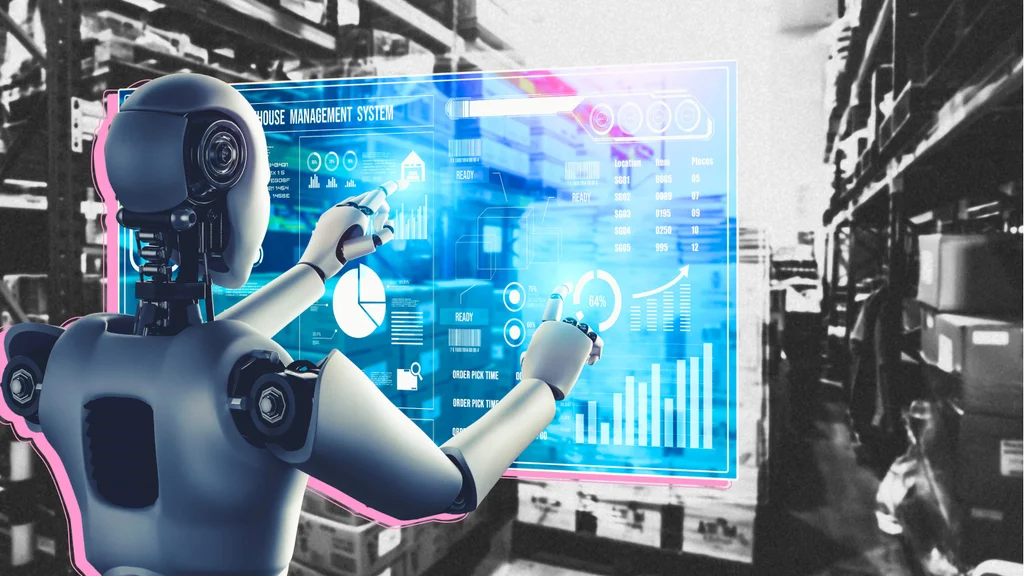

There have been many shifts in human behavior as a result of the pandemic, but one that appears here to stay is click-and-collect, where consumers order items online and pick up their purchases at physical stores. According to Adobe, click-and-collect purchases in the United States increased from 15% of orders to 25% at the beginning of the pandemic, a 65% share increase.
But has the retail industry put everything in place to handle such exponential growth? And can other industries learn from the rapid digitization of the retail supply chain?
As the Deloitte researchers point out, consumers see click-and-collect as more convenient and cheaper than online retail with home delivery. This has forced the retail industry to change nearly everything—not only its processes, but also overhaul back-end integration from warehouse to check-out, store layout, and parking-space configuration. For example, at many stores now, a consumer can pull up and pop the trunk and an employee will rush out to put their purchases directly in their vehicle.
To make this seamless, retail workers need to have everything at their fingertips on a commercial-grade digital device. Most retailers were not geared up for this pre-pandemic. It’s been a steep learning curve for those who lacked integration between online and offline data sets too.
DROWNING IN DATA
Every executive, whether in the retail industry or otherwise, has data at their fingertips. However, it is usually static, requiring human-based intervention to work out what’s going on—or about to go down.
In my experience as a technology CEO, it’s clear many industry leaders are still looking at spreadsheets to ascertain whether they’re going to hit deadlines or need to “change their lane” or delivery time slot. Those types of decisions require deep knowledge across many data sets and it can take days to realize an insight that will impact everything.
In a shocking statistic from Forrester, “between 60% and 73% of all data within an enterprise goes unused for analytics.” According to Accenture’s 2020 Human Impact of Data Literacy report, this lack of data literacy costs the U.S. economy more than $100 billion a year.
That’s a huge issue, no matter what industry you’re in. If execs are drowning in data, and it takes too long to get answers to pressing business questions that drive decision-making, the cost to enterprise is just too high.
Is there a solution? Intelligence, or to be more precise, pre-emptive intelligence, can help.
EMBEDDING AI
With an intelligent AI-powered layer embedded within all this data, executives can surface insights to ensure their supply chain remains secure, on track, and can deliver goods on time. AI can predict issues before they happen, such as a company falling foul of its service level agreements due to missed delivery slots. With intelligence embedded in the system, executives can be presented with options, such as alternative fulfillment options, and reroute goods instantly to avoid penalties.
AI inside the supply chain can also support ethical practices by making every node on the network transparent and trackable. Veronica Villena, assistant professor of supply chain management, and Dennis Gioia, professor of management, cover this subject in their Harvard Business Review article, A More Sustainable Supply Chain.
“In recent years a rising number of multinational corporations have pledged to work only with suppliers that adhere to social and environmental standards,” Villena and Gioia wrote. “The aim is to create a cascade of sustainable practices that flow smoothly throughout the supply chain, or as we prefer to call it the supply network. It’s an admirable idea but it’s been hard to realize and practice many of the MNCs that have committed to it have faced scandals brought about by suppliers that, despite being aware of sustainability standards, have nevertheless gone on to violate them.”
In my experience, embedded AI is a good solution to enable reporting at every stage of a supply chain, keeping everyone honest. AI can be tasked with monitoring all system and performance data toward mission-critical goals. Through symbolic reasoning, it can identify patterns and outliers to ensure there are no anomalies in a highly complex networked system.
But it’s not just good at flagging issues. By being computationally smart, AI can suggest new ways to tackle an issue—before it arises. Through its pervasive nature and ability to process data insights rapidly, it also has a much broader view of the situation overall.
Boris Evelson, vice president and principal analyst at Forrester, calls this type of business intelligence a post-dashboard future. In a recent report, Evelson predicted that “Legacy BI technology is dead. Emerging technologies and techniques will deliver business insights more efficiently and effectively—beyond just dashboards.” The former strategic technology advisor at JPMorgan concurs with what I’ve been seeing in post-pandemic business processes: “The post-dashboard world of BI is impactful, actionable, augmented, unified, personalized, adaptive and pervasive.”
Following two years of rapid digital transformation, today’s business intelligence solutions must move beyond observation and monitoring to predict changes or anomalies in performance and prescribe timely solutions. Because when a consumer clicks online and schedules a pick-up at their local retail emporium, they expect it to be there. To enable such a seamless process, the entire supply chain should have embedded intelligence. Anything less may be disastrous for the industry.
Kathy Leake is the award-winning Founder and CEO of Crux Intelligence, a next-gen AI-powered business intelligence solution.