
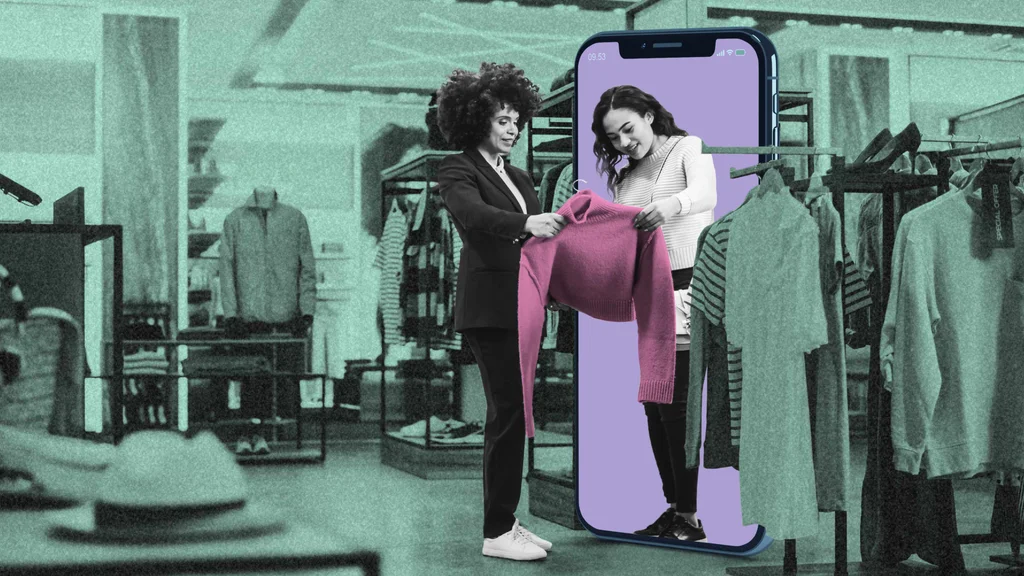

Even after two-plus years of pandemic-era online shopping, some retail segments are stronger than ever. Just look at what’s happened over the past few years with the top direct-to-consumer brands. Casper, Glossier, Allbirds, Bonobos, Away, and dozens more were online-only for years. Yet every one of these brands now operates at least one physical retail location. Warby Parker, one of the most successful and iconic online-first brands, even has plans to open 40 new retail stores in 2022.
So, what’s keeping retail alive? Experiences. The modern consumer craves experiences, and despite how appealing and interactive websites can be these days, they can’t fully replace the real-life experiences brands can create in-store. Modern retail is so much more than shelf after shelf of products and a few cash registers. It’s a curated, tech-enabled experience that blends the best of what physical and digital have to offer.
For brands looking to succeed in this modern era of retail, it’s time to get phygital (“physical” and “digital”)—a combination of real-world experience with all the ease and sophistication of technology.
Chances are you’ve already had a phygital retail experience. Ever ordered something online and picked it up curbside a few hours later? That’s phygital. Ever tested a product in-store and then ordered a custom size or color shipped directly to your door? That’s phygital, too.
A phygital retail strategy is one where the consumer is engaged across multiple channels, not just in the store. It’s meeting the customer where they are and engaging with them on their own terms.
Is your brand ready to explore the future of retail but not sure where to start? Let’s look at the three core components of a successful phygital strategy:
1. PHYGITAL EMBRACES TECH
For your brand to embrace phygital retail, you should get comfortable with high levels of technology.
Take 19 Crimes wine, for example. Traditionally, shopping for wine is a monotonous retail experience involving row after row of look-alike products with little differentiation. With so much repetition, it’s not surprising that 82% of consumers admit to purchasing wine based on the look of the label. 19 Crimes knew it had crafted a decent wine, but it also knew it had to stand out among the thousands of bottles on the shelves at major liquor stores by crafting an experience. To do so, it ditched the fancy display and embraced the power of tech instead.
Each 19 Crimes bottle comes with an augmented reality-powered label. When shoppers scan the labels with the Living Wine Labels app, they watch and listen as the characters on the bottles come to life. Talk about turning the mundane task of shopping for wine into a one-of-a-kind experience.
This phygital experience turned out to be great for business, too. 19 Crimes quadrupled in size over a four-year period following the release of its app and AR labels. The ingenuity even helped introduce an entirely new segment of drinkers to wine, proving just how important phygital experiences are for succeeding in the modern age.
2. PHYGITAL ASKS “WHAT IF?”
The possibilities for phygital experiences are endless. Look at McDonald’s and its iconic Happy Meal toy. One can only imagine the massive team and budget dedicated to designing, sourcing, producing, and managing the inventory of physical toys that changes every month. But what if the Happy Meal no longer needed a physical toy?
By removing the limitation of physical toys, McDonald’s could open a whole new world of possibilities. It could emulate the current NFT craze by creating virtual “toys” that come to life on phones. With AR, experiences could even be customized to each user’s age and interests. Digital solutions also eliminate the need for extensive resources and capital investment into physical toys.
The same strategy could be used by museums as consumers gravitate toward the experiences of places like the Museum of Ice Cream and the Immersive Van Gogh Exhibit.
Several years ago, I was visiting an art gallery in Brussels. From across the room, I watched as a small boy tried to swipe a painting as if it were a screen. Some people might roll their eyes at what this suggests, but it’s a huge problem for gallery owners and museums: Future generations will expect almost everything to be interactive.
In that case, what if paintings in a gallery could come to life? Van Gogh could leap right out of his self-portrait and explain to the young boy why he chose to cut off his own ear. Asking “What if?” of your own brand can help you create experiences that matter and unlock the true potential of phygital solutions.
3. PHYGITAL PUTS EXPERIENCE OVER PRODUCT
One of the most important lessons I learned while serving as the head of innovation and creativity at Disney came from Walt Disney himself: Start with the experience, and the sales will follow.
This is how he was able to transform Disneyland from a remote orchard in Anaheim into the model for the entire Disney parks, experiences, and products division that now generates over $4 billion in revenue per year.
Disneyland’s profits come primarily from merchandise sales, with many stores inside the park posting revenue numbers that would make even the most successful retailers jealous. Disney parks are so good at driving sales precisely because they were built as experiences first. By combining physical experiences with retail, the success of one allowed for the benefit of the other.
While phygital strategies can drive significant growth in sales, it’s important to focus on the experience, not the products. After all, experiences are what consumers are actually interested in buying.
We’ve entered what I believe will be the most exciting decade for retail in years. The shift from physical to e-commerce swung us from one end of the pendulum to the other, but an era of embracing phygital brings balance back and welcomes what both sides have to offer.
Duncan Wardle, former Head of Innovation & Creativity @ Disney. Founded iD8 & innov8 to help organizations embed a culture of innovation.