

Did you know that 80% of customers believe the experience a brand provides to them is just as important as the products and services it offers?
Customers seek great in-store experiences at the brick-and-mortar retailers they shop with. They’re not just looking for a product to purchase—they’re looking for ease, convenience, engagement, and an overall positive experience that will compel them to return.
But do you have a strategy in place for how to go about creating those experiences? Do you know the types of features customers want? If you’re stuck in your planning, here are six different types of experiences you can provide to your customers to create a frictionless, fun, engaging, and even educational visit.
1. CLICK AND COLLECT
Buying items online and picking them up at the store allows customers both the ease of shopping from home and the immediacy of being able to get an item in the same day. During the pandemic, click-and-collect options with curbside pickup were ways to keep customers purchasing and stores selling. As stores reopen, many have online pick-up areas or shelves where customers can simply grab their purchased products and go.
Click and collect has quickly become a popular option for customers, specifically because it’s cheaper and faster than delivery, and faster than shopping in the store, according to a Deloitte survey. Purchases made using click and collect are expected to grow 15% annually as well.
2. SELF-CHECKOUT
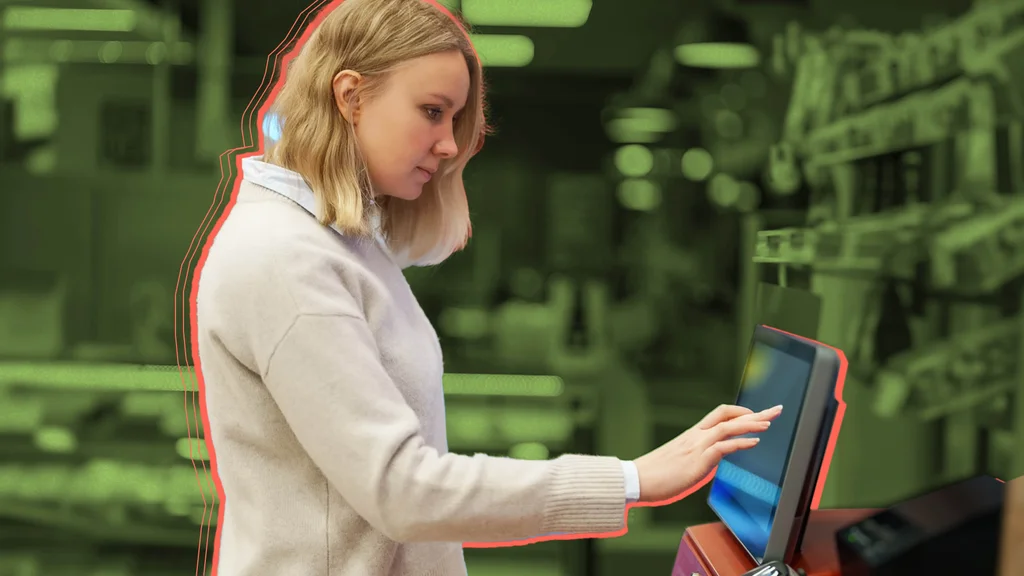
Self-checkout options have been growing in popularity in recent years because they are fast, convenient, and private. In Raydiant’s 2021 State of Self-Checkout Experiences report, we found that about half of respondents (49%) said they use self-checkout all the time when they shop. Additionally, 49% of respondents also said they are more likely to shop in stores that offer self-checkout options.
Self-checkout offerings range from kiosks or units near checkout aisles, to scanning items and checking out through an app, to a concept like Amazon Go, where customers simply pick up items and leave, and sensors track what’s been purchased and charge those items to the customer’s account.
3. SELF-SERVICE
In addition to self-checkout, brick-and-mortar retailers are adding more self-service options to create a better in-store experience as well. Customers may use self-service kiosks to find products in the store on their own, or to check themselves into a hotel or appointment. Self-service touchscreens can allow customers to bypass long lines and place food orders themselves, or they can use apps to help them find products.
According to SOTI, 73% of consumers said they want more self-service technologies available to them in brick-and-mortar locations, not only to improve their experience but to also reduce their dependence on store staff.
4. EDUCATIONAL EXPERIENCES
Educational experiences can show your customers that your store is not just a place to buy products, but that it’s a trusted presence in the industry. Educational experiences can include demonstrations on how to use a product, classes or workshops, talks by knowledgeable associates or guests, or even using shelf talkers to tell about a product’s history.
Hosting an educational class or event can pay off as well. Ninety-one percent of customers say they feel more positive about a brand after attending an event, and 85% say they’re more likely to make a purchase after an event.
5. ENTERTAINMENT
Offering entertainment to your customers can be as simple as creating a store atmosphere that engages all the senses: design, music, lighting, demonstrations, events, or even entertaining associates. Or your entertainment offerings could be as big as hosting a movie night at a cafe or bookstore, having musicians or singers wander around your restaurant, or adding video game kiosks to your electronics store.
Forty-nine percent of Millennials and Gen Zers say one of the top reasons they go to a store is because of its entertainment. Fifty-six percent of Gen Z shoppers say one of the most important things to them when deciding where to shop is a “fun in-store experience.”
6. INTERACTIVE EXPERIENCES
Finally, offer interactive experiences for your customers, too. Unless you have to be a showroom, give customers the ability to test out your products like Apple and Sephora do. Studies have shown that allowing customers to touch and engage with a product increases the likelihood that they’ll purchase it. Set up augmented reality features around the store to engage customers in learning about products or playing a game, or even offer virtual reality options to give customers a truly immersive experience.
KEEP YOUR OPTIONS OPEN
You may decide to implement all of these or just one for now. But the important thing is to put your focus on ensuring that your customers have a great experience when they step foot into your location, that they can find the products they need quickly, that they can be entertained and engaged while they’re there, and that they can have a positive lasting impression of your brand to take with them.
CEO of Raydiant, a digital signage and in-store experience solutions provider.