

Property Manager Ann sprints across the 150-unit complex to unlock three units for repair teams, verifying paint colors and clarifying incorrect work orders. She’ll spend her lunchtime playing catch up, untangling problems with the lease renewals and past due rents.
Leasing Agent Mark, having wasted 40 minutes on an early no-show unit tour, just spent an hour on four calls, all asking the same questions about two available units. Other team members are manually collecting and recording lease documents, accepting deliveries, collecting payments, and attempting to respond to prospective residents—and it is not even noon!
If the last couple of years have taught us anything, perhaps it’s just how quickly we can adapt and innovate in order to respond to disruption. Yet, the recent past has also highlighted and compounded the impact of inefficient and disconnected systems on our operations and frontline employees. Staffing shortages, coupled with a remote working model, have shined a bright light on the impact that non-integrated systems and manual processes have on employees like Ann, Mark, and their co-workers.
THE PITFALLS OF BEING SLOW TO ADOPT CHANGE
In general, the real estate industry has lagged behind other sectors in replacing traditional business methods with modern advanced technologies. Contributing to this is an often-stubborn attachment to the familiar and a fear of implementing new systems—not to mention aging buildings that might require significant capital for modernization. Owners and operators recognize that change is upon them, and that change requires the replacement of systems that negatively impact their frontline employees in the execution of daily operations, as well as revenue growth and customer satisfaction.
Tedious and time-consuming backend systems hamper the efficiency and productivity of property management teams, leaving little time to focus on more profitable and customer-focused initiatives. Despite a growing number of innovative property tech solutions available on the market, tight integrations and native user interfaces are rare, causing a lack of valuable data sharing and a cohesive management view.
Vendors may have nailed down individual tech stacks to handle various functions—leasing, resident management, payments, maintenance, smart home, telecom, asset management, finances, and reporting, for example—but how many different apps and stacks do they require property management teams and residents to use?
The results are inefficient workflows and a very disconnected experience for operators and their employees in the management of their properties.
BEING REALISTIC IN THE SHORT- AND LONG-TERM
Remember the typical day in the life of Ann and Mark, our overworked property management team?
Automation, AI and machine learning, smart devices, the explosion of IoT, and virtual reality can come to the rescue. Using these technologies would allow us to restructure and streamline almost every process of the multifamily leasing industry, potentially replacing traditional tools and approaches that have challenged revenue growth and resident retention. However, to be realistic, the development and adoption of some of these technologies will take some time.
So, what do we do in the meantime? Multifamily owners can begin the modernization process by focusing on solutions that will make the most impact and provide efficiency and convenience for frontline employees, operators, and residents today.
SEAMLESS TECHNOLOGY AND SYSTEM INTEGRATION IS THE REMEDY
Multifamily owners and operators want—and need—a simple way to manage properties, people, and systems in one easy solution. Unified platforms of integrated solutions within an intuitive user interface dramatically increase productivity and enhance the comfort and performance goals that impact revenue growth, employee retention, and resident satisfaction.
Updating buildings and operations with these smart technologies will be an absolute must to attract and meet the expectations of tech-savvy and smart-device-dependent millennials and Gen Zers. These advanced technologies are rapidly permeating our work and lifestyle environments and will continue to evolve and impact.
Here are just a few of the positive effects of integrated smart technologies, all of which relieve the burden on frontline employees:
- Fully automated tenant screening and leasing processes
- Digitized rent payment collection, reminders, and renewals
- Automated maintenance with prompt request notifications, follow-up, and tenant alerts
CAPABILITIES TO KEEP BOTH EMPLOYEES AND TENANTS HAPPY
If relieving some of the burdens on frontline employees is key to staff retention and satisfaction, the same can be said for attracting and retaining multifamily residents—not to mention boosting the property’s bottom line and reputation. Property managers (and their solution providers) can accomplish both by starting to implement some key features into their system, such as:
- AI leasing agents for 24/7/365 virtual guided tours and relatable customer support
- Online 24/7/365 tenant portals for service requests, a community and local event bulletin board, lost and found, and more
- Delivery and package management with automated notifications and storage options
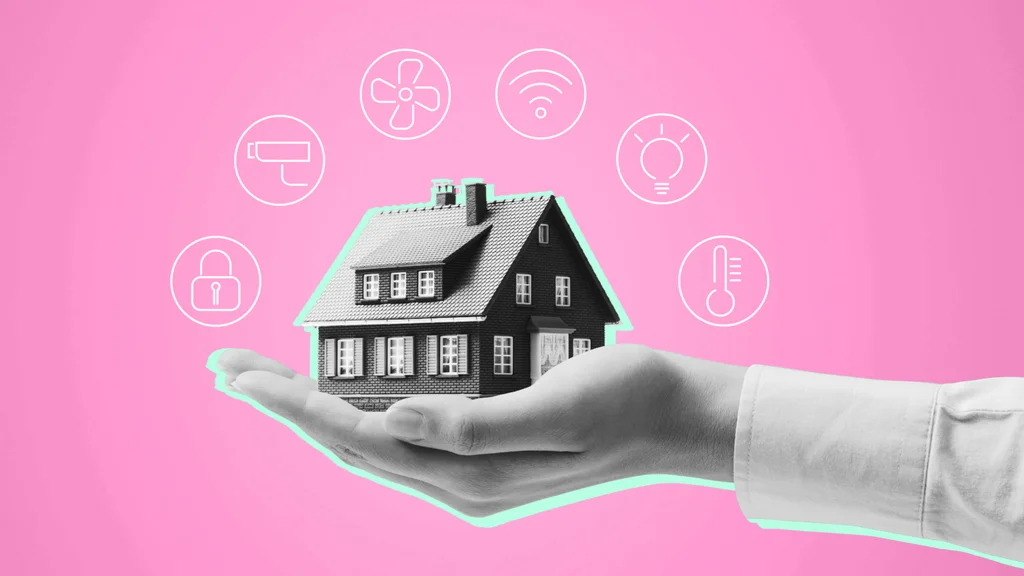
- Smart home locks, thermostats, lighting for tenant, and operator remote control of environment
- Automated promotional marketing to create personalized experiences and opportunities
NOW IS THE TIME TO CHANGE OR BE LEFT BEHIND
Certainly, frontline employees benefit from these positive effects that free them to focus on more meaningful and productive pursuits. Property owners and operators can also significantly benefit from streamlined processes that improve efficiency, security, and resident retention while increasing their competitive edge and ROI.
At the same time, current and potential residents also benefit from these technologies. They can simplify property search and acquisition, rent collection, utility needs, security, and smart solutions that enhance their comfort and convenience.
With careful research and due diligence, multifamily owners and operators can replace antiquated and fragmented processes. Partnering with a technology solution provider that offers smooth integration and smart technology features to increase efficiency, comfort, security, and customer satisfaction is all that’s needed. It’s time to finally help the frontline team by moving managed property technologies into the future.
John McNelly serves as Chief Product + Marketing Officer at Quext, a cutting-edge apartment technology and software company.