
In today’s age of “Great Fragmentation,” I believe a new approach to business leadership is needed. According to WEF, innovation and collaboration are vital to really move the needle on some crucial challenges. In particular, a strengthened social contract and constructive public policy solutions will be critical going forward.
Every year, the WEF Annual Meeting in Davos, Switzerland, attracts the world’s most notable thought leaders, politicians, and corporate and public-sector executives. The theme for this year’s event is “Cooperation in a Fragmented World.”
As someone who is passionate about the leadership aspects of global developments, I have also been reflecting on how the way we lead should shift to enable stronger, better cooperation in this fragmented world.
CONNECTING THE INTERNAL DISCONNECT
Connecting the fragments starts with connecting your disconnected employees internally. According to a survey from The Adecco Group, in a world more digitally connected than ever, many employees have never felt more disconnected. Leaders play a huge role in nurturing a culture of connection and partnerships as opposed to a culture of siloed thinking. However, the pandemic has revealed soft skill gaps in leadership, as many have not been successful in helping their employees feel like they are a part of a big, connected, and exciting whole. Empowering your employees to become enterprise-wide leaders and coaching them to become good “corporate citizens” can be one step toward making them more conscious citizens of the world as a whole.
THINKING IN ECOSYSTEMS
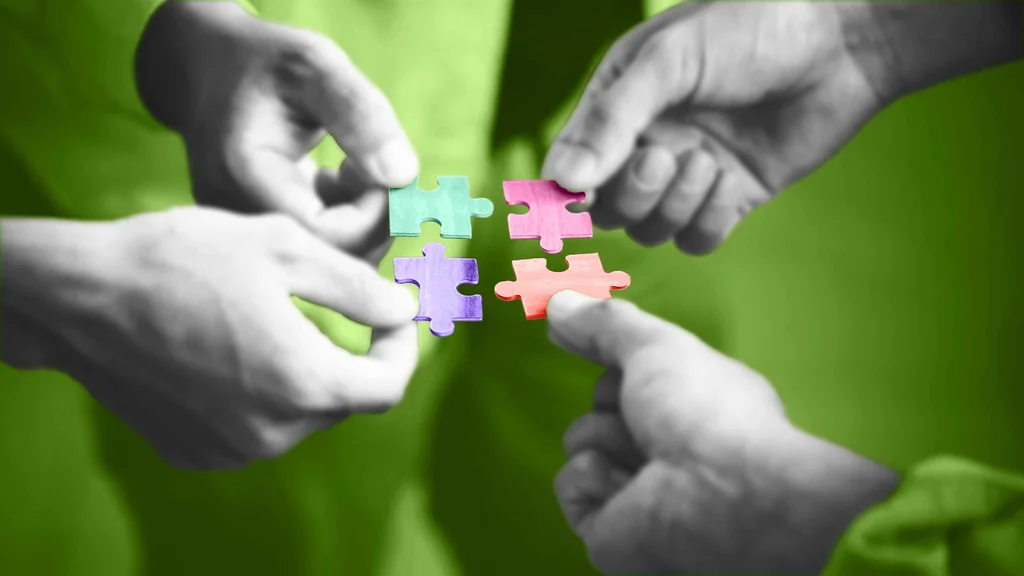
In order to bring more cooperation in the fragmented world, I believe we need leaders who think and operate in ecosystems. Leaders who believe in the power of ecosystems are willing to replace their small, fragmented perspective with a big picture of a connected ecosystem. Does this mean charity work? Absolutely not. Ecosystem leadership does not mean completely neglecting the interests of your own organization, country, or government for the benefit of the greater whole. It means believing in the win-win world and cooperating to create more of those win-win opportunities. It means bringing various fragments into a connected alliance that thrives together.
ALIGNING PURPOSE WITH PROFIT
Purpose-based leadership and organizations have been topics of discussion for a while. Unfortunately, many acclaimed purpose-based organizations don’t really walk the talk, as a focus on profit can often take priority. Skeptics might claim that purpose and profit do not go hand in hand and that there is an inherent trade-off between the two. Research has proven, however, that walking the purpose-talk can pay off. According to Deloitte, true purpose-based organizations can be more profitable than their peers and drive sustainable, long-term value.
LEADING BEYOND EGO
Last but not the least, certain leaders will be more successful at all of the above than others. The higher the level of consciousness of a leader, the more likely I believe they may be to naturally lead according to the principles above. Those who have worked on themselves and are aware of their own ego are more likely to know how to keep it at bay and lead beyond that, because all of the above takes leaders who are not only in it for themselves. It takes leaders who understand that they can be powerful multipliers and are willing to do the work needed to become an exponential multiplier and connector in the ecosystem and responsibly manage the shadow they cast.
I believe the CEOs and boards who will thrive in the future will be those who show up as true strategic partners in the industry and society; those willing to do the work to create leadership alliances across the public and private sector, connecting around the common mission, vision, and principles; and those believing in a win-win world in which we all thrive together. Maybe not at the same time. Maybe not at the same pace. But together.
Marina Cvetkovic is a Top Team Executive Coach, Board Advisor, TEDx and Keynote Speaker, and Co-CEO of Heimann Cvetkovic & Partners.