
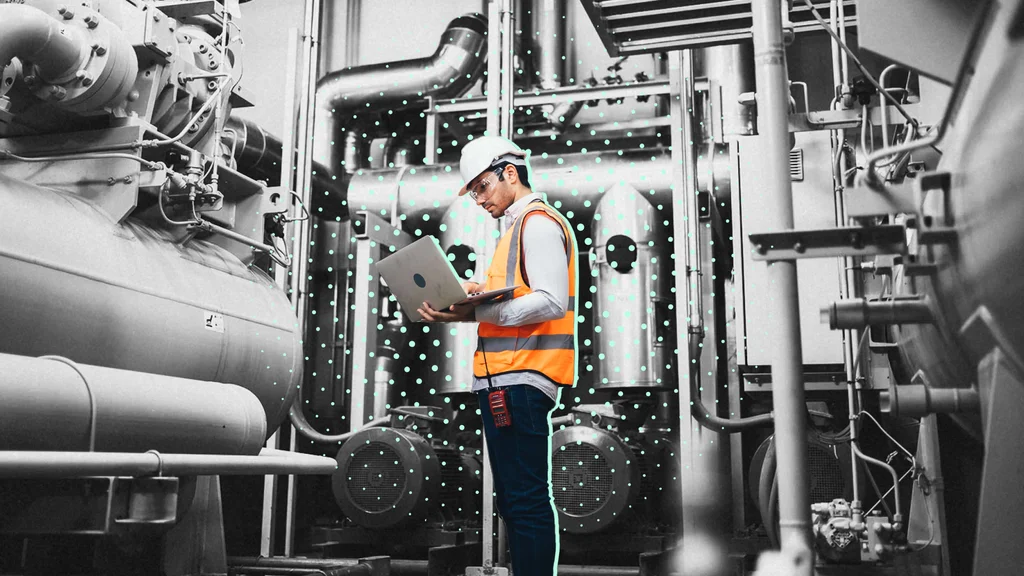

If you were to peer into the factory of the future, you would see a work environment that is unrecognizable from those of just a few short years ago.
Automation and robotics are part of that change. But that’s only half the story. The shop floor is becoming digitized, creating new opportunities for workers in the manufacturing sector and their employers alike. To take advantage of these opportunities, industry can find a way to attract and train workers on the new technologies that working on the shop floor demands.
This transformation of the manufacturing floor and the upskilling of workers is already well under way, particularly among companies that have adopted additive manufacturing (AM). Their experiences can provide a useful model in how to meet workforce demands.
IT’S NOT JUST ROBOTS
The central fact of manufacturing isn’t just increasing automation. It’s all of the technologies that will evolve alongside it. A survey from the Manufacturing Leadership Council (MLC) found many companies expect their manufacturing data volumes to increase 200%-500% within just a few years.
Increasing data volumes point to an increase in sensors and cameras to collect it. In turn, we should expect to see increasingly complex networks over which sensors and Internet-of-Things devices will transmit their data, along with software and hardware to store, manage, and analyze these new streams of data.
The MLC, meanwhile, notes in a 2022 report that artificial intelligence will “increasingly be found in many types of applications and systems involved in manufacturing, from software applications used on the factory floor, to robotic systems used to help assemble products as well as move materials, to systems used in design, simulation, customer interactions, supply chain, and logistics.”
Alongside this rising digitization is a demand for new, high-skilled workers to operate these systems: software development engineers, data scientists, networking specialists, and even newly created titles for experts in digital twin technology for the modeling or new production lines and rapid retooling.
DEMAND FOR WORKERS
The digitization of manufacturing comes at a time when manufacturing companies are expected to need millions of workers.
An analysis by Deloitte forecasted 4 million job openings in manufacturing between 2020 and 2030—with roughly 2.5 million of those coming from retirements. That analysis also predicts that less than half of those jobs will be filled. The rest, a total of 2.1 million potential positions, will be left open because of a lack of a skilled workforce.
These unfilled openings reflect the increasingly technical nature of manufacturing careers. For frontline employees, there is going to be more and more emphasis on skills like data analysis, cybersecurity, and networking.
ADDITIVE AS A MODEL
As the CEO of an additive manufacturing company, I’ve had a ringside seat into the ways in which manufacturers have integrated advanced manufacturing technology into their plants.
Some firms have partnered with two-year colleges to design programs that meet industry needs. These efforts should be expanded.
But companies will also need to develop stronger workforce strategies to design roles and skill requirements. For example, certification has been valuable for years in the IT industry. Recently, we have launching certification programs on specific additive manufacturing technologies to document employees’ skills even as they move between companies. It’s an approach that has also been applied recently to robotics.
Advanced manufacturing also requires continuous learning, and so, in addition to developing training plans to upskill existing employees, they’ll need to find a way to prepare for a constant evolution. Many employees will see a transition from working on a single process to working across multiple processes.
And it all begins with education, which today is one of the main barriers to the adoption of real digitalization on the production floor. The current practice of manufacturing engineering is an outcome of many years of traditional methods of manufacturing. The factory of the future will require new skills and new engineering knowledge, which I believe will require collaboration of all stakeholders—private organizations, public institutions, and education institutions.
The evolution will not be easy, but there is much we can do to make it less hard. But the productivity and efficiency gains will pay off. For today’s manufacturing employees, there are unprecedented opportunities to build a future with new skills and to get ahead in a rapidly changing industry.
Chief Executive Officer, Stratasys