

“That dream of a land in which life should be better and richer and fuller for everyone, with opportunity for each according to ability or achievement.” James Truslow Adams (Epic of America, 1931)
These promises—equality, upward mobility, freedom, and meritocracy—all ladder up to the collective vision known as The American Dream. Since America’s founding, this vision has enticed millions to pack up their lives, leave everything they know, and head to the “land of opportunity.”
But when we look at modern interpretations of The Dream, they seem to be less about these original idyllic values and more about material success. The switch happened in the post-WWII 1950s, when maximizing profit through consumerism became a commonplace business tactic. Entertainment and advertisements of the time furthered these stereotypes, convincing consumers that success in America looked like a nuclear suburban family with a big house, fancy cars, luxurious vacations, and the latest toys and technology.
The same propaganda machine is alive and well within today’s hyper-curated influencer culture. Their lives serve as public templates for all of us, and their unique alchemy of relatability and aspiration keeps us collectively believing in and working toward The American Dream. But ultimately it’s all an illusion, funded by the brands and PR agencies behind the scenes.
The American Dream may be beaten into the collective psyche as something real and attainable, but it was never designed to work for everyone. After all, it is quite literally called a “dream.” This is more apparent today than ever before, as Americans are facing housing shortages, record-high education costs, decades of stagnant wages, and threats to rights and democracy. Each pillar is collapsing before our eyes.
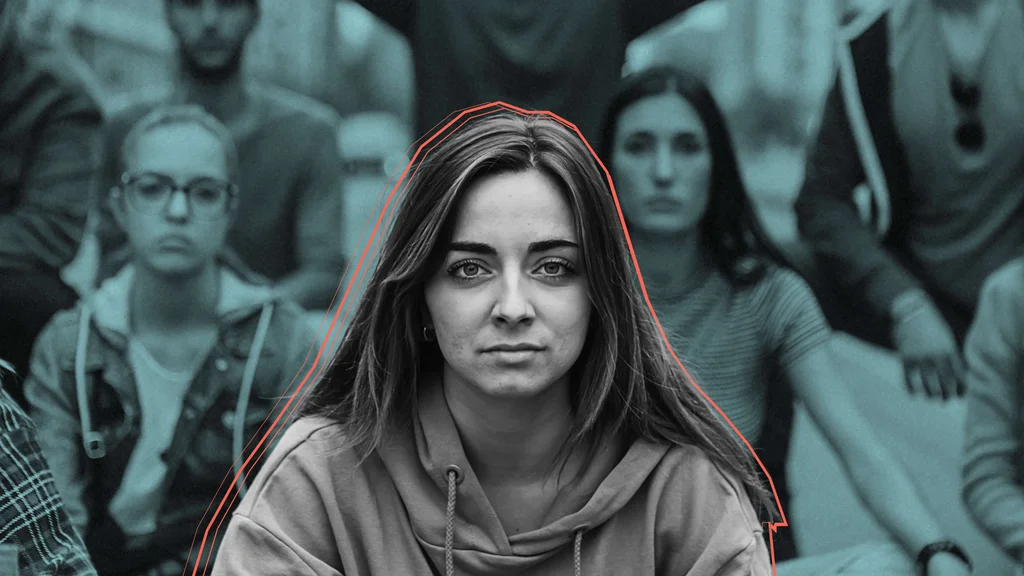
These modern realities have all culminated in a younger generation that’s feeling ghosted by The American Dream and rejecting the aspiration of it entirely. In fact, 71% of American adults under 30 believe The Dream doesn’t exist or are uncertain if it does.
And I can’t blame them. Millennials have experienced slower economic growth than any other generation in U.S. history. And Gen Z was confronted with a global pandemic—and now an impending recession—as soon as they entered the workforce.
It’s disheartening to feel like the future is stacked with challenges and uncertainties. But the sense of nihilism that young people are adopting can go one of two ways: toward resignation or toward action. And luckily, we see many embracing the latter mindset, facing the shortcomings of the present and taking their futures into their own hands. They’re rejecting traditional workplaces and career paths. They’re running for office as soon as they can and seeking ways to move beyond America’s two-party system. And they’re organizing efforts to educate their peers and bolster their communities.
The American Dream no longer encapsulates young people’s aspirations. Instead, they’re pursuing an Imperfect Reality: a recognition of truth and a realistic vision of the future over propaganda. It encompasses five key values shifts:
1. FROM INDIVIDUAL LUXURY TO COLLECTIVE GAIN
Younger generations are less interested in simply preserving their own comfort. Instead, they want to preserve their communities and the broader environment. Enduring a pandemic and facing a climate crisis, they’ve seen how interconnected we are, and it’s shaping the intent of their actions.
2. FROM BLIND MATERIALISM TO CRITICAL CONSUMPTION
The internet “hauls” of 10-15 years ago are now seen as embarrassing. Instead, many young people are letting impact lead their purchase decisions.
3. FROM GUARDED GROWTH TO OPEN-DOOR OPPORTUNITIES
Many young people are no longer interested in the competitive rat race that divides and isolates us. They’re seeking projects and careers that tap into the power of inclusion.
4. FROM REACTIVE CHOICES TO PROACTIVE LIVING
Young people are throwing out society’s limited expectations and embracing their own multifaceted identities.
5. FROM DELEGATED HUSTLE TO INTENTIONAL AMBITIONS
Young people are also no longer living to work (and especially not trying to climb a ladder that they know isn’t guaranteed). They’re being more selective with how they spend their time and energy.
Will the world of business and brands perpetuate the propaganda, or can we all embrace an imperfect reality and co-create a better world with this emerging generation?
Alain is Founder and CEO of SYLVAIN, a strategy and design consultancy that provokes progress for companies, people, and society at large.