

Today’s CISO must be a student of history if they are to successfully guide their organization through times of upheaval—be it a major data breach, a vulnerability disclosure, or the across-the-board budget cuts that accompany an economic downturn.
While the current economy does not yet meet the technical definition of a recession, two-thirds of the economists polled by the World Economic Forum for its Chief Economists Outlook said a global recession was likely in 2023. Of course, the world looks quite a bit different today than it did during the last economic crisis. In 2008, the first generation iPhone had only just launched while public cloud services were still in their infancy. It was also a lot harder to be a competent cybercriminal 15 years ago than it is today.
Yet despite the fact that the pool of threat actors was considerably smaller in 2008, online criminal activity skyrocketed by an average of 40% in the two years following the peak of the recession. Nowadays, hacking tools have been largely commoditized, enabling those with only rudimentary skills and a couple of hundred bucks in their pocket to perpetrate a sophisticated attack.
If past is indeed prologue, then today’s CISOs would be wise to heed the lessons from those who have traveled this road before. Consider these four lessons I’ve learned from some of the industry’s most forward-thinking CISOs as they guided their teams through times of turmoil and uncertainty.
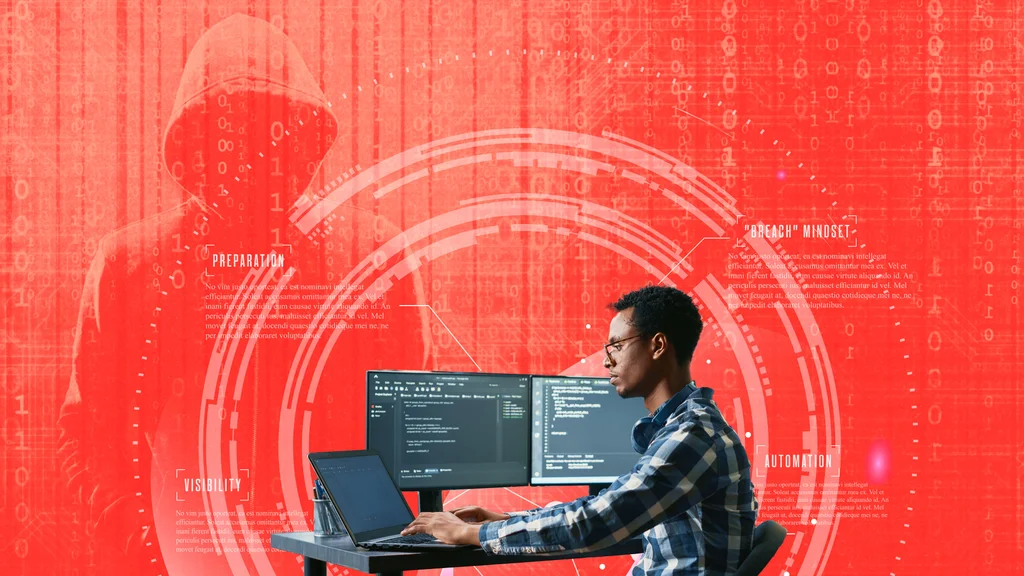
1. THE IMPORTANCE OF PREPARATION
In my years of working in cybersecurity, I’ve come to understand that preparation is the key to weathering any storm. Being proactive and having a well-thought-out incident response plan in place is essential. When a crisis arises, it’s crucial for everyone on the team to know their role and have access to real-time information for a coordinated and efficient response.
What I’ve observed is that a data breach doesn’t necessarily mean failure, but it’s the level of preparation that makes a difference. Ensuring that all relevant information is easily accessible, queryable, and cross-referenced is a challenge but a necessary step for a robust response.
2. EMBRACE THE “ASSUME BREACH” MINDSET
One of the most necessary mindset shifts to which I have dedicated myself is the adoption of an “assume breach” approach. Traditional incident response strategies have focused on keeping intruders out, but it’s becoming increasingly clear that we must assume they’re already inside our networks. This change in posture allows us to concentrate on addressing the root cause of a breach instead of wasting time on smaller issues.
In my experience, even the smallest mistake can lead to a breach, and attackers are becoming more patient and targeted. Preparing for every possible attack vector is impossible, which is why adopting an “assume breach” mindset is crucial for modern cybersecurity.
3. PRIORITIZE NETWORK VISIBILITY
Having spoken to many CISOs who have overcome some of the worst breaches imaginable, I’ve realized that visibility into an organization’s network infrastructure is vital. Perfect security hygiene is impossible, and eventually, attackers (possibly with the aid of insiders) find their way in. Without proper visibility and monitoring, it’s impossible to know when something is wrong until it’s too late.
Investing in tools that provide comprehensive network visibility and continuous monitoring is essential for detecting and mitigating threats promptly. It’s a lesson that has proven invaluable in my professional experience.
4. FOCUS ON AUTOMATION AND EFFICIENCY
In the face of economic uncertainty, CISOs must prioritize automation and efficiency in their cybersecurity strategies. In our 2023 survey of CISOs, 84% of respondents considered integrating and automating cybersecurity capabilities with new and existing technologies a top priority. Interestingly, only 75% prioritized cost-cutting initiatives in their cybersecurity organization.
Cutting spending may provide short-term savings, but it could have long-term consequences. It is essential to maximize the value of existing security infrastructure during an economic downturn.
If there’s one thing that every battle-tested CISO could likely agree upon, it is that every crisis is unique in its own way and will present a host of challenges that can never truly be prepared for. However, you can control how you respond to and prepare for the uncertainty that accompanies every crisis. I believe those security leaders who have taken the time to understand history will be better able to navigate their organization forward.
Ricardo Villadiego, founder and CEO of Lumu Technologies, is a cybersecurity expert & entrepreneur with a passion for transforming security.