

Millions of people in the United States opt for self-employment.
Consider 2022 research from McKinsey, which found that “36 percent of employed respondents—equivalent to 58 million Americans when extrapolated from the representative sample—identify as independent workers.”
But due to legislation, the livelihood of self-employed people in the United States is at risk. California’s AB5 law, which uses a three-pronged ABC test, makes it difficult for companies to classify workers as independent contractors and has cost many freelancers in the state their jobs. Nationally, the PRO Act (Protecting the Right to Organize Act) threatens to do the same. Ultimately, awareness and technical understanding of worker classification and optionality act as barriers to companies embracing a more inclusive, flexible workforce economy.
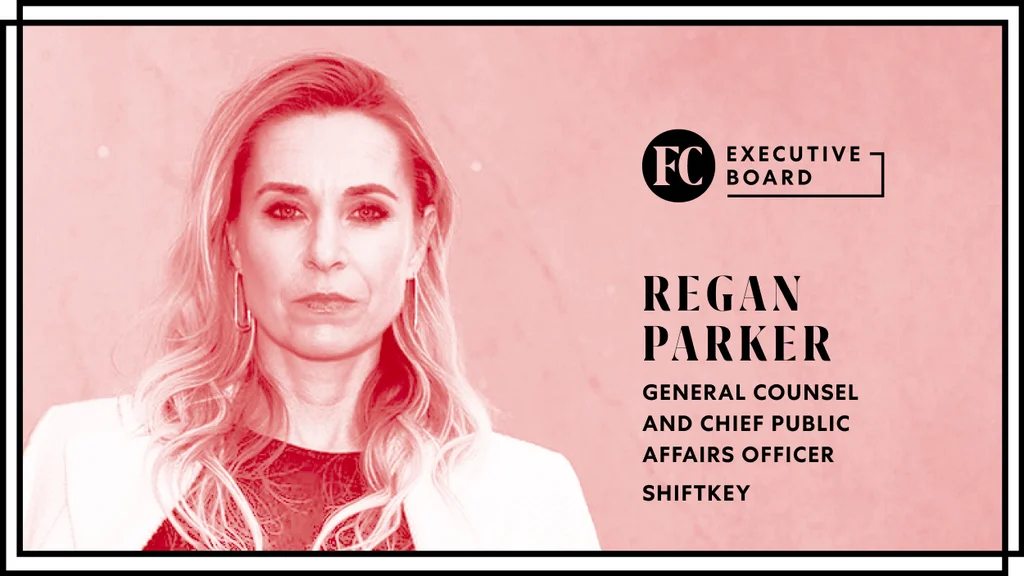
To Regan Parker, general counsel and chief public affairs officer at ShiftKey, a platform that connects healthcare professionals to open work opportunities, it’s an “interesting moment” for the country’s employment policy.
“You’re seeing a lot of tension between people who are ready to embrace empowered work and people who are still fighting the old guard, the old way of working,” Parker explains.
The root of the issue? Labor laws in the U.S. were put into place at a time when nobody could have envisioned what work would look like today.
“All of our laws are written to tie all of the protections and benefits for workers to employment status,” says Parker. “I don’t think anybody would advocate that workers don’t deserve basic human rights, human decency, protections, and access to benefits.”
EMPOWERED WORK
Parker believes that there’s a “nuance and spectrum” to empowered work; she takes the phrase to mean giving people the freedom and flexibility to work on their own terms. For some people, that might look like taking a remote, full-time job where they can work from anywhere in the world. For others, it might look like going the self-employment route. While full-time, W2 jobs are the right choices for some people, they aren’t for everyone. Some people want greater flexibility.
“I don’t typically call this the gig economy,” she explains. “At ShifKey, we’ve created a marketplace for licensed professionals to pursue independent work. We empower people to work on their own terms. I think that’s a really important distinction and one that we strongly believe in at ShiftKey.”
Parker started law school with the intent to practice civil rights law. But when one of her friends invited her to visit his technology company, she saw firsthand how technology could transform access to work—and realized that work opportunities are “the forefront of civil rights.”
“Access to work is a civil right,” says Parker.
Parker saw how that platform was able to help people work from home and on their own terms—“somebody could build a life around their work instead of the opposite,” which, for many people, is a necessity.
“It was enabling stay-at-home moms, single moms, people with disabilities to work when and if they could or chose to,” says Parker. “And that was such a huge differentiator because if you’re tied to a full-time or part-time job, you’re locked into those hours. There are many people in this country who can’t work full-time or who don’t want to.”
So, Parker changed course, deciding to focus her career on the future of work. After graduating from law school, she joined that company and went on to work for several others as her career progressed. Then, in 2021, during the COVID-19 pandemic, she started the next stage of her career at ShiftKey.
SELF-EMPLOYMENT FOR HEALTHCARE PROFESSIONALS
Regan notes that the COVID-19 pandemic exacerbated pre-existing issues in the nation’s healthcare workforce, such as burnout and workforce shortages. According to research published in April 2023 by the National Council of State Boards of Nursing, approximately “100,000 registered nurses (RNs) left the workforce during the COVID-19 pandemic in the past two years due to stress, burnout and retirements.” And many more are predicted to leave the field in the years to come, with 610,388 registered nurses indicating “an ‘intent to leave’ the workforce by 2027 due to stress, burnout and retirement.”
ShiftKey’s goal? To bring healthcare workers back to work. Currently, the platform helps licensed healthcare professionals find shift openings at facilities so they can work when they want to work, all while being able to negotiate their hourly pay rates. Using ShiftKey, these healthcare workers have options; they can choose when to work, where to work, and how much to work—depending on their life circumstances, priorities, and financial needs without fear of it impacting their upward career mobility or standing with a manager.
As for benefits, the ShiftKey team has built strategic partnerships with companies to give self-employed workers on the platform access to healthcare and is actively looking at partnerships to bring access to other services.
“At the end of the day, healthcare workers love what they do, and they love caring for patients,” says Parker. “But many are burned out. So we give them an opportunity to work on their own terms and for the pay they believe they deserve—and have access to that work if they want it.”
NAVIGATING THE CURRENT LANDSCAPE—AND PREPARING FOR THE FUTURE
The ShiftKey team wants to bring its model to other industries to help more professionals find work opportunities. But the team recognizes that it must take action in the policy realm to safeguard self-employment for the workers it wants to serve.
“We get engaged in policy conversations to make sure that people are thinking about how best to look at this issue going forward,” says Parker. “Let’s put it all on the table so we can solve it.”
She points to California’s Proposition 22 (which was enacted after AB5 and allows rideshare and delivery companies to classify drivers as independent contractors) as proof of a model that enables people to be self-employed workers and have access to protections and benefits.
“I think you’re seeing the beginnings of how to envision a third way of work,” says Parker. “I think the future is looking at how to build a better support system for workers so that there’s a social safety net for them, even if they choose to work on their own terms.”
And that future is one that companies—and the country—need to prepare for.
“I think that every company needs to embrace the fact that this is where work is going,” she says. “People want to work on their own terms. They want flexibility. We’re going to have to figure this out as a society and as a country.”