

Everyone has their eyes on the economy. We’ve seen multiple banks fail and lay-offs hit companies that had previously seemed solid. Inflation continues to rise, a recession may loom, and the future seems increasingly uncertain. In light of such economic instability, many businesses are walking on shaky ground. Will the spring and summer months bring an increase in demand? Or will the instability of the economy keep consumers saving money at home?
The way to manage such uncertainty is not just to buckle down and enforce the same systems we’ve always used, but rather, we need to focus on flexibility and innovation. When we don’t know what the future will hold, we must prepare to pivot on a dime, willing to scrap plan A and move on to plans B, C, or even D, depending on the market. Such flexibility is particularly necessary when it comes to staffing—businesses need to react to market conditions and seasonal changes without the stress of being under- or over-staffed.
Businesses should consider implementing flexible staffing methods that utilize artificial intelligence (AI) and machine learning to ensure they are connected with the best workers for their needs. Having a reliable and flexible workforce can be critical in maneuvering the ongoing economic instability.
MOVE ON FROM LEGACY SYSTEMS
Over the last decade, businesses’ approach to staffing has largely stayed the same: Post a job listing online, wait for responses, interview candidates, and hope they show up. The problem is that this approach is no longer working. An alarming number of hospitality businesses are still understaffed, and many hourly workers have left the industry entirely post-pandemic.
So, what can we do if our tried and true methods are no longer viable? It’s time to throw out our old staffing solutions and look toward the future of innovation.
It would be a mistake to ignore the rapid technological advancements happening around us just because “this is how we’ve always done it.” Before you post the same old job listing online, research staffing solutions that use AI to ensure the workers who show up are trained and vetted to help your business run more efficiently. More options than ever exist to help businesses find the right worker. While finding the right staffing solution can seem daunting, once you find a flexible work platform that best fits your needs, you’ll never go back to the way things were.
ELIMINATE STAFFING STRESS
By implementing technology tools such as AI to support staffing needs, businesses can reduce costs and stress. Staffing is often one of the biggest pain points for business owners. A report from the software company Xero showed that close to 50% of small-business owners’ biggest stressor is staff-management.
With AI-powered flexible work platforms, business owners post a shift to the platform, and AI works in the background to match them to workers in the area with the skills they are looking for. Businesses can offload some of their staffing stress onto a machine-powered system, allowing them to focus on growing their business and providing an exceptional customer experience.
Furthermore, businesses can easily manage staffing fluctuations, bringing in extra help for a busy holiday weekend without worrying about giving them enough work the following week. Flexible work technology also takes away some of the unpredictability inherent to working with people—businesses don’t have to spend two weeks training a new employee only for them to quit one week in or get hit by the curveball of a longtime employee’s departure during the busiest season. With an engine cranking in the background, automatically sorting through and finding prospective workers, business owners and managers can find greater peace of mind knowing they will be adequately staffed.
DON’T BE AFRAID OF AI
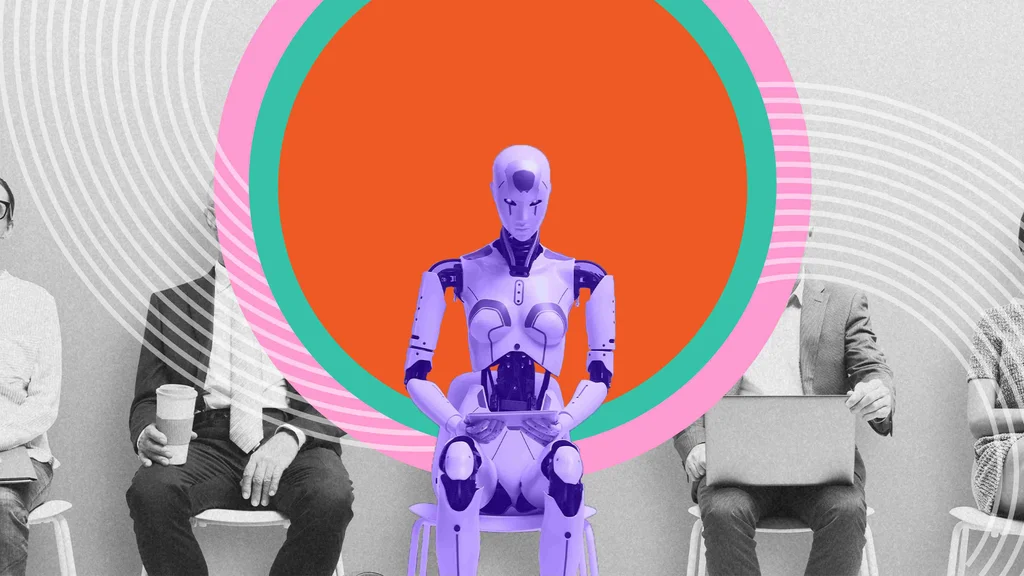
When we talk about AI and machine learning, many react with trepidation, fearing that “robots are going to take our jobs!” In reality, AI can help us find jobs with machine-powered staffing platforms. With the right systems, AI can do much more good than harm, making our work lives more efficient.
For example, when ChatGPT first came out, many were concerned it would take jobs away from writers. I tried it myself, thinking ChatGPT could potentially write a press release for me or help me think of the right quote. However, each time I used it, while it may have spurred an idea or two, I always had to rewrite the entire piece it produced.
ChatGPT and AI cannot take away the nuances of our human specialties. Instead of thinking of such technology as threatening replacements, we can think of them as new and exciting tools to add to our arsenal—tools that can free up our time to focus on the work that will truly push our business forward.
CAPITALIZE ON INNOVATION
Times of uncertainty often breed the most exciting innovation. As AI and machine learning continue to become more and more advanced, it would be a loss if we did not capitalize on the innovation at our fingertips. Furthermore, the more we use AI-powered staffing platforms, the smarter the technology gets, increasing both efficiency and accuracy for users.
AI-powered flexible work platforms can provide an essential tool to businesses hoping to streamline their staffing and get the help they need—and with something as important as the people who keep our businesses running, why not use every tool we can?
Kira Caban is a flexible work expert and leads global communications for Instawork.