
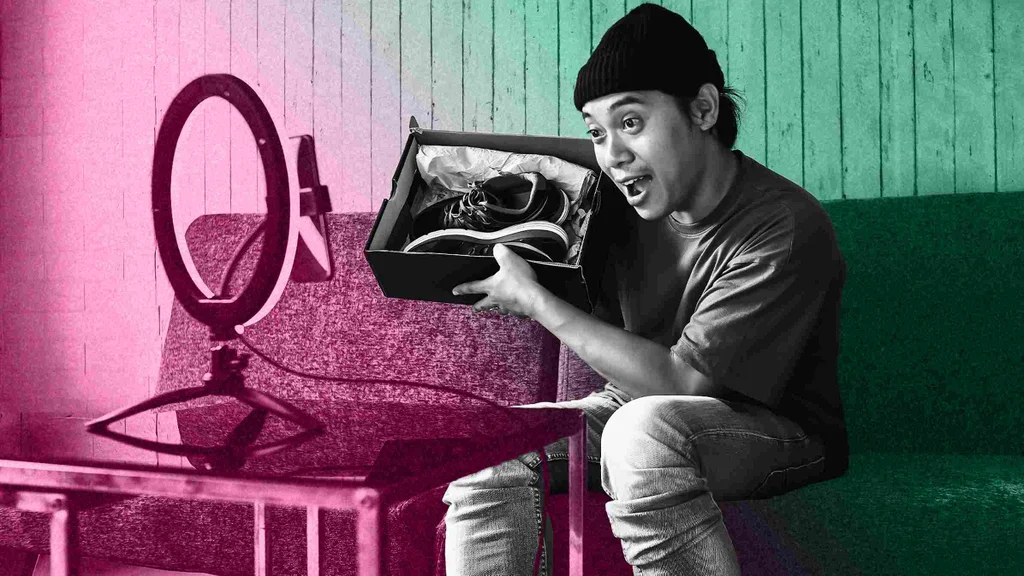

The creator economy has been a buzzworthy topic for over a decade. But recent shifts in the business landscape are driving more marketers to make increasingly bigger allocations of budget, time, and resources to source and produce creator marketing campaigns.
More brands are investing. More creators are creating. Social platforms are evolving. And best of all, more fans are watching and building trusted relationships with their favorite creators.And of course, they are spending money; 41% of GenZ and Millennials make an impulse purchase online every 2-3 weeks, rising to 48% among daily TikTok users. (GWI)
Yet, despite the massive opportunity, only a handful of brands and marketers have truly mastered the art of effective creator marketing. Just like navigating romantic relationships, there are many myths that get in the way of knowing what good looks like and how to develop the necessary skills to become experts.
So let’s begin by dispelling some of the biggest misconceptions about creator marketing.
IT’S ALL ABOUT COLLABORATION
Creators are not actors. They are businesses. To unlock the full potential of a partnership, invest in the relationship. Focus on collaboration and creativity—not just a logo slap. Do your homework. Get to know their communities and watch their content. It’s surprising to learn how few marketers actually explore their creator partners’ content or read their fan comments. It’s a rookie mistake to hand creators a script without context and hope they magically transform it into a TikTok masterpiece that goes viral.
Melissa Tovar, a Latina skincare and beauty creator, recently shared a story at an event during Brandweek about collaborating with a personal care brand. (Disclosure: Melissa Tovar is a client of my agency.) The brand provided very prescriptive direction, including specific marketing phrases to use, what music to feature, and how to demonstrate the product’s benefits. As a pro, she delivered what was asked. The results were not what she had hoped for. The next day, Melissa shared an off-the-cuff video based on a real-world insight she had about the product and how she was actually using it. No surprise, in a matter of days, the video received over 6 million views, and according to the brand, resulted in increased sales.
FALLACY OF THE FAST TURN
Many marketers view creators as a fast-turn tactic—they aren’t. To do it right takes time. Longer-term partnerships versus transactional executions really do matter. While creators can move faster than traditional agency partners, this does not mean speed should be the primary benefit. Remember, one of the most important reasons for working with creators is that their audiences trust them.
MORNING CONSULT released their annual “Most Trusted Brands” study stating, “Trust is hard to earn, but it’s resilient: That’s because it is more of a state of mind for consumers. We see trust gains for brands over long stretches of time.”
By establishing thoughtful partnerships with creators versus transactional executions, fans can get to know your brand in a new way. They see your commitment to the creator and her community which helps build trust. If they trust your brand, they may be more likely to share their recommendations; 66% of all purchase decisions are influenced by community recommendations. Brands recognizing creators as community leaders is an important way to unlock significant value in the partnership.
BRAND VISION VS REALITY
Creators understand their audience (your audience) better than anyone, including your research department. They also understand intuitively and in real time. Thinking of creators solely as sources of fun songs and dances is limiting and deprives your brand of valuable insights. Ignore them at your own peril.
Let’s go way back to a tale as old as time. In 1921, Ford Motor Company was the market leader. They “…sold about 2/3 of all the cars built in the U.S. By 1926, this share had fallen to approximately 1/3.” By 1927, the market share had fallen to 15%.
The reason Ford Motor Company ultimately lost market share was not their product; it was their reluctance to test Henry Ford’s vision against the reality of what car buyers really wanted.
By listening to creators and Gen Z, could Google Search (which once dominated with 91.35% of the search market) have prevented TikTok from capturing 40% of the Gen Z search audience?
Creators are the marketing world’s canaries in the coal mine. Don’t ignore their knowledge and insights. Ask creators the hard questions about product/market fit or audience needs, and you can discover new ideas or untapped growth opportunities.
The creator economy is definitely here to stay. As momentum builds, it’s crucial for brands and marketers to recognize that effective creator marketing is more than just a trend—it’s a strategic approach that requires investment, collaboration, and a deep understanding of the creator’s community and audience.
To succeed, don’t just listen to the experts—learn for yourself and find out what works for your organization. Nothing is perfect the first time, so adopting a long-term view can position you ahead of the curve as the industry continues to grow and evolve.
Jamie Gutfreund, Chief Growth Officer at Whalar, helps marketers anticipate cultural shifts to benefit from innovations in technology.