
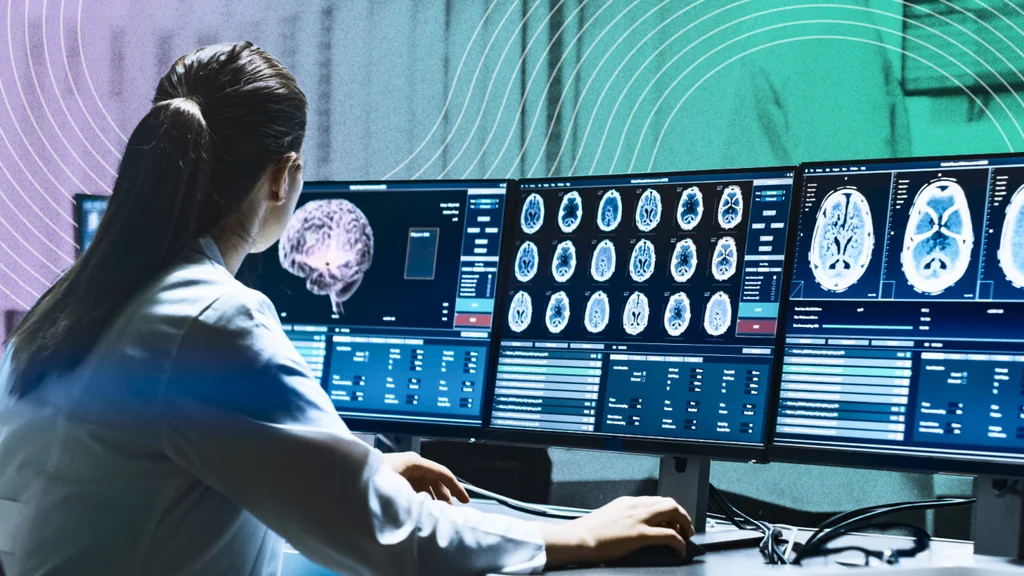

The health care industry is one of the principal industries that I have been dealing with since my genesis into the IT industry. I have seen it transform from the very core. Decades back, health care technology adoption was slow-moving with medical professionals reluctant to embrace change.
But in the last few years, especially after the pandemic struck, the scenario has drastically changed (for the better). Medical professionals have finally witnessed the resource and financial limitations of their traditional health systems and realized that the industry requires more sophisticated techniques of treatment and care delivery.
Recently, I came across a study on the global health care IT market. It emphasized that the market is poised to grow at a CAGR of 17.9% by the end of 2023. And yes, we are watching it happen!
Modern-day doctors are employing emerging technologies (AI, IoT, ML) and digital tools (personal health records, clinical apps) to impart better care to patients.
Moreover, the key players of the medical sector are using the IT infrastructure to concentrate on creative health care software product-development tactics, hence making continuous technological breakthroughs to improve the health care industry. As a C-Suite executive, I believe the winds are flowing in a favorable direction both for society and the health care IT industry in general.
HAS THE FUTURE OF PATIENT CARE ARRIVED?
In my opinion, yes, definitely! As an IT leader, I bet that you saw this coming, and the future is here today, looking straight into our eyes.
The torchbearers of the medical sector today view health care as influencing holistic health instead of merely focusing on physical fitness. This paradigm shift has led to health care organizations opting for health IT systems backed by data, cloud, and analytics tools.
You might be surprised to learn that nearly $45 billion was invested in the digital health sector in 2021, as reported by Statista. This was two-fold from the prior year and by far the highest since 2010. Such is the impact when the health care technology trends intersect with patient care. Let’s take a look at a few of those trends:
ARTIFICIAL INTELLIGENCE
At the forefront stands artificial intelligence (AI), an unprecedented innovation with a promise to transform patient care. AI algorithms carry the potential to create treatment plans, produce medications at double the speed of doctors, and even identify cancerous and non-cancerous tissue samples. Mining of medical data stands at its center. Physicians can more accurately capture complex images like the heart by utilizing AI as a “compass” to assist them in recognizing human anatomy. Besides diagnosis, AI can be used for managing health data, formulating treatments, controlling remedies, health tracking, and more.
WEARABLES AND PORTABLE ASSESSMENT DEVICES
Medical wearables have captured the limelight in the health care industry. Health monitoring devices like fitness trackers and integrated activewear have taken the market by storm. What if I said that the way doctors check patients’ vital signs would completely change by using such lightweight wearables!? That’s very true. They can quickly and non-invasively monitor sleep, detect stress-levels, manage workout routines, and trace cognitive capabilities better.
TELEMEDICINE APP DEVELOPMENT
Telemedicine app development is poised to provide top-notch patient care and guarantee long-term organizational success. As a business pioneer, I am aware of the enormous potential of telemedicine as it enables virtual consultations, remote monitoring, and real-time data interchange. The global telemedicine market exhibited a tremendous growth of 91.7% in 2020 and is only bound to rise upwards. How? I believe such growth can be attributed to tactical benefits like resource utilization maximization, reduced health care expenses, and scalability.
LOW-COST GENETIC TESTING
The way I see genome sequencing, it has become a ground-breaking scientific endeavor that has altered our understanding of human biology and the science of genomics. This tech trend helps decode the entire set of genetic data that is stored within a person’s DNA and cut costs and provide precision treatment at the same time. Medical practitioners can learn a great deal about a person’s possible response to therapies, susceptibility to disease, and even their ancestral origins.
NANOTECHNOLOGY
The era of nanomedicine has just begun, and I think that soon, precise medication delivery systems, cancer treatment equipment, and even miniature surgeons will arise. And all the credit lies with nanoparticles and nanodevices. The CES 2020 also saw one of the key presentations on the nanotechnology-based smart patches by a France-based company that enables continuous monitoring of wounds and potentially speeds up wound healing thanks to its graphene core.
ROBOTICS
The idea of robots has always been enticing, and now the health care industry is partnering with them. Robots help health care professionals offer accurate and effective choices for patient monitoring, medical surgeries, mental health treatment, and chronic illness alleviation. Exoskeletons and prostheses are enabling people with mobility disabilities to regain independence and enhance their quality of life.
CYBORGIZATION
Cyborgization speaks of the idea that we might improve human health by replacing unhealthy natural tissues with artificial ones. A few of my health care clients who have adopted this trend are convinced by the easy monitoring, diagnosis, and better treatment that it offers. Cyborgization also has a lot of potential in prosthetics. The current developments in neural interface technology allow people to control prosthetic limbs considerably more effectively than in the past.
MY FINAL VERDICT
As leaders in the health care IT services sector, let’s be aware of the enormous responsibility that we bear in advancing innovation, creating reliable platforms, and encouraging cooperation between health care providers, tech firms, and governing bodies.
The trends here are revolutionizing patient diagnosis, tailored medicine delivery, and minimally invasive operations. However, these technological developments don’t just happen overnight. Instead, I believe dedicated businesses that are willing to be early adopters will build the future of health care technology through cooperation and development.
Dharmesh Acharya is the COO of Radixweb, a global tech consultation and bespoke software service provider.