

At first glance, a mobile dog grooming service, a vacation rental search aggregator, and a healthcare platform that helps seniors find the right Medicare plan have nothing in common.
But what unites these three companies—Barkbus, VacationRenter, and OpenMedicare—is that they all originate from Wilbur Labs, a startup studio based in San Francisco. The company focuses on solving customer problems and building innovative startups from the ground up to solve these challenges.
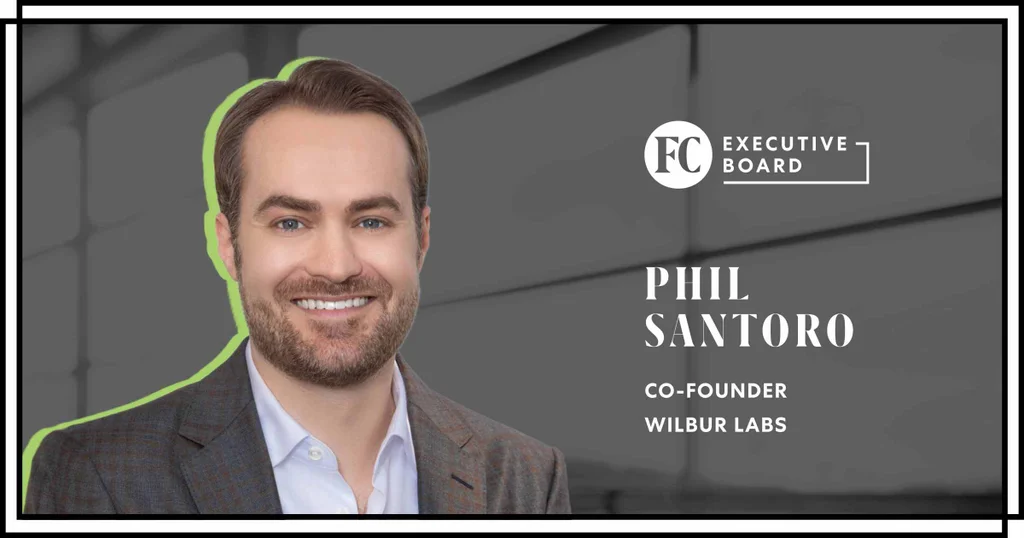
Wilbur Labs was founded in 2016 by ex-Google employees Phil Santoro and David Kolodny, who would regularly meet to talk about problems they wanted to tackle and brainstorm solutions.
“Eventually, we just had so many different ideas that we decided that instead of going after one of them, we’d build infrastructure that could solve all of them,” says Santoro.
While the startup studio model was around at the time, it was still relatively new, and the model was unproven.
“There weren’t any big standouts of success,” says Santoro. “So we wanted to create a company, pair that with capital, bring in experienced builders, and share knowledge and operational support across our portfolio companies to tackle these big problems.”
OPERATING FROM A BANK OF KNOWLEDGE: THE BIGGEST ADVANTAGE OF THE STUDIO MODEL
There’s more to building a business than capital, Kolodny explains.
“Shared knowledge gives the companies within our portfolio a distinct edge in the hyper-competitive startup world,” says Kolodny.
Companies built at Wilbur Labs get to tap into a team of experts, and the learnings compounded over the last seven years—something the team calls “studio knowledge.”
“When we were just getting started on Phil’s couch, we had to figure things out as we went along without guidance and support,” says Kolodny. “The infrastructure we’ve now built out would have been a significant shortcut and advantage.”
Companies that launch within a studio environment get to leverage a “goliath” amount of data and information, explains Santoro, rather than handling things on their own.
At Wilbur Labs, Santoro and Kolodny provide critical input on the strategic decisions companies need to break into the market, gain market share, and adapt over time. But their team also offers support on the tactical details that keep daily operations running smoothly, such as setting up payroll and accounting systems and selecting group insurance plans. No matter what challenges the companies at Wilbur Labs face, they are never alone in navigating them.
“The durable advantage is that they have a big studio behind them that provides the expertise, tools, technology, and resources to help them succeed,” says Santoro.
BUILDING DURABLE COMPANIES
To ensure that the companies they work with get the most out of their extensive knowledge, Santoro, Kolodny, and the studio team rigorously vet hundreds of ideas, determining which big problems are worth solving in the first place. That research is the foundation that gives Wilbur Labs’ portfolio companies durability—they are executing ideas that have been thoroughly tested by experts in the field.
To date, the studio has built and invested in 21 companies. Santoro emphasizes that at Wilbur Labs, the team focuses on solving problems that matter, not solving the most amount of problems possible.
“We have a research and development team that runs all of our ideas through a three-point test,” says Santoro. “First, the idea must be centered on a large pain point affecting many people. Second, it must be a solution to a problem that our team is uniquely positioned to solve. And third, it must be a business that we can launch in phases.”
Once an idea passes the three-point test, Santoro, Kolodny, and the rest of the team move forward, deploying Wilbur Labs’ resources, funding, and personnel for a successful build and launch. Key among the initial steps is putting together the right team to run each company. Santoro says that Wilbur Labs gets a lot of inbound requests from people who want to build companies with them. Wilbur Labs’ team members also take an outbound approach, actively reaching out to people they believe would be good candidates to lead its portfolio companies.
“We try to match people if there’s a good fit between someone who wants to work with us on a company and an idea we have,” says Santoro.
After companies are launched, the Wilbur Labs team continues to share expertise and knowledge throughout the growth stage, helping each company strategically scale along a timeline that makes sense for them.
“Our level of involvement with these companies evolves over time,” says Santoro. “We spend months or even years on each idea. At the beginning of the journey, we’re hands-on; when we hire people into a company, we do everything from setting up their brand’s website and social media accounts to securing their bank accounts and legal documentation.”
As companies mature, Santoro explains, Wilbur Labs takes one step back so that the independent teams can take more ownership.
“They’re experts in their industries,” says Santoro. “They’re really passionate and excited about solving that one problem. And we’ll always be involved in supporting the companies, but there is a path that moves from that high-touch approach to a lower-touch one over time.”
PUTTING CUSTOMERS FIRST
Because Wilbur Labs is intentional about the ideas it pursues, it only launches a few companies every year.
“We’re not trying to compete on the number of companies,” says Santoro. “Our strategy from the beginning has been to build fewer companies per year with more resources, more funding, and more support behind each company.”
That intentionality, Kolodny adds, is critical.
“It’s enabled us to build a studio that affects the outcomes of each company in our portfolio rather than acting as a traditional investor or accelerator with limited operational involvement,” Kolodny says.
Ultimately, at Wilbur Labs, management teams don’t have to reinvent the wheel or struggle with many of the challenges that typically come with new companies.
“The extensive research, knowledge, resources, and support the Wilbur Labs team brings to the table enables its portfolio companies to focus on the most important thing, which is solving customer problems,” says Santoro.