

Behind the doors of hospitals and other healthcare facilities lie the juxtapositions of the human condition—chaos and calm; struggle and perseverance; despair and hope.
Healthcare professionals help patients navigate these juxtapositions to get them back to their daily lives. But in the course of doing so, healthcare workers often encounter tremendous stress caused by various factors, including demanding schedules, worker shortages, burnout, and emotional distress.
That’s where ShiftKey steps in. Taking a data-driven approach with a model that prioritizes empowerment, stability, and growth for both the professional and the organization in need of the worker’s services, ShiftKey’s technology is transforming access and integrity in the workforce. Founded in 2016, ShiftKey is a platform that connects licensed healthcare professionals (including nurses, certified nursing assistants, and physical therapists) to available work opportunities, empowering them to approach their careers on their own terms.
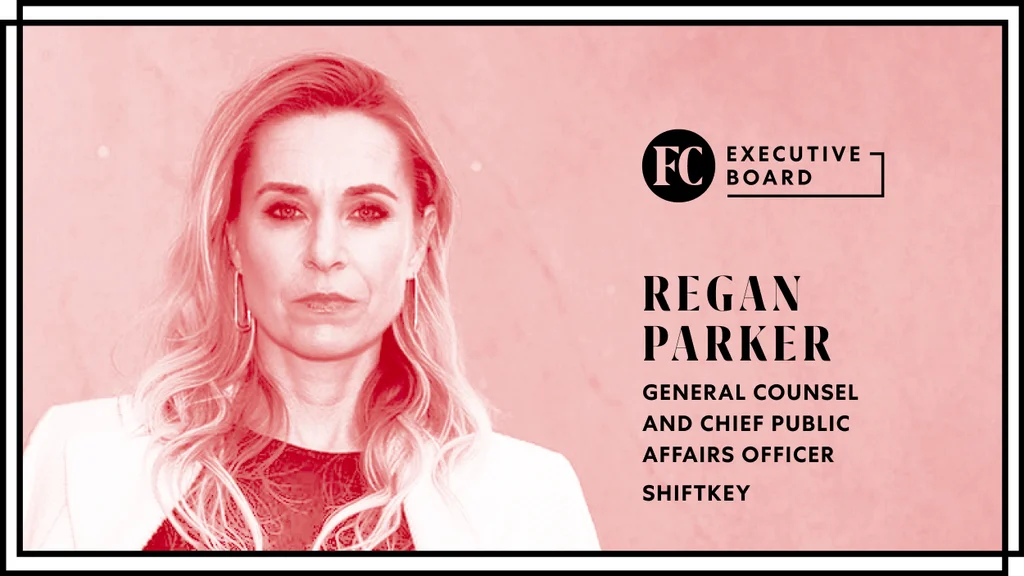
Today, with CEO Mike Vitek and general counsel and chief public affairs officer Regan Parker at the helm, the company is redefining what it means to work in healthcare.
In recent years, there have been growing concerns about the dwindling healthcare workforce in the United States healthcare system, exacerbated by the aftermath of the COVID-19 pandemic. According to a report published in 2022 by Definitive Healthcare, as of Q4 2021, 230,609 U.S. healthcare providers—physicians, nurse practitioners, physician assistants, physical therapists, and licensed clinical social workers—left their jobs. The future is pointing to more vacancies. In a 2022 report by Elsevier, a staggering 47% of U.S. healthcare workers stated that they “were planning to leave their current role within the next two to three years.”
Additionally, in The 2022 National Nursing Workforce Survey conducted by the National Council of State Boards of Nursing (NCSBN) and the National Forum of State Nursing Workforce Centers (Forum), nurses were asked “if they plan to retire in the next 5 years,” and 28% “of all nurses replied positively to the question, an increase from the 21% who respondent positively in 2020.” The survey also found that while 88.9% of the nurses who responded were “actively employed in nursing,” some registered nurses are unemployed, with caring for the home and family “the most frequently reported reason for being unemployed (reported by 46.8% of respondents).”
Parker and Vitek believe that if more healthcare professionals could work on their own terms, more would stay in, or return to, the profession. By personalizing their careers, healthcare professionals can feel more in control of their time and earnings—they aren’t confined to a work structure that doesn’t align with their personal goals, or the competing demands on their time.
“We believe wholeheartedly that healthcare professionals should be able to have agency over how and when they work and for what dollar amount,” says Parker. “ShiftKey has been committed to this philosophy from the start, and we believe more people are embracing this model of work as a path forward. Fundamentally, we can’t solve the workforce crisis in healthcare with traditional employment models. We have to embrace the empowered workforce and give the freedom of choice back to this community.”
Findings from a 2021 FreshBooks report show that the U.S. workforce is increasingly interested in self-employment. Ninety-five percent of self-employed Americans indicated that they planned to remain self-employed “for the foreseeable future,” and 40% said it was at least “somewhat likely” that they would “work for themselves within the next two years.” ShiftKey is paying attention to the growing interest in self-employment, says Parker, and is exploring how it can apply to other fields.
Healthcare is just the beginning in terms of the application, Parker says. The technology is poised to empower workers and solve workforce challenges across licensed industries.
She explains that while it’s been great to see much of the U.S. workforce champion empowered work, there are still fears around the concept, which are echoed in California’s AB5 law and the PRO Act (Protecting the Right to Organize Act). Vitek understands those concerns, noting that “change always invokes fear in people.” But he urges legislators and healthcare leaders to look at the sobering reality and embrace non-traditional models.
“People are leaving this industry faster than they are coming in,” stresses Vitek. “The need in this industry and the gap is getting bigger by the year.”
To continue innovating to close that gap, Parker explains that the company prioritizes fighting against misinformation about worker classification and simply being a good ally for healthcare professionals. Vitek adds that it’s important for ShiftKey to always press ahead.
“Over the last several years, we’ve put ourselves in a position where we can, as allies, speak with both groups we partner with—workers and facilities—about how they do business so they can thrive,” says Vitek.
To more effectively communicate this vision, ShiftKey has recently unveiled a rebrand and new website that tells ShiftKey’s story of technological innovation, and invites both workers and companies to embrace an empowerment model that fosters growth for everyone.
“We know who we are as a company and our core values,” says Parker. “But, it’s never been done before, so it can be challenging to envision. Now, the world can see it.”
For both Parker and Vitek, it’s been gratifying to see the tangible ways ShiftKey is impacting individual lives and communities.
“I get messages consistently from healthcare workers on the ShiftKey app that say, ‘This access allowed me to pay for formula,’ ‘This access allowed me to work, help my family, maintain my personal life, and better my career in a way that I wouldn’t have had access to otherwise,’” explains Vitek. “And they’re saying these things through tears. It changes your soul when you listen to some of these conversations.”
And for Parker, who has experienced firsthand what it means to be an empowered worker—ShiftKey has enabled her to balance a demanding executive role with spending time with her two young sons—it’s all the more important that she continues to work so that other professionals can have the same opportunity.
“We want healthcare professionals to be able to balance their work and their home lives so that they can feel present and fulfilled in both,” says Parker. “Ultimately, empowered workers provide better, more meaningful patient care—and that type of human connection and compassion is what makes what we do worth coming to work every morning.”