
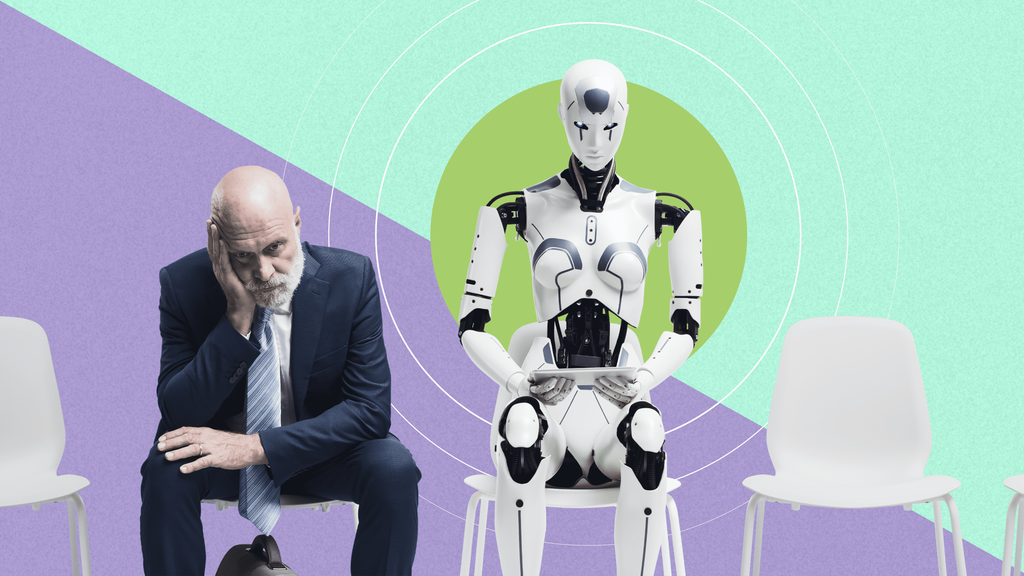

Isaac Asimov’s I, Robot is a science fiction classic—a novel that explores the tension between humanity and technology. Since its publication in 1950, the book has been adapted into numerous films and movies (most notably the 2004 film starring Will Smith). Despite their early strife and mutual mistrust, in the end, humans and robots learn to coexist, each doing their part to support a stable ecosystem.
Asimov’s work has proved somewhat prescient in many ways, although today’s “robots” have not (yet) taken such exacting humanoid forms. In recent years, the rise of accounting automation in finance, driven by AI and machine learning models, has been remarkable and, in some ways, perhaps a bit unsettling.
Trends would seem to indicate that AI-powered automation will only continue to grow in the coming years, revolutionizing the way financial tasks are handled and heightening efficiency at an unprecedented rate. While automation offers many advantages in the fintech realm and others, it also raises concerns about its eventual impact on human jobs—and whether peaceful coexistence between humans and machines can be maintained.
THE STATE OF JOBS IN A TECH-FORWARD ERA
Advancements in technology have paved the way for automation to take over various business processes, from tech support to payroll management to email reports to expense tracking. Initially, this wave of automation might seem unsettling, and many nervously wonder if machines will displace human workers entirely. While this concern may seem justified, the reality of the situation is more nuanced.
Automation complements and supports human roles rather than replacing them outright. Automating mundane and repetitive tasks frees up time and space for employees to focus on the elements of their roles that are uniquely human.
For instance, empathy and emotional intelligence play pivotal roles in customer service. Customers continue to place a premium on meaningful human interaction when seeking assistance or clarification regarding a product. Over 75% of consumers prefer to speak to a live agent for support compared to self-service and chatbot methods, and they express frustration when forced to reckon with a bot.
Moreover, far from being a death knell for jobs, automation paves the way for new job opportunities in emerging fields. Roles in cloud computing, data analysis, digital marketing, and other industries require a combination of technical expertise and soft skills. Thus, there will always be a demand for human workers who can ground automated processes in human intuition and foresight.
SUCCESS DEPENDS ON PROPER INTEGRATION
While automation can significantly streamline processes and enhance efficiency, its success ultimately hinges on the skillful guidance of human teams.
Consider a successful and seamless integration between various software applications, bank accounts, and payroll systems. Accurate and timely data input is essential, as is maintaining a sense of context, prioritization, and risk assessment based on emergent trends or unanticipated needs. Automation can present data, but it is only able to analyze it to a certain degree. It is up to humans to take that interpretation and translate it into a skillful strategy that aligns with broader business goals.
The human touch is particularly vital when understanding the sensitive nuances of financial data and interpreting it within an organization’s unique circumstances. Financial professionals possess invaluable knowledge and intuition that automation cannot replicate (and should not attempt to). It’s easy to consider finances as purely mathematical and static, but the motivations and meanings attached to financial activity are anything but simple. Within accounting and elsewhere, there will always be a need for the experiential sensitivity of human intelligence.
BALANCING EFFICIENCY AND EMPATHY
They say a tool is only as effective as the skillfulness of the hands that wield it. No matter how sophisticated a technology may be, we’re far from the era of “technological singularity”—a world where technology runs itself. Human intelligence continues to set the tone regarding how and why a technological tool is (or is not) used.
While automation enhances efficiency and accuracy, I believe it should never be viewed as a replacement for the cognitive and creative abilities of human teams. Emphasizing the human touch in proper balance with automation can unlock the full potential of both, leading to better decision-making, innovative problem-solving, and enhanced customer experiences.
CHANGE AS AN INVITATION TO TRANSFORMATION
When it comes to change, it often feels safer to default to black-and-white thinking rather than considering the potential upsides of a new scenario. After all, when faced with the unknown, it’s natural to want to protect what you value most. As automation technologies gain more ground, some natural tension will arise from the dichotomy of jobs being created and displaced.
Projections state that by 2025, technology will create at least 12 million more jobs than it erases. In other words, we’ll see a net gain in the job market. That does not mean there won’t be some fallout along the way. The best tactic when implementing new technologies is to remain objective and neutral, ascertain its limitations and potential, and weigh the promised benefits against the hard costs of implementation and upkeep.
Over half a century ago, Asimov explored what would happen if robots became sophisticated enough to support humans via machine intelligence realistically. Readers throughout the years have been surprised that, for the most part, Asimov had a favorable view of how robots can support human enterprise without becoming adversarial.
The big challenge during our own era of transformation will be ensuring human workers can adjust and adapt their careers alongside this new form of “intelligence.” I believe the more companies and industries commit to and encourage continuous learning and career evolution throughout their employees’ working lives, the more likely the emergence of robots (in all their forms) will ultimately prove a net positive for all—just like Asimov predicted.
Steve Smith is the U.S. COO at Esker.