
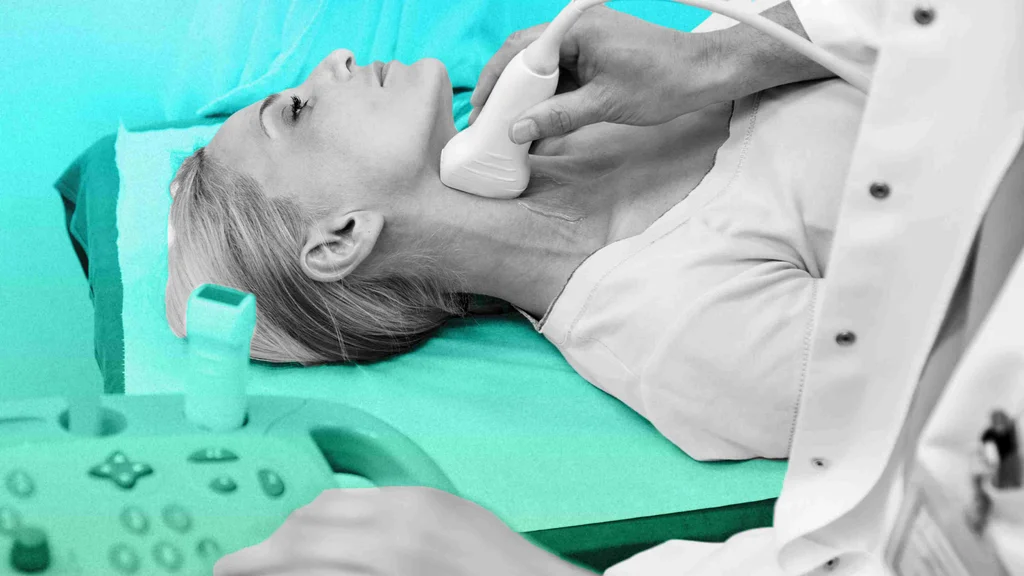

Ultrasound is not a new technology, but it’s becoming the go-to tool for practitioners—and especially specialists—looking to improve patient care.
The benefits ultrasound can bring to a practice are numerous. It can aid in quickly diagnosing a patient and can give more real-time information and insights than a stethoscope. Ultrasound guidance is eliminating risks in procedures that were once done by guesswork. And utilizing ultrasound is a draw to safety-minded patients looking for their practitioners to perform procedures accurately and safely the first time.
But there is one barrier to adoption that’s preventing ultrasound from reaching its full potential: training.
In my over 20 years in the medical device space, I’ve talked to many practitioners who are hesitant to adopt ultrasound because they perceive its learning curve as too steep for them. However, there are many initiatives today that are flattening that curve—which may not be as steep as many think.
Here’s why a lack of training is the main hurdle to adopting ultrasound, and how the industry can address it.
TRAINING IS THE (PERCEIVED) CHALLENGE
Ultrasound use in clinics, specialist offices, ambulances, and even patient homes has only been growing. In a recent Clarius report, it was found that 86% of practitioners have an ultrasound machine in their office and 87% are planning on purchasing more ultrasound machines in the next year.
But why don’t the rest have an ultrasound machine in their practice? The largest segment said it’s because they’re not trained in how to use ultrasound. Furthermore, 66% believe that learning ultrasound is “very complicated.”
If they learned ultrasound during their residency or even in med school, they may have lost the skill and see learning it again as too time-intensive. Or, they may have learned ultrasound in one specialty during a rotation—likely OB/GYN—yet practice in another where they haven’t yet learned how to apply it. Or, the lack of training may simply be because practitioners just don’t want to learn. They may have been diagnosing and treating patients a certain way for years and don’t see the need to change their ways.
However, ultrasound’s rapidly advancing technology and benefits for patients are going to leave practitioners who don’t know ultrasound behind—and they’ll see their patients turning to practitioners who do use it.
FOUR WAYS TO IMPROVE ULTRASOUND TRAINING
Despite the hesitancy to learn, 89% of practitioners still believe that all clinicians should be trained in ultrasound. What can the industry do to make learning ultrasound easier and more accessible, increase adoption, and drastically improve patient care?
1. Debunk The Assumptions
Ultrasound is often perceived as a challenge to learn when looking at a black and white screen of light and shadows that needs to be deciphered. But the first step in overcoming the barrier of training is to debunk the assumption that it’s too hard to learn.
There isn’t as steep a learning curve as one might think, and just a few instances of use can get one to proficiency. One study found that it only took two exams for ultrasound users to become proficient at identifying nerves, and another study found that practicing on just five patients was enough to “achieve an adequate level of competency.”
Today, new built-in technologies are making ultrasound much easier to learn, and AI guidance can even teach a practitioner during the procedure. Continually practicing with ultrasound can increase proficiency, as well as “ultrasound helps students learn the location and relationships between anatomical structures and their disposition in a living human body.”
2. Peer-to-Peer Awareness And Training
The biggest driver of change will likely be peer-to-peer influence. Clinicians who are already proficient on ultrasound can raise physician and patient awareness by simply using ultrasound and touting its benefits. We’re seeing a growing number of specialists who use ultrasound in their practices become passionate evangelists of the technology. They start their own websites or YouTube channels, offer in-person training, or host webinars to help others in their specialty learn ultrasound.
3. Start Training Early
Without ongoing practice and continued education, it seems that many practitioners simply lose the ultrasound skills they gained in med school or residency. One way to lower the learning curve is to make ultrasound usage an integral part of practitioner training, starting in med school. While ultrasound training has been required for some specialties like emergency physicians to become certified, and is built into ACGME’s program requirements, more specialties are building ultrasound certification into their residency accreditation, which will only be a boon to the industry.
4. Leverage New Technology
Artificial intelligence (AI) will play a larger role in non-traditional education as well—it will essentially become an in-device teacher. As a practitioner uses ultrasound, AI can guide them on what they’re looking at and where they want to be, needle guidance, probe positioning, and more. This real-time guidance can help newcomers to ultrasound easily learn as they practice, and an AI teacher will take the guesswork out of what they’re looking at on the screen.
REACHING ULTRASOUND’S FULL POTENTIAL
Ultrasound is fast becoming the go-to tool for practitioners—and especially specialists—looking to improve patient care. Now’s the time to double down on making sure practitioners get the training they need, and push ultrasound towards reaching its full potential.
Ohad Arazi is the President and CEO of Clarius.