
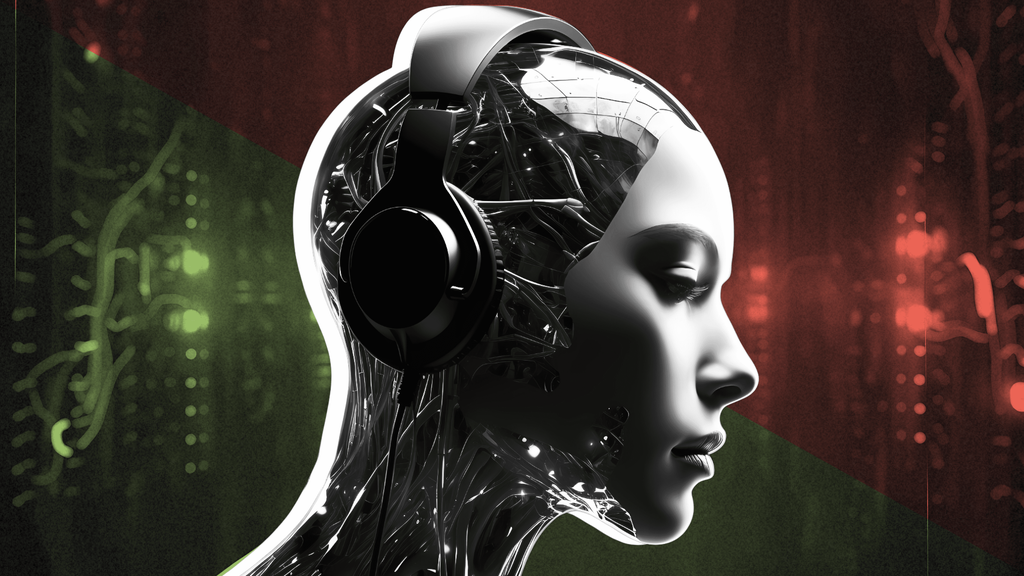

Not since Wu-Tang reimagined “While My Guitar Gently Weeps” in 2007 have we been this excited for a new Beatles collab. And this time, it comes straight from Liverpool, not Shaolin. This month, when Sir Paul McCartney revealed that he used artificial intelligence (AI) to “extricate” John Lennon’s voice from an old demo, music lovers like me rejoiced. Sure, there is a lot of hand-wringing in the industry about how AI can be used to nefarious ends. But new Beatles’ music more than 50 years after they split and more than four decades after Lennon’s murder is a testament to the immense potential of AI in music—and, as Google’s new music generation product MusicLM shows, it is merely the tip of the iceberg.
Technology that facilitates the creation, reproduction, and distribution of art is one way of describing generative AI. But it also could serve as the definition of recorded music. More than a century ago, John Philip Sousa warned that the advent of the phonograph would put professional musicians out of work. And with apologies to Mr. Stars and Stripes Forever, he was way off. Recorded music democratized access and brought it into the homes and hearts of those who could never have afforded to attend a concert or visit the symphony.
Music creators, don’t fear the reaper when it comes to AI: Recognize its potential instead. Rather than put musicians out of work, I believe AI will allow more creators to make more music and explore sonic wavelengths yet unheard. AI will augment the creator’s process to produce art, and it will lower barriers to entry for new voices and allow for previously impossible collaborations from across the world or beyond the grave.
Can AI be artistic? No, not on its own. By definition, generative AI tools are derivative—a self-licking lollipop only capable of emulating that which came before. But just as instruments are tools for human creativity—strings must be plucked to make a sound—so too is AI. No less critical thinking and artistic talent are required to construct a song out of garage band instruments than literal instruments in a garage. Same with AI-generated progressions or sounds.
It reminds me of when Auto-Tune hit the market, itself a form of AI that leverages math as a tool for creative production. The use of Auto-Tune for its own sake was scorned until we saw how the human element elevated the tool to create art. I’m certain music creators will soon make creative use of the AI tools available to them—just like the Beatles themselves did with the first song to feature intentional guitar feedback on “I Feel Fine.”
I’m also excited by the prospect of AI tools lowering barriers to music creation across the globe, increasing accessibility and, thus, the supply of musical talent. Sure, we’ve had Garage Band and its built-in synths for years, but now we have the opportunity for an AI jamming partner or even tutor that’s capable of suggesting a new riff or adjusting a lick for maximum shreddage. We see AI as a bridge for burgeoning talent as it adopts tools and creates the next sleeper hit—and builds new audiences for music.
The Beatles likely don’t need more fans. But Lennon’s posthumous collaboration with his former bandmate is sure to introduce them to a new generation of listeners. It’s also an extreme example of what AI can do to bridge distances, both physical and temporal. Generative AI will widen our access to new music and sounds—just as the successive waves of innovation from filesharing, mp3, blogs, and SoundCloud did before. It won’t be long before we see a viral hit built by generative AI.
The technique of collaborating with musicians from prior generations was scorned and litigated when it emerged from the 1980s hip hop scene. Hip hop pioneers De La Soul settled a million-dollar lawsuit with ’60s rock group The Turtles in 1989 over their use of samples in the seminal 3 Feet High and Rising. In 2010, the same album was added to the Library of Congress’ official registry—specifically because of its innovative use of samples.
We expect that before too long, the LOC will add an AI-generated song to its archives, not because it was made without human hands but because in human hands, it made something we’d never heard before.
Tom Chavez is the co-founder of super{set}, a San Francisco-based startup studio, CEO of boombox.io, and a musician.