

Sustainability should be a major concern for all modern businesses, not only for the sake of the planet, but also for the sake of the business itself. A study by Bain & Company and EcoVadis found that “positive ESG outcomes are a trait of successful companies and that sustainability measures correlate with better financial performance.” Companies that decide to drag their feet when it comes to sustainability may be quickly surpassed by those that take the initiative to incorporate sustainable practices into their business models.
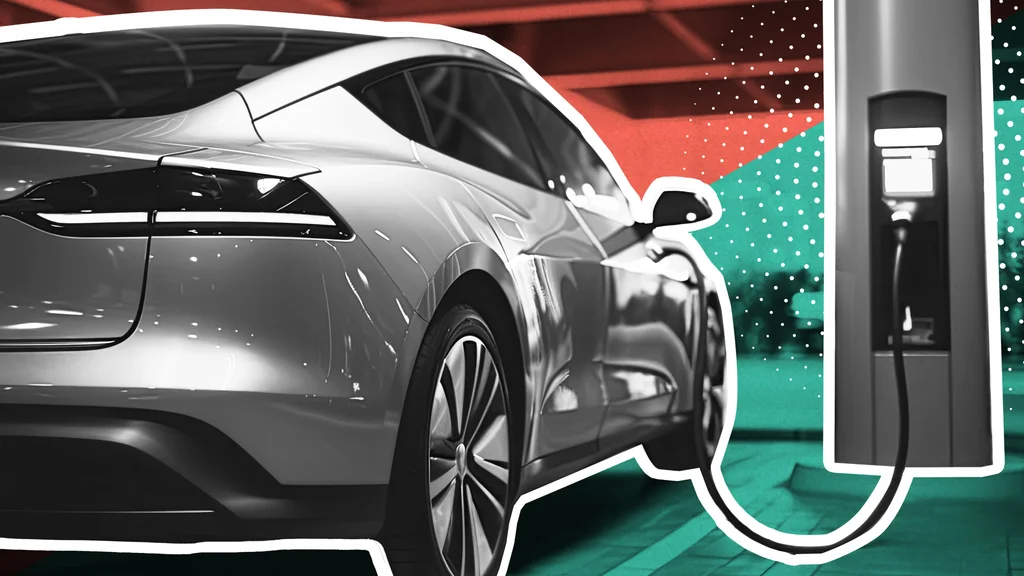
Switching to electric vehicles is an overwhelming but increasingly essential sustainable practice for all businesses. From companies managing delivery fleets to local convenience stores, practically every brand of business with a storefront stands to benefit from installing EV chargers on their premises.
Offering charging to both employees and potential customers can set you apart from competitors, and making the switch to an electric fleet can build a sustainable image that also attracts customers.
Despite these clear benefits, EV charger installation is no easy process. We found that out firsthand while installing our fleet chargers at our Fluid Truck HQ.
Here’s what we learned throughout the experience so you can go into your own installation well-equipped and knowing exactly what to expect.
TAKE ADVANTAGE OF STATE AND LOCAL PROGRAMS
State governments and local utilities are there to help you, and there is a substantial amount of funding up for grabs for businesses that make changes to promote electrification.
Throughout our own installation, we used programs through both options to help with funding. Charger installation is far from cheap, costing up to $50,000 per station when you factor in preparation with the actual costs of parts and installation. The extra funds were critical in getting operations up and running for us.
The U.S. Department of Transportation offers a full overview of federal funding programs for EVs, including grants, loan financing, and tax incentives. Be sure to look into your own state’s funding as well.
START ASAP AND BE PREPARED FOR A LONG RIDE
EV charging projects take a long time. There are even more moving parts than you might originally anticipate. In our own experience, we battled against hardware lead times, site electrical upgrades, applications, and approval processes for funding programs, construction, and more.
Anyone who is interested in starting an EV charging project should start the process as soon as they possibly can and buckle in for a long journey.
KNOW YOUR CHARGING OPTIONS
There are a ton of options out there for charging equipment. Level 1, Level 2, and Level 3 chargers all have their own specific use cases, pros and cons, and power outputs.
Here’s a brief breakdown of each charger:
- Level 1 EV Charger
- A little under 2 kW capacity
- Slower charging
- Often for residential use
- Level 2 EV Charger
- A little under 20 kW capacity
- Slightly faster charging than Level 1
- Residential or commercial use
- Level 3 EV Charger
- Up to 400 kW capacity
- Fastest charging
- Mainly commercial use
Not only are the chargers themselves varied in many ways, but there are also a lot of different companies that offer these products. Different manufacturers produce different quality products and can have slightly different processes when it comes to installation. It is a good idea to vet the manufacturer you end up working with to feel out their quality of service and make sure everything suits your needs.
We put in the effort to get hands-on experience with each level of EV charger from as many different reputable manufacturers as possible. We did this so we could learn which level of charger and which manufacturer would best support our company’s vision for future projects.
GAUGE YOUR POWER CAPABILITIES
Available power at a site can be a huge constraint on your installation process. EV chargers require a very large amount of power, especially when installing several chargers to support a fleet operation or provide charging options for employees or customers.
One of your first steps should be to hire an electrician to come out to the site where the chargers will be located and gauge how much surplus power you currently have available. This will drastically affect the cost and feasibility of a project along with the level of chargers you are able to support, as you may have to drastically change your current power system to accommodate the addition of EV chargers.
ELECTRIFICATION IS TOUGH, BUT WORTH IT
Though the process is a hard one and a long one, working on EV charging projects is fulfilling for businesses of all sizes.
For us, it was great to take part in a project that helped directly in the push to move away from gas vehicles and make a real difference in how transportation affects the environment. Plus, our own fleet vehicles use the chargers, and Fluid Truck’s EV-driving employees (including me!) get to charge their vehicles during the day when they’re at the office.
These accomplishments were far worth the effort to make sure we did the installation process right.
Many people lament that they would drive an EV if only they had a place to charge. Well, the charging infrastructure won’t build itself––and there are no electric vehicles without chargers. So, it’s important that leaders all do their part to make EVs not only a feasible option, but a real sustainable solution that seamlessly integrates into our lives, our employees’ lives, and our customers’ lives.
James Eberhard is the CEO and Founder of Fluid Truck, the on-demand commercial vehicle rental platform.