
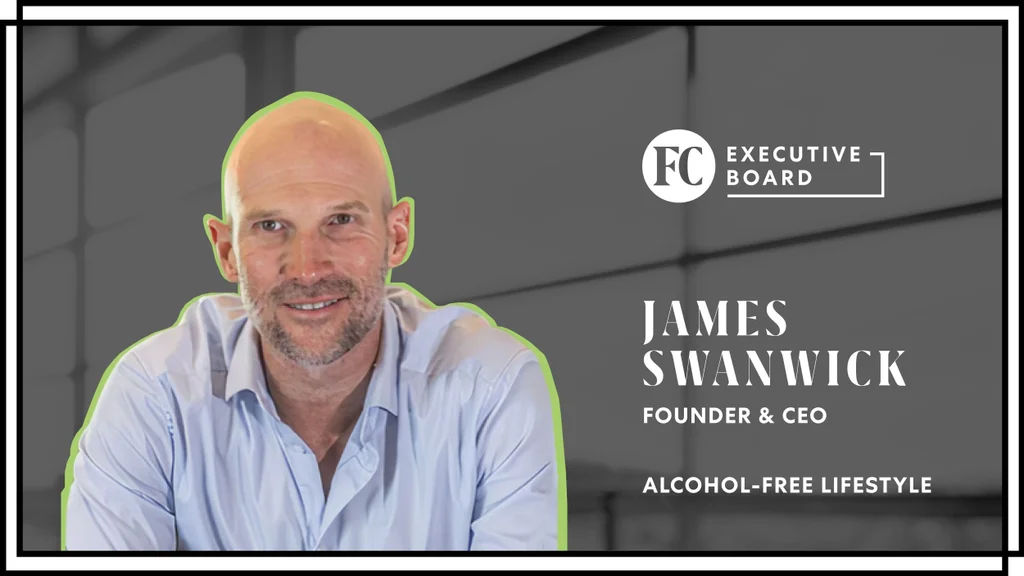

Growing up in Australia, James Swanwick didn’t think much about his relationship with alcohol. Swanwick—founder and CEO of Alcohol-Free Lifestyle—was what he calls a “socially acceptable drinker,” having two or three drinks most nights of the week, until he started to feel the consequences of this habit in his mid-30s. He decided to take a 30-day break from drinking and was astounded by the results.
“I slept better, I felt better,” said Swanwick. “I lost 13 pounds. I got my dream job hosting an iconic television show, SportsCenter on ESPN. I attracted a high caliber of relationships into my life. I created much healthier habits, and I just kept going. It’s been 13 1/2 years now.”
In 2015, Swanwick was living in the Hollywood Hills and attending high-profile events, such as the Golden Globes and Oscars after-parties, while maintaining his alcohol-free habits. He started fielding questions from other guests who were curious about his lifestyle—and the idea for a new project began to grow.
“I was going to these hedonistic, extravagant Hollywood events where there were open bars, and I was drinking soda water with ice and lime and having a wonderful time,” he said.
“Celebrities and acquaintances were always saying, ‘Is it true that you don’t drink alcohol? How are you having such a great time without drinking?’ And I thought maybe I could create a program that would support people to stop drinking and still have a wonderful time and experience all the benefits of being alcohol-free—including clarity, focus, energy, great sleep, and positive mindset and well-being.”
Swanwick created an online 30-day no-alcohol challenge to test his idea. He recorded 30 videos, one for each day, promoted the program on Facebook and made his first sale. The 30-day program is still available today, but in 2018, Swanwick evolved the focus of his company to serve business owners, executives, and other high performers who want to have a better relationship with alcohol, either by reducing their consumption or quitting entirely.
“I was increasingly leaning into the entrepreneurial world myself, and I found myself spending considerable time with other business owners and executives and investors,” he said. “And I realized that there were a lot of burnt-out executives and business owners, and they were seemingly seeking refuge in a bottle of wine or a six-pack of beers every night or drinking too much on corporate golf days. They had high levels of stress and anxiety, in part because of their drinking habits.”
Swanwick launched Project 90, Alcohol-Free Lifestyle’s flagship product, as a personal development and business mastermind program for this audience. Project 90 incorporates scientific research, expert coaching, and step-by-step advice to help a client base that includes business leaders, innovators, real estate investors, and medical professionals.
“I shifted my attention from trying to help everyone to really supporting high achievers in their mid-30s to late 60s who were really struggling with their drinking habits,” he said. “Most people are blissfully unaware of the true impact of their drinking habits: the long-term health, business and relationship ramifications. It can be a challenge to persuade people that their drinking may be causing marital strain or slowing down their business. Maybe you’re operating at a four out of 10 when you could be at a nine out of 10.”
Project 90 requires all participants to use its financial calculator to estimate how much their drinking habits cost them. The financial toll can take many forms and add up to hundreds of thousands of dollars a year or more, said Swanwick, including through lost income, missed opportunities, or even divorce settlements.
Swanwick has seen his initial idea transform from a DIY pilot program to a thriving business with thousands of clients. He offered this advice for other entrepreneurs who are just starting out: “Don’t try to serve everyone. I suspect I went too broad initially and tried to help everyone to stop drinking. It was only when I moved more niche that I really started to attract more people to my services. My advice would be to pick the demographic of the person you most want to have as a customer or client first and then create the service for them.”
Swanwick said he also lives by the model “always be testing.” He didn’t want to spend a year planning for a big launch only to find out he was on the wrong track. “If you have an idea, test it very quickly. I’ll test a product by running some Facebook ads or putting it on my social media, and I can get feedback within days or even hours.”
The next chapter for Alcohol-Free Lifestyle will be focused on expanding its evidence-based approach and helping corporate clients in addition to working with individuals. In early 2023, the University of Washington conducted a scientific study of Project 90, evaluating the effects of the program’s approach on 160 participants. The results of the study are scheduled to be released in 2024.
“We’re also going into organizations, taking 30 to 50 employees at a time and putting them through a fun 90-day process to stop drinking and develop healthy habits,” said Swanwick.
“What HR departments are realizing is that if they can get their employees to even just reduce the amount of alcohol they drink, that has a direct result on employee well-being and performance. Sick days and HR complaints are reduced, and employee retention and revenue increase. Our company has a goal to be the most effective corporate wellness program out there, helping companies to keep staff, improve staff performance and well-being and create millions of dollars more revenue. Because a happy staff is a happy company.”