
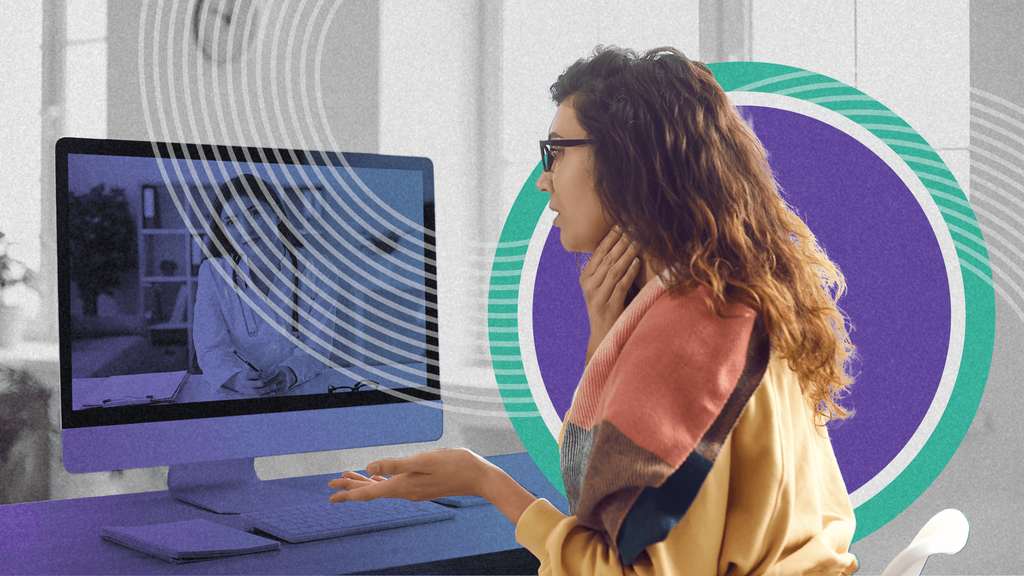

Telehealth is capable of bringing doctor-patient relationships into the 21st century, but it’s still stuck in the Dark Ages. Licensing and credentialing limitations, rapid regulatory movement, and general resistance to change are still significant barriers holding back telehealth.
Ultimately, these barriers make the healthcare experience worse than it has to be for millions of people. Eradicating them is more than a dollars-and-cents issue—it would save lives.
LACK OF TIME FOR COMMUNICATION DURING IN-PERSON VISITS IS THE PROBLEM, IN A NUTSHELL
What we have here is a failure to communicate. The nostalgic retrofuturism of the ’80s tried to envision concepts like video calls and wearable technology, but could never have grasped the ease with which we communicate today.
Patients can interact with their physicians face to face in real time from anywhere they can get an internet signal. It’s not necessary to travel for hours to find appropriate care. They can schedule an appointment with the physician of their choice via telehealth and benefit from an unrushed, less stressful interaction in a comfortable environment. Doctors who use telehealth spend less time traveling to and from the office and incur less overhead by integrating telehealth from home when appropriate. This allows them to spend more time with patients and schedule more frequent follow-up care.
Yet with all the technology we have at our fingertips, patients still travel to medical appointments and spend hours waiting in cold, gloomy, and often germ-infested waiting rooms for access to an overworked physician, with whom they’re lucky to get 15 minutes of face time.
In that 15 minutes, the physician is expected to accomplish a miracle: Establish a comprehensive doctor/patient relationship that can address and fix a host of patient health issues in a cold, cramped, uncomfortable environment where the patient may be too stressed from the travel and wait to think clearly.
Nearly a third of the population has more than five health issues, so this is a lot to expect of any medical practitioner, even one who is very good at what they do.
TELEHEALTH WOULD ALLOW MORE FREQUENT HEALTHCARE INTERACTIONS
Our healthcare system asks a lot of patients, too. They’re expected to retain complicated medical directions with an average of less than 60 minutes’ worth of interaction per year. That’s a pretty short time slot for something as important as medical instructions.
Some studies show that patients immediately forget up to 80% of the information they receive from their doctor. It seems clear that patients who have chronic conditions would benefit from more frequent interactions with their healthcare teams to ensure they understand and are correctly following their treatment plan.
But physicians’ patient loads are far too heavy, and patients don’t have time to attend the bare minimum of appointments, let alone more. Americans work the longest hours among the industrialized nations, and with inflation at new heights, they can least afford to take days off to attend frequent in-person follow-ups.
Is it any surprise that the average no-show rate is 36% for in-office visits? This is a huge tax on doctors with heavy patient loads, and leads to even longer wait times for patients as practitioners overstack appointments to compensate for no-shows.
However, for telehealth appointments, the no-show rate drops to just 7.5%. Imagine not having to wait for hours just to be rushed through an appointment because doctors can reliably schedule time with their patients and know they’ll be there.
THE MANY BARRIERS HOLDING BACK TELEHEALTH
To date, 41 states and one territory have adopted the Interstate Medical Licensure Compact, which allows doctors to practice across state lines. The last holdouts should adopt this policy.
Extending where medical providers can practice doesn’t just address the physician shortage. When combined with telehealth, it gives patient consumers greater choice when selecting their practitioner, which applies upward pressure to the overall quality of care.
Regulators should also standardize a national set of telehealth policies so interstate practitioners aren’t forced to navigate the current maze of individual state restrictions. Standardized telehealth training would help practitioners better comply with the developing regulatory landscape.
In that same vein, a national certification process for telehealth practitioners could serve as evidence of a healthcare provider’s ability to offer high-quality remote care and could be recognized across state lines.
WHAT TELEHEALTH LEADERS SHOULD BE DOING RIGHT NOW
Better government relations and lobbying efforts from telehealth companies are perhaps part of the solution, but a directive to lobby more effectively is much easier said than done, particularly in the healthcare sector.
Telehealth companies and their leaders need to chip away at the institutional biases and norms that maintain the barriers mentioned above by taking control of the conversation. Society is firmly entrenched in a digital-first era of commerce—older millennials may remember being warned not to get into a stranger’s car when they were children; now, we summon a ride from someone we don’t know with a few pecks at our iPhone.
The point being: App-based platforms work to make life better, easier, and (most crucially when it comes to healthcare) safer. The facts, the evidence, and the mood of the times are on the side of telehealth. So, at a minimum, telehealth leaders need to be more vocal about the problems that their companies solve. They need to speak about healthcare as a fundamental human right, and about telehealth as the most efficient, safe way to improve access for the millions of people in the U.S. whose lived experiences accessing and using healthcare are not positive.
There is only one clear path forward. Consumers need increased access to quality healthcare and more-frequent interactions with healthcare providers. Telehealth makes this possible, and regulators need to take it seriously as a part of the healthcare experience they shape for hundreds of millions of people.
Alex Milligan is co-founder and CMO of NuggMD, the leading telehealth platform for cannabis.