

Sometimes, we are so obsessed with competing for market share that we forget that industry-wide marketing can create additional demand for everyone and increase adoption of a product or service (and hence the size of the total available market, or TAM). The old adage “A rising tide lifts all boats” is rarely incorrect.
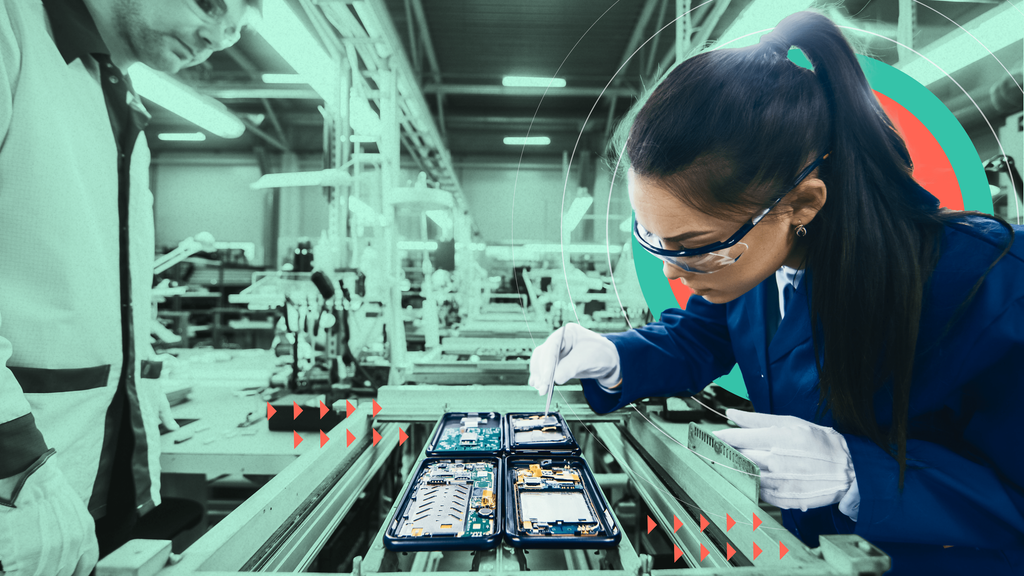
Take the industry I specialize in: electronics manufacturing services, or EMS. Over the last four or five decades, many OEMs (original equipment manufacturers) have shifted their production from an in-house activity to something they outsource. The reasons are relatively simple:
- Outsourcing shifts the fixed costs of a manufacturing ecosystem to a variable cost per product, allowing greater flexibility as demand ebbs and flows.
- It provides economies of scale, as the EMS companies have grown and become ultra-efficient.
- It allows the OEM, or brand, to focus on product development and marketing, knowing their whole manufacturing supply chain is in good hands.
THE CASE FOR A RISING TIDE
The global market for EMS is around $750 billion and most companies, particularly those in the top 50, obsess about their share of that market. That $750 billion is what we currently consider to be the TAM for the EMS industry.
But the truth is that this number is barely half the TAM. Recently published research suggests that in Europe, outsourcing is currently around 41% of the total electronics manufacturing capacity. Put simply, that means around 59% of capacity is still manufactured in-house. In the US and Asia, the numbers might be a little higher, but I think it’s reasonable to suggest that the penetration of outsourcing is still only around 50% globally.
If we take the traditional strategy of competitive marketing—which, let’s face it, is hard in a ‘me too’ market—we have to be pretty aggressive to win additional market share from our competitors. And I mean aggressive in pricing as well as how we sell our version of the service offering.
However, if we add an element of the ‘rising tide’ to our strategy, we have the potential to bring more brands to the table, driving more business for the industry as a whole and perhaps even achieving greater value.
AND THAT’S NOT ALL
What’s more, the industry has even more potential for growth as we shift business models from ‘build to print’ to something much more akin to a technology product partnership where value is added throughout the product life cycle. If the industry is able to convince brands that the best solution is to work with a technology product partner who takes care of a product design for manufacturing and supply chain, as well as every subsequent aspect of the product life cycle, up to including end of life, then it will have a much larger share of the product value than it currently has. Hence, another incremental step in capturing more of the value of the TAM.
I don’t think it’s unreasonable to say that this rising tides approach could double the TAM in the next two decades, all on top of the growth expected as more products become technology products. Smarter products need smarter manufacturing solutions!
SO, HOW DO WE RAISE THE TIDE?
In the case of the EMS industry, the way to raise the tide is simple: shifting a little focus from competitive marketing to cooperative marketing, and investing time and money in promoting the value of the solution over the relative value of a specific company.
The argument for outsourcing this work is absolutely compelling and the more brands outsource, the better off they are. These last few years of extreme disruption have shown that these technology powerhouses are the best placed to weather storms, be they trade wars, pandemics, or supply chain shortages.
The EMS industry is hyper-efficient, produces amazing quality, and can take a product from ideation to mass production in every market in the world at breakneck speed. I’ve worked in this industry for most of the industry’s lifespan, and I am in constant awe of what these diligent companies can do and how successful the brands that embrace these partnerships can be.
If everyone sings from the same song sheet, I really believe that every single company can benefit.
Philip Stoten spent his entire career in electronics manufacturing and supply chain. He is founding partner of SCOOP.