

In 2017, three childhood friends from Chechnya—an orthodontist, a software engineer, and a lawyer—came together with an ambitious business plan: to bring affordable 3-D printing to the orthodontics market. They launched a startup, 3DMed, with the goal of using 3-D printers to streamline the in-house design and production of braces and dental aligners, significantly lowering prices for both doctors and patients.
The cost of braces and aligners can vary dramatically depending on factors such as geographic location, provider, and style, but in the United States, they can easily fall in the $5,000 and $9,000 range. In many parts of the world, accessible and affordable oral healthcare, especially in specialty areas such as orthodontics, remains a privilege. Approximately 2.4 billion people around the world have little to no access to oral health treatment and care, according to data from FDI World Dental Federation.
While 3DMed made advancements in technological and software development, the team ultimately ran into insurmountable challenges and shut the company’s doors in 2018. But what at first seemed like a failure ended up becoming a new opportunity. One of 3DMed’s main obstacles was not having the right software capabilities to meet doctors’ needs—so its leaders decided to develop a comprehensive software solution with a new company, SoftSmile, which launched in 2020.
SoftSmile’s flagship product, VISION, is an AI-powered digital treatment planning software that gives doctors full control over creating treatment strategies and designing and producing aligners, cutting out middlemen to reduce costs without sacrificing quality.
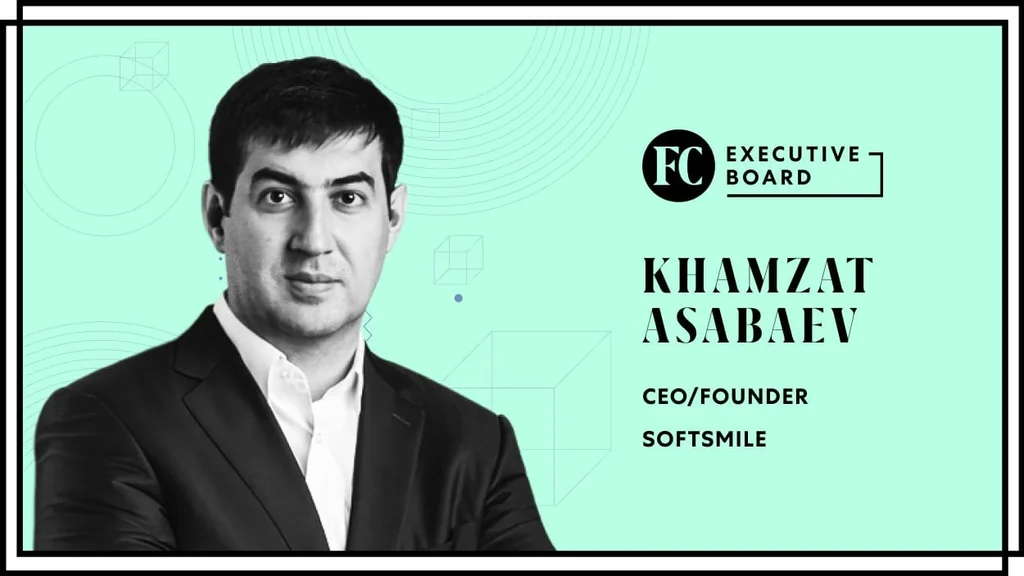
“Typically, if you go to an orthodontist and you want to align your teeth, the doctor will take scans and send them to an aligner producer,” said Khamzat Asabaev, 3DMed cofounder and SoftSmile founder and CEO. “Patients think that it’s the doctor who prepares digital treatment plans, but it’s actually technicians without any medical education who do this and send them back to the doctor. Then there is constant iteration to finalize the treatment plans. The doctor has to negotiate with the aligner producers to make changes—they can’t do it themselves.”
With SoftSmile’s software, doctors can upload patient scans and generate treatment plans that they can adjust or approve directly, without any back-and-forth communication with technicians. Many of the previously manual procedures are prepared automatically by AI, which is overseen by human technicians.
“This AI is self-learning, and it gets more accurate with more data,” said Asabaev. “As AI plays a bigger role in treatment planning, it decreases time and cost requirements, while enhancing quality. What we do is more precise and more efficient than any other solution on the market. We work with doctors who say that with our technology, they don’t need to have patients come into the office for repeat visits to correct their treatments.”
SoftSmile has existing partnerships with aligner manufacturers in the United States and Europe, and it plans to launch its own production services in 2024. Doctors who use VISION have full ownership of their treatment plans and can work with any manufacturer they choose.
“We look at SoftSmile as a utility, similar to electricity; 150 years ago, only big industrialists could get electricity to run their businesses,” said Asabaev. “Today, in this market, you only have three or four large players who have this utility and can make aligners. We aim to deliver this utility to each and every doctor in the world. We want any doctor to be able to get into the SoftSmile portal, get access to this technology, and start making aligners right away, without worrying about the prices. Our clients may eventually just pay us for the digital planner and then manufacture everything in-house, which will be even cheaper for them.”
Looking back on his entrepreneurial journey, Asabaev said he learned valuable lessons from his first startup that he applied to build SoftSmile. The most important takeaway? The customer isn’t always right.
“There’s that famous quote attributed to Henry Ford: ‘If I had asked people what they wanted, they would have said faster horses,’” he said. “In my first company, I regret letting some customers push an old-school agenda and tell our team what to do. Fortunately, we got back on track and created something new in the market. I believe that in startups, you always have to get some feedback from customers, but you should never sacrifice your own unique ideas or the spirit of the company. We are not mimicking someone else. We are building something new. And because of this approach, I believe we are successful.”