

In 2011, the world prematurely bid farewell to Steve Jobs, a visionary who inspired the tech industry and set the benchmark for new product launches and brand building. Even after his time, Jobs’ legacy lives through the next generation of Apple leaders who are innovating and building on his foundational values and vision. I sometimes wonder what he would think about his business and how this second generation is running it.
Beyond operational styles and product strategies, I am intrigued about how companies can build a continuum of the vision and passion of the founding team across generations. I am told that generational businesses are rare to come by in this decade. Often, businesses struggle with succession.
GE is a classic example of such a struggle, specifically the Jack Welch to Jeff Immelt transition. Until the last decade, GE, a centenary company, was renowned for leadership development and pioneering management principles that others adopted. Under Welch, GE transitioned from manufacturing to services, gaining global admiration. However, Immelt, coming in just before 9/11, faced a different business landscape. Immelt’s era saw GE divesting many operations, marking a period of reinvention amid a digital evolution, and rising competition from smaller, agile companies.
GE is a company that I have loved deeply and in fact, consider to be my business role model. It has produced phenomenal leaders with high integrity. GE’s journey encapsulates the intricacies and challenges in succession planning in generational companies, highlighting the need for foresight and adaptability to ensure sustained success.
However, I must acknowledge that it is often hard to predict from outside the company why a succession fails or succeeds. Various cultures around the world underscore the challenges of passing down leadership through generations with interesting adages. Whether it’s the saying “Shirtsleeves to shirtsleeves in three generations” in the U.S. or “From the stable to the stars and back again” in Italy, the core message remains the same—the path of keeping a legacy alive is a tricky one.
Japanese and Korean generational companies have seen trends and transitions with relatively higher degrees of success by often blending traditional values with modern leadership styles. Japanese firms, in particular, face the task of melding their time-honored management styles with the requirements of a rapidly evolving global market. In South Korea, I gather, a subtle shift in corporate culture is unfolding, veering towards a softer touch, which might be indicative of a broader shift in leadership styles and approaches towards generational transitions.
When I think of my own company and observe these developments across the globe, I can’t help but ask myself what it is that we, the founding team, must seek in our next generation of leaders. The primary challenge for every founder and their leadership team is transitioning from an owner-operated to an operator-owned business. What does this shift involve?
- Purpose Formalization: The journey starts with embedding the founder’s vision and values into the organizational culture. Often, only people with access to the founder or who have been a part of his/her journey, are aware of the original vision and mission. For many, it could be shades of grey. A founder must make time to articulate the purpose to all corners of the organization and ensure its right comprehension, perhaps reflected in measured behavioral management.
- Leadership Cultivation: If the aim is for a company to prosper over many generations, then its success largely depends on its ability to consistently develop leaders suited for each stage of its growth and the evolving needs of future generations. Continuous learning is the cornerstone of internal leadership development, ensuring that emerging leaders are equipped with the adaptability and knowledge necessary to navigate the company’s future challenges.
- Operational Autonomy: The founders need to let go of the idea that they are the only ones who can make things work. Instead, they should provide their team the power to make their own choices. This kind of freedom, along with being responsible for their actions, creates agency and a sense of ownership.
- Incentivizing Long-Term Success: It’s extremely crucial to have structures in place that incentivize leaders to think about the long-term, and also make it really worthwhile for them to play the long game. You can do this by offering things like shares in the company, sharing profits, or other rewards that last a long time.
- Resilience And Innovation: One key difference between an operator and an entrepreneur lies in the entrepreneur’s inherent “never say die” attitude and the unshakeable belief that the best is yet to come. This resilience and adaptability, which are at the heart of entrepreneurial success, must be cultivated in managers and leaders. Celebrating failures is a key intervention here. Also, in the right culture, new ideas aren’t just accepted; they’re eagerly sought out and more importantly, rigorously thrashed out.
- Succession Planning: This also involves making tough decisions, like letting go of individuals who might not be the right fit for leadership roles, as their presence could risk the company’s stability. Additionally, it’s about recognizing and encouraging team members who have outgrown their current roles and could find greater success in leading roles elsewhere. It’s essential not to hold them back, but rather to support their growth, even if it’s outside the company.
In the grand scheme, neither the operator nor the founder takes anything along with them to the grave. I am convinced that the essence of building a generational company lies in every management team cherishing the business as their own, embodying the spirit of foundership. They should feel that the company is their brainchild, not a distant entity owned by someone else. It’s their baby. I strongly believe that even if just 1% of the total population (i.e., senior leaders) embody and act upon this ethos, the company will ascend to greatness and transition seamlessly to the next generation. Perhaps seeking these values and emotions in the top 1%, or ensuring such individuals constitute the top tier, is the key to organizational longevity.
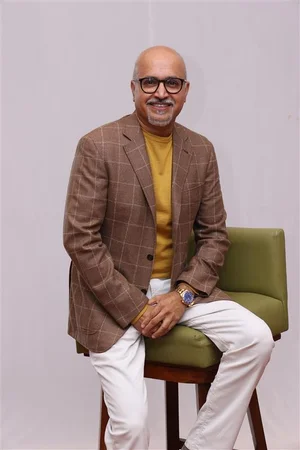
Ajit Prabhu is the founder and CEO of Quest Global.