
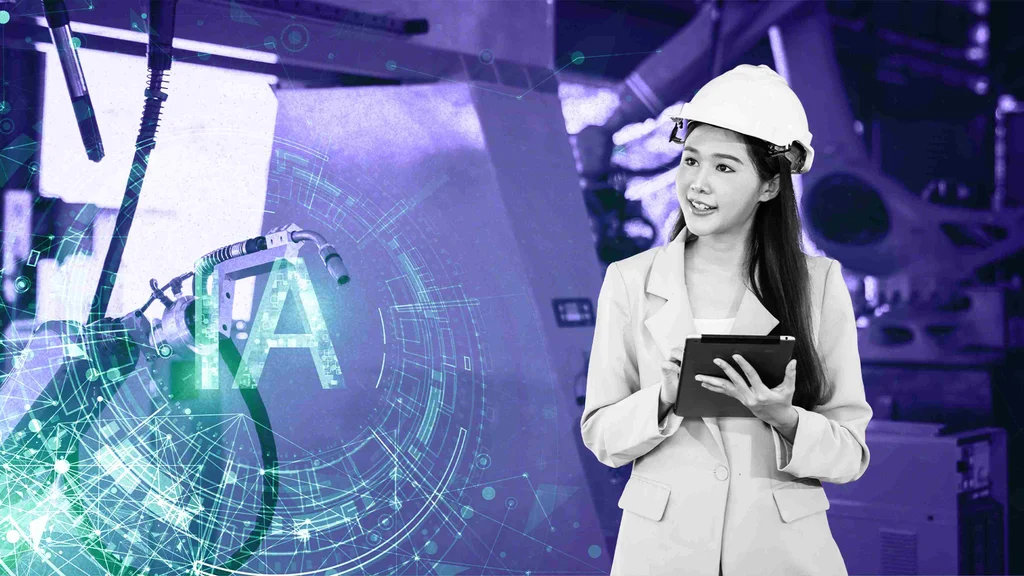

Even though it’s been around for years, AI is at an inflection point, especially when applied to manufacturing. With natural language processing applications like ChatGPT, new possibilities are within reach, including application-specific technology to streamline communications between manufacturers and customers. In fact, in Fictiv’s “State of Manufacturing Report,” 97% of manufacturing leaders say they expect AI to impact product development, and 85% have already adopted or plan to adopt AI solutions.
Keep reading for what I believe are some key ways manufacturing can leverage AI, including improving customer outcomes, increasing supply chain visibility, and optimizing workflows.
IMPROVING CUSTOMER OUTCOMES
Manufacturers already use AI for everything from quality control and inspections to 3D printing, but leveraging AI to improve customer outcomes shows immense promise. Take chatbots, for example. Rich language modeling continues to evolve by enabling more contextual questions, redirecting common customer questions to automated systems, and communicating product developments and improvements as they happen.
Say your customer runs into a shipping issue. They report the problem using a help desk chatbot interface and are asked a series of specific, relevant questions followed by instructions that resolve the issue. Still, another customer runs into a software bug. They contact the help chatbot, which flags an engineering issue and escalates it to the right team. A solution is identified and communicated to the customer, resulting in stronger customer satisfaction.
Customer expectations keep rising and demand for relevant, personalized experiences has reached critical mass. Leveraging AI to deliver the right message at the right time is more critical than ever.
INCREASING SUPPLY CHAIN VISIBILITY
I’ve seen AI help strengthen supply chains firsthand. Aggregating historical, as well as real-time, data can flag issues before they become disruptions. AI can also analyze seemingly disconnected factors like geopolitical events, weather patterns, economic volatility, or supplier performance to predict risk and give early warnings to help mitigate these risks.
AI-driven systems can also provide end-to-end visibility into the supply chain by integrating and analyzing data from multiple sources. This transparency allows companies to identify bottlenecks, inefficiencies, and potential risks across the supply chain. With a clear understanding of the entire ecosystem, organizations can make informed decisions that enhance overall resilience.
OPTIMIZING WORKFLOWS
AI also optimizes complex manufacturing processes by continuously analyzing data from intelligent sensors and equipment. By dynamically adjusting production schedules in response to changing demand and resource availability, AI helps manufacturers achieve more efficient use of resources and minimize lead times.
It’s also clear that boosting workforce productivity and closing skills gaps are critical challenges facing manufacturers today. AI optimizes workflows by analyzing historical data and other variables to optimize planning and scheduling, maintenance, resource availability, and more. Still, without an optimal workforce, it’s difficult to realize these benefits. One solution? Upskilling current workers to fill those gaps, rather than grapple with talent shortages.
I believe collaborative robots might be another solution. They can become integral to our factory floors, working seamlessly alongside human operators, optimizing workflows, and enhancing overall productivity. In partnership with human workers, these AI-powered robots can adapt to changes in the production environment and handle intricate tasks with precision.
KEY TAKEAWAYS
AI certainly isn’t a magic bullet, but its ability to analyze and synthesize vast amounts of data, make predictions, and automate decision-making processes is revolutionizing manufacturing. By leveraging AI, manufacturers can achieve greater efficiency, reduce costs, improve product quality, and stay competitive in an increasingly dynamic and demanding industry.
Dave Evans is Co-Founder and CEO of Fictiv, the operating system for custom manufacturing. Stanford MechE. Ford Alum. Forbes 30 Under 30.