

At first glance, experiential marketing doesn’t seem to have much in common with quantum computing. But Momentum Worldwide, a global experiential agency within Interpublic Group of Companies, is exploring how to use quantum computing technology to solve practical business challenges.
Last year, Momentum launched a pilot project alongside quantum computing company D-Wave to optimize experiential marketing tours and events. Quantum computing is a multidisciplinary field, incorporating aspects of physics, mathematics, and computer science, that uses principles of quantum mechanics to tackle complex problems that classical computing can’t efficiently solve.
Traditional computers process information using bits, which can exist in one of two states: one or zero. Quantum computers use qubits, which can exist simultaneously in multiple states—any combination of one and zero. In problems with multiple variables, classical computers have to conduct a new calculation for each variable change. Quantum computers, however, can investigate many variables at once.
If this sounds complicated, that’s because it is. And it also has enormous potential in diverse business domains.
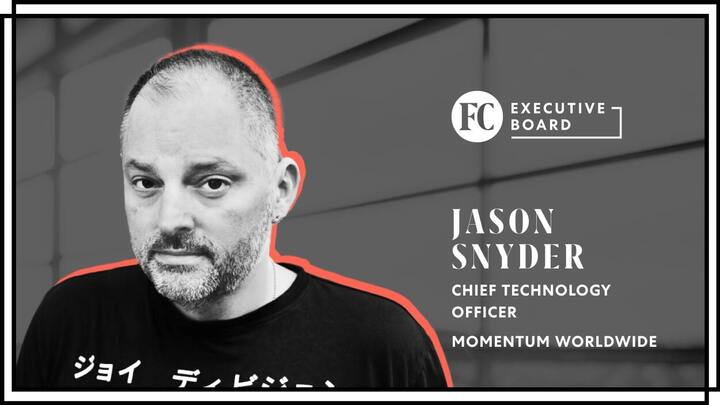
“Quantum computing represents a transformative leap in technology,” said Jason Snyder, global chief technology officer at Momentum Worldwide. “This advancement is not just theoretical; it’s applicable and valuable in real-world business scenarios in various sectors. For the marketing industry, it marks significant progress toward more sophisticated, efficient, and eco-friendly operational models.”
Momentum produces large-scale experiential marketing and promotional tours for brands including Coca-Cola, Verizon, Walmart, and William Grant & Sons. The agency’s objectives were to optimize the efficiency of time- and resource-intensive tasks while minimizing the environmental impact and improving workers’ quality of life.
“We oversee over 1,000 activations in Walmarts across the United States every year,” said Snyder. “From a logistics standpoint, so many elements go into making these events successful. We must pack, ship, unpack, and fabricate everything for each experience. And Walmart itself has a discrete set of business requirements. Maybe you need to find a Walmart with a certain number of parking spaces or a certain distance from a Sam’s Club or a movie theater. If you have to do this in three or four places, it’s not that big of a deal. But we must do it at 1,000 places, and it becomes a huge, complex deal.”
In the past, Momentum had to gather teams from experiential marketing, design, strategy, creative technology, and business leadership to try to figure out the logistical plans that were most optimal for their business, the client, and the environment—a time-consuming and imperfect process. Momentum’s teams set out to answer several critical questions with its pilot project: Is quantum computing theoretical and experimental, or can we use it for our business? Is it realistically scalable? How can we best utilize it for our clients?
“We were able to take all of these overlapping factors and translate them into a mathematical model that the quantum computer can understand,” said Snyder. “We used quantum annealing, a kind of quantum computing, to quickly leverage and harness the power of quantum to solve business problems efficiently. We’ve seen remarkable progress, with the prototype solution solving complex problems in under an hour.”
Snyder said that when Momentum started the pilot, he assumed that team members who already develop and deploy complex technologies—such as engineers, integrated producers, and creative technologists—would be most excited about quantum computing’s promise. However, leaders from the experiential production teams were most eager to adopt the new solution.
“The people responsible for putting all the trucks on the road, finding the drivers, loading and unloading, moving things in and out of warehouses immediately recognized the power of having this kind of tool,” said Snyder. “They saw it could enable them to be far more efficient, have a better quality of life, and create a better experience for our clients.”
Momentum’s next step is scaling the pilot into a complete production-quality application, expanding it to other business areas inside the company’s proprietary unified experience platform—a suite of utilities and technologies offering an AI-enabled holistic solution for experiential marketing activation, commerce, and sponsorship.
“There’s so much potential in quantum computing,” said Snyder. “It’s offering unparalleled opportunities for innovation in a way that’s rarely seen with the introduction of new technologies. This is a change of an order of magnitude in what we’re capable of, not just in marketing but in any industry. I think people are hesitant to invest to embrace these new technologies. But by being fearless in our approach and jumping right in, we can take what’s theoretical and esoteric to most people and find valuable applications in the real world.”