

In the intersection of health care and technology, the last few years stand as a landmark for surgical innovation. This landscape is being reshaped not by one but by a suite of advanced technologies, each contributing to a profound transformation in the way patients are treated.
These innovations—ranging from robotic-assisted surgery and artificial intelligence (AI) to 3D printing, wearable technology, telemedicine, and extended reality solutions—have collectively reinvented patient care. Together, they are redefining the very paradigms of the operating room, making surgeries safer and outcomes more predictable.
This confluence of technology promises a future where the integration of advancements will continue to elevate the standards of surgical care, expanding the limits of medical possibilities.
ROBOTIC-ASSISTED SURGERY
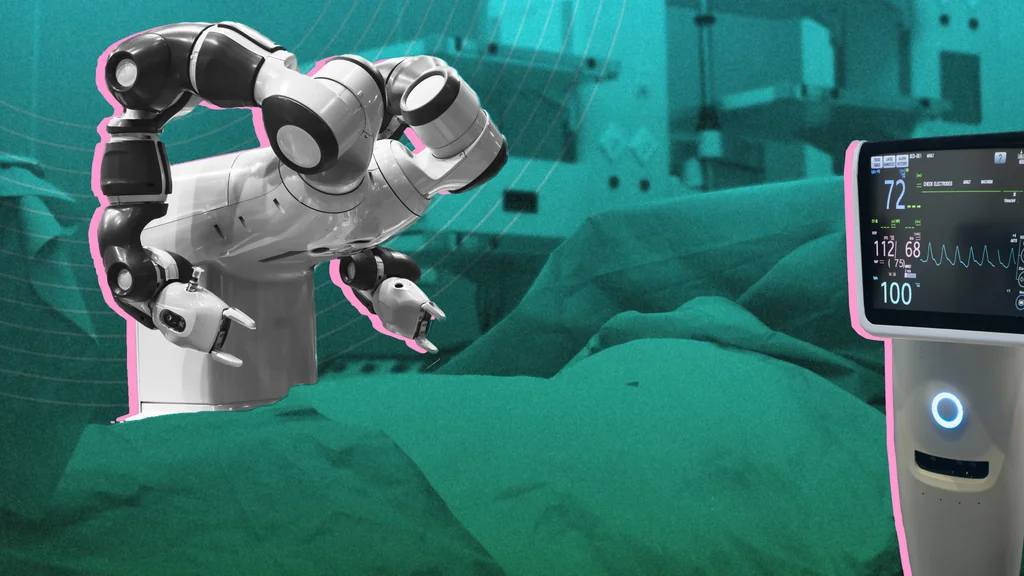
Robotic-assisted surgery has taken center stage in modern surgical procedures, providing surgeons with the ability to perform complex operations in an increasingly minimally invasive environment, thereby significantly reducing recovery times for patients.
This technology leverages specialized robotic arms equipped with small instruments and a high-definition 3D camera, all controlled by the surgeon sitting at a nearby console, providing greater accuracy and flexibility in confined spaces. Patients often experience less pain, lowered risk of infection, reduced blood loss, and reduced hospital stays. Additionally, the use of smaller incisions leads to minimal scarring.
ARTIFICIAL INTELLIGENCE AND MACHINE LEARNING
AI and machine learning (ML) are marking a significant shift toward more efficient, precise, and personalized medical interventions. By employing the power of AI and ML, medical professionals can streamline the diagnostic process, making it faster and more accurate. This aids in the early detection of conditions and plays a critical role in planning surgeries with a level of accuracy previously unavailable.
The ability of AI to sift through and analyze extensive datasets also enhances surgical planning, utilizing patterns and insights from a comprehensive history of outcomes and patient data. This approach helps improve patient care and advances the field of surgery through continuous learning and adaptation.
The integration of AI and ML with robotic surgical systems introduces a dynamic aspect to real-time decision-making. These technologies assist in adjusting surgical techniques during procedures, improving the response of robotic systems to the intricate variations of human anatomy with precision. This collaboration between human expertise and machine intelligence opens new possibilities for surgical interventions, potentially improving outcomes through the adaptability and learning capabilities of AI and ML.
3D PRINTING
The role of 3D printing in surgery has been equally transformative, enabling the creation of customized implants and models that match the specific anatomical requirements of each individual patient. This leap toward personalized medicine creates the building blocks to help ensure surgeries are not just successful but also significantly safer and more compatible with individual patient profiles.
3D-printed surgical aids and implants introduce a new dimension of customization in patient care, connecting the disparity between standard medical solutions and individual patient needs. This technology supports surgeons in executing more precise and less invasive procedures and shortens recovery times, as the custom-fit tools are designed to complement the body’s natural structure.
As 3D printing technology continues to advance, its application in creating biocompatible materials welcomes possibilities for even more complex and innovative treatments, signaling a future where each surgical solution is as unique as the individual receiving it.
WEARABLE TECHNOLOGY
Wearable technology marks another groundbreaking advancement, enhancing surgical performance by monitoring the ergonomics of surgeons during operations and providing invaluable health data from patients before and after their procedure. This dual application not only helps improve outcomes but also contributes to a more comprehensive understanding of an individual’s health over time.
TELEMEDICINE AND REMOTE SURGERY TECH
Telemedicine and remote surgery technologies are yet another area expanding the boundaries of what’s now possible in-patient care, bringing expert consultations and even direct surgical interventions to remote communities. This democratization of health care services is a step forward in making high-quality health care accessible to all, regardless of geographic and economic constraints.
EXTENDED REALITY
As providers of extended reality (XR) solutions, we understand the transformative power of immersive experiences in surgery. XR technologies—consisting of virtual, augmented, and mixed realities—elevate the surgical experience by creating 3D interactive visualizations of the patient’s anatomy. This enhances operating room precision and deepens patient engagement by providing a vivid understanding of their medical conditions and the planned interventions.
XR aids in pre-operative planning and real-time guidance during surgeries, offering a more detailed view of the patient’s anatomy. This technology promises to improve surgical precision and alleviate patient anxiety by providing a clearer understanding of their upcoming procedure.
However, XR does have its challenges, with the most prominent being accessibility and the high costs associated with acquiring and maintaining the equipment. There is also a notable learning curve for surgeons and medical staff to become proficient in using XR technologies. The effectiveness of XR in surgery heavily depends on the quality of automated segmentation and processing of medical images, which can be complex and require further development to ensure accuracy and reliability in surgical planning and execution.
TRANSFORMING THE SURGERY LANDSCAPE TODAY
As we look toward the future, it’s clear that the integration of these technologies into everyday clinical practice is no longer an aspiration but a reality. The commitment to embracing this technological convergence will ultimately enhance patient care and surgical outcomes worldwide.
In this journey of continuous innovation and learning, the fusion of human expertise with technological advancements holds the promise of transforming the landscape of surgery, making previously unimaginable levels of precision and patient care achievable.
Alon Zuckerman is the President of Surgical Theater, a global leader in XR visualization for healthcare.