
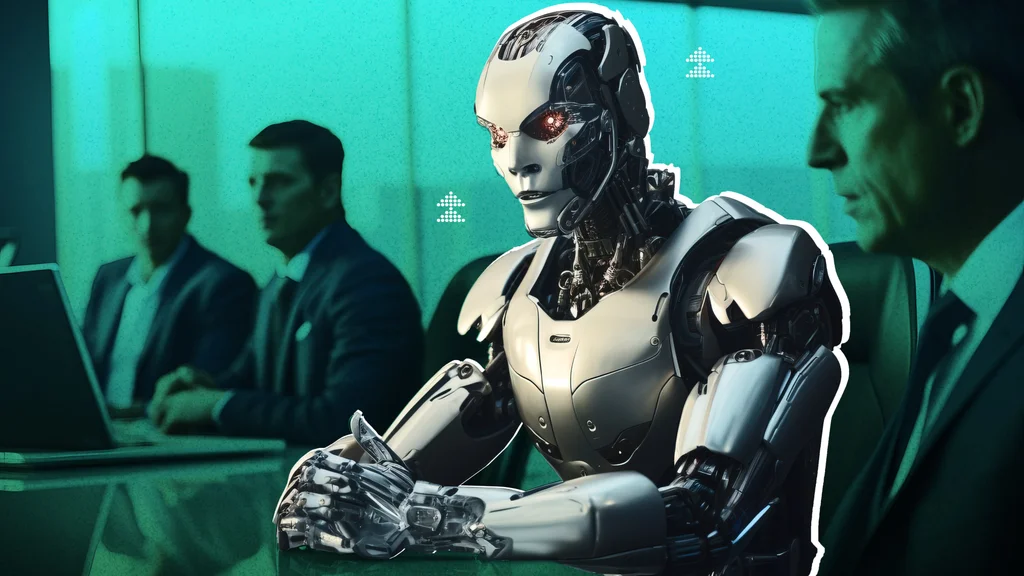
Imagine yourself, in the near future, joining a call to discuss a hiring initiative with four colleagues. Two of them are from strategy and HR. One is a vice president. Another comes from a department with an urgent need for more investment. The discussion is productive, and you schedule a follow-up session.
But this future call is different from those you are often on now in that three of the five participants are not actually there. I do not mean they are present but checked out mentally—the way so many of us are on calls from time to time. In fact, that sort of absence is impossible for them.
They are “digital humans,” AI-empowered representatives who look like your colleagues, speak with their voices, and even have their smiles. They act as stand-ins. They represent the real people, who, thanks to their AI counterparts, can spend their time elsewhere. The VP had to cancel at the last second, but wanted to be represented. The head of legal had to be in court. The head of PR was at a press conference. Thanks to the presence of their digital twins, the meeting goes as it ought to. The conversation is primarily between the two real humans on the call, with contributions from the digital participants that complete the discussion.
Digital humans are not the real thing. They can’t tell you how their real-life counterpart is feeling. They may not excel at brainstorming, but ask one what sort of progress on the latest project her human has logged, and she can answer. She can step in and correct inaccuracies, offering precise data points. She can schedule future meetings for her human and give a full report of what was discussed, with action items. She can provide talking points and presentation drafts.
“Digital humans” is a cumbersome term. I’d rather we call them PDAs—as in, personal digital assistants. Like the old PDAs, the new PDAs are not completely autonomous. But they work for real people, and participate in organizations that require human ingenuity and labor. They supplement that labor and ingenuity, and can make a company work in ways we are only beginning to explore. The arrival of PDAs promises nothing less than a transformation of how we work.
MEET YOUR NEW AI COLLEAGUE: THE FUTURE OF WORK
One of the biggest changes I see with AI organizational transformation is not technology stack and cost-efficiency, but a shift in how we work with one another and unlock knowledge. It will change organizational culture fundamentally.
To many people who will soon interact daily with digital humans, their future colleagues are glorified chatbots. But PDAs are far more than that. I think they will quickly become a form of staff augmentation. They need to be seen as such.
Those in workforce strategy need to co-lead AI transformation initiatives. So far, much of the work on AI has been done in siloed technology teams. People responsible for steering workplace culture, workforce strategy, talent management, learning, and development are on the sidelines, but they should be at the forefront of the AI transformation. They must be the ones pioneering this shift in workplace culture.
HR’S NEW FRONTIER: EMBRACING AI FOR TALENT TRANSFORMATION
People and talent organizations everywhere should prepare for the arrival and increase of digital assistants. We should see these digital colleagues not as a challenge—though they will come with challenges—but as an opportunity.
HR and workforce planning teams need to play a key role in defining what is to come and in determining how AI will be integrated into every organization. Legal issues will arise. Regulations will be put in place. Biases and culture shifts will be strong.
These teams must begin discussing those implications now. They must be ahead of the curve.
RESHAPING WORK: HOW AI REDEFINES ROLES AND RELATIONSHIPS
Soon, our ‘digital twins’ will be able to handle day-to-day tasks, leaving humans to look at the big picture and use soft skills that cannot be emulated. This will affect development of skills in the workplace. People must learn not only to communicate with PDAs, but to make the most of them as coworkers.
The most effective future managers will know how best to work with PDAs. They will be those who make the most of their participation in the workplace and who can stage the best collaborations between technology and people.
The workplace culture will shift. It is up to all of us to help determine in which direction and how far it will go. How will we introduce human employees to this change? How do we address worries people have about AI transformation? What is the best way to introduce a worker to their digital counterpart? How can we ensure they hit it off?
These questions sound almost ironic. They are the stuff of high-concept science fiction, but they are our reality. We will be expected to have answers for them soon.
LEADING THE CHARGE: HR’S ROLE IN THE AI REVOLUTION
If you are in strategy and planning, HR, people and talent, or another corporate function, then take a seat at the table. Establish contact with technology teams who are often building these solutions in silos. Cross-functional governance and strong participation from HR are essential to a successful AI transformation because, while much is made of human-machine interaction and how it defines the modern workplace, that is not what we are discussing here.
We must think of this less as human-machine interfacing and more as human-human interaction. It won’t be long before people won’t know the difference between a digital human and a real person.
Imagine meeting with me to discuss how to best drive AI workforce transformation. Imagine not knowing if the person you talk to is the real Alex or his PDA. Maybe I want to let him handle our first chat before I interface with you directly. Let’s think seriously now about what we want our organizations to look like when this sort of thing is commonplace.