

A teacher cries after being screamed at by a parent who doesn’t approve of the homework assignment. A customer berates a teenage barista for getting an incredibly complicated coffee order wrong. A driver pulls out in front of my car—and then flips me off while driving away.
Welcome to my Tuesday morning.
When I finally got to the office, I sat for a moment bewildered as I asked myself, “Why is everyone so angry?”
And then I remembered.
“Oh yeah. It’s an election year.”
HOW IS FEAR USED IN POLITICS, AND HOW DOES IT AFFECT US?
Elections are divisive by nature. Each person must make a choice as to the candidate they will support, saying “yes” to one and “no” to the others. The job of a candidate’s campaign is to push people into making that choice.
The easiest and generally most effective way for a campaign to get a voter to choose their candidate is to stoke their most primitive emotion: fear. Campaigns work relentlessly to convince voters that they will be harmed if another candidate wins. Fear spurs people to action like few other emotions can. It also typically induces anger at the threat that causes it—the enemy.
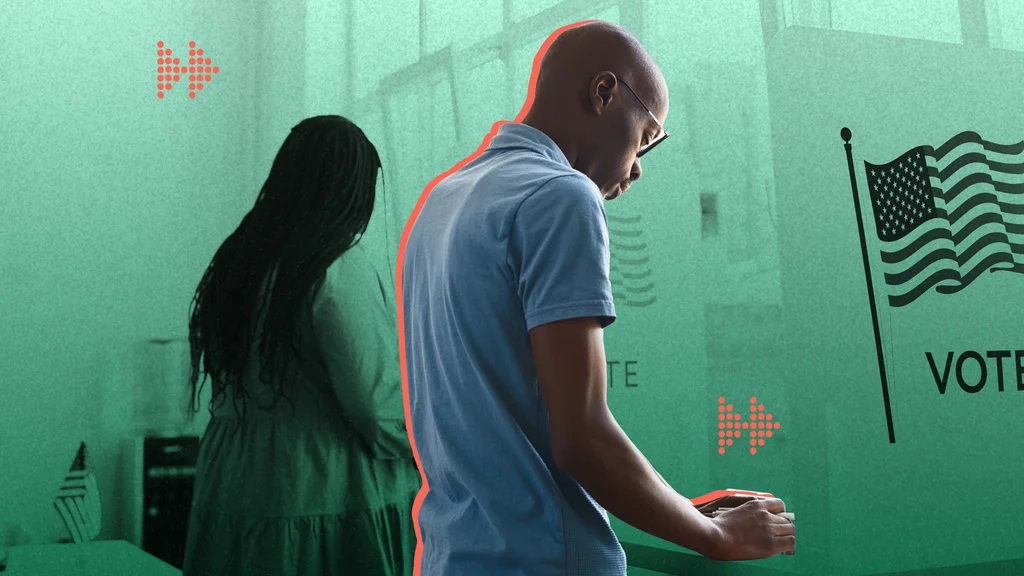
In the United States, nearly all the messaging we will consume around the election this year will be intentionally designed to feed our fear, and if we’re not careful, it will make us angry. Angry at the other side—those “others” who are trying to hurt us and our families. Angry at the opposing candidates. And even angry at those who support them.
Supporters on both sides will be mobilized for battle, ready to put signs in yards, knock on doors, rally, and protest. Added to the mix this year is what seems to be a larger-than-normal proportion of voters who are disillusioned with both sides. They are angry that we are left with the choices we have.
Try as we might, we cannot separate how we perform at work from what is happening outside of work. When we suffer a personal tragedy, those emotions show up with us in our jobs. When we have been hurt by someone we love, that experience may shape our ability to trust and communicate. And when we feel threatened by those on the other side of the political aisle, we sometimes project those emotions onto others, like our colleagues.
HOW CAN LEADERS ALLEVIATE PARTISAN ANIMOSITY IN THE WORKPLACE?
What strategies can you deploy to unify divided, fearful, and even angry people into a cohesive team? How can you keep the collective emotion from spilling into the way you treat those you work with, including your customers? And how can you unite your team when everything around you this year is designed to do just the opposite?
To survive in the highly competitive, quickly evolving market we are in today, leaders need focused teams with great communication that is based on a high degree of mutual respect and trust. Creating high-performing teams is always challenging but will be especially difficult in the divisive atmosphere coming our way this year.
THREE WAYS TO GET IN FRONT OF ISSUES
Here are three ways leaders can get in front of the potential for issues that seek to divide versus unite us:
1. Continually talk about what unites you.
Everyone on your team has chosen to be there because they believe the team can help them accomplish something worthwhile that they can’t do on their own. The fact that they are choosing to work alongside their teammates each day demonstrates that they need each other.
Effective leaders talk about shared mission, vision, and values in ways that build camaraderie and make everyone aware of their commonalities. This year, more than ever, emphasize the shared purpose that binds your team together and reflect on the things you have accomplished together. As a leader, help people remember that whatever the noise is “out there,” there are only allies “in here.”
2. Actively demonstrate care.
If you want to attract people who are seeking to escape the anger of the world, you must be sure that their time with you evokes emotions contrary to anger—such as understanding, care, and compassion. Be intentional and take time to demonstrate care for your team members this year. That doesn’t mean merely asking “How are you?” at the coffee maker in the morning. It means committing to active listening and looking for ways to create moments that demonstrate you see them and are there for them.
3. Give a reason to believe.
Campaigns will go to great lengths to communicate the devastation that will occur if the “wrong” candidates win. You have a tremendous opportunity to counteract this doom and gloom by reinforcing the positive things that lie ahead for your business, team, and yourself personally. But being optimistic isn’t enough. You must articulate what is coming and back that positive vision up with proof points that can be clearly seen to give your people reasons to believe.
AN OPPORTUNITY TO BE THE ANTITHESIS
In a year when we will all be feeling the stress of division and fear, businesses have an opportunity to be the antithesis—a place where people can engage in purpose and experience shared success. By creating an atmosphere that is different from the world at large, leaders can not only create a space for people to be their best, but also an environment that’s unique and attractive to others seeking the same.