
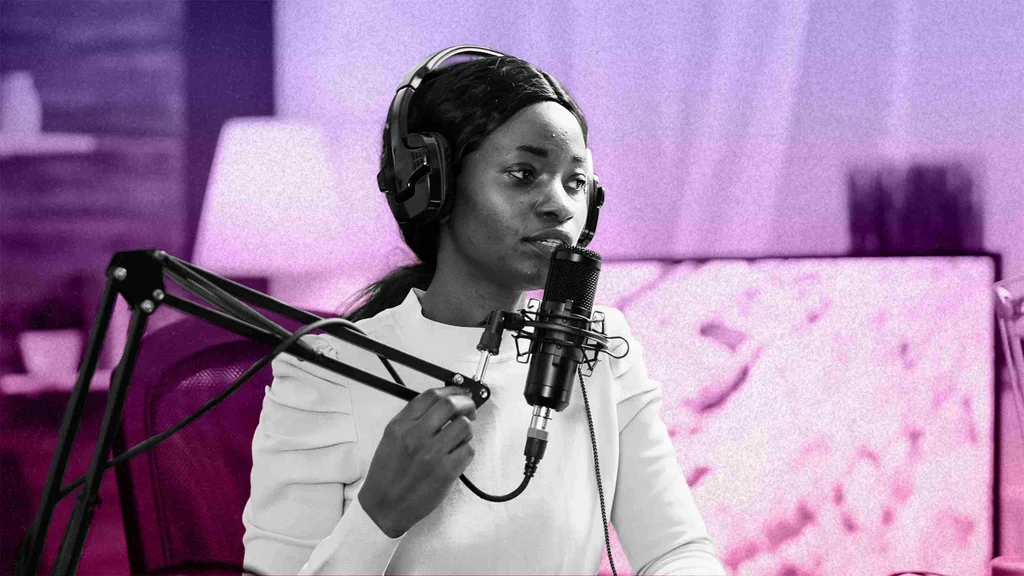
Last fall, I committed to launch a podcast. Why not apply one of the fastest-growing, most affordable mediums to elevate our brand (Mamava, inventor of the lactation pod) and give voice to our mission and values? Our marketing team saw podcasting as an opportunity to make our own news and create some cultural currency around our areas of expertise (inclusive design, parental support, brand strategy, and sustainable entrepreneurship).
Because our business attracts other mission-oriented leaders—early adopter customers, brand collaborators, and activists—we saw our podcast as an opportunity to highlight the amazing people who have come into our sphere, make them the heroes in the narrative of their work, and celebrate (and share!) their spirit and strategies for creating positive change.
Here’s what we learned making our first season:
SOCIALIZE YOUR IDEA
Leading up to our launch, we bounced the idea off friends and friendlies, including one of the OGs of podcasting, Adam Davidson. A frequent reporter for NPR programming and co-founder of Planet Money, Adam’s voice had been in my ears for years. He moved to Vermont during the pandemic and was kind enough to meet with our team to share tips and offer encouragement (Be authentic! Have fun!). He also agreed to be one of our first guests. We had plenty to discuss, including Adam’s book, The Passion Economy, and his work helping people tell stories to grow businesses.
POSITION YOUR PODCAST
We aimed to elevate conversations with folks who are leveraging their gifts to create positive change: entrepreneurial innovators, artists, and leaders of all levels—essentially people who align with our mission. We branded our podcast The Bodacious Optimist, which aligns with a brand value I have written about in the past. We knew we wanted to do a direct-to-audio interview-style podcast as opposed to a highly produced podcast like This American Life, which is far more expensive.
DEFINE YOUR GOALS
We weren’t intending to make money or go viral; our podcast goals centered around the process and elevating ideas. Think of them as the four Cs of podcasting:
1. Connections: Podcasting fosters and promotes connections and amplifies awareness of your brand through your guest’s networks (and vice versa). It sets everyone up to win.
2. Creativity: Your podcast is an extension of your brand. Name it, design it, and make sure the experience delivers. How do you want your listeners to be changed by what they hear?
3. Content: A podcast creates engaging content. A good interview is a pot of gold for soundbites, social shares, and LinkedIn posts.
4. Cultural Currency: A podcast is your platform for thought leadership and a calling card for opportunities to share your expertise and invite others to do the same.
CONSIDER YOUR PRODUCTION OPTIONS
Given our inexperience and small team, we decided to use a local production studio to deliver the sound quality we desired. In addition to recording and editing, the studio helped us create the theme music, intros, and audiograms to promote the episodes. We are lucky to have great designers who did the branding for our podcast.
For a season of 12 professionally produced interview-style shows, you can expect to pay between $3,000 and $8,000. If you have the time and interest to do your own editing, platforms like Riverside, which allow for remote collaboration, make the medium accessible. A USB microphone (~$100) to pair with your laptop or mobile device helps improve sound quality. Platforms like Spotify offer free tools for all aspects of production.
SET UP A SYSTEM FOR SUCCESS
Because we outsourced production and are seasoned content strategists, the heaviest lift for our team was project management. For each guest, you will need to plan for the following:
- Recruit and outreach: Who would you love to talk with?
- Prep call: Plan a half hour and keep it loose so the actual interview doesn’t feel repetitive.
- Draft script: Capture themes, but be willing to go where the conversation takes you.
- Schedule recording: This can be a bear between the guest, the studio, and your calendar; a scheduling tool like Calendly helps.
- Recording: We booked an hour, recorded for about 45 minutes, and edited to 30 minutes.
- Edit drafts: We spent about an hour per draft (times two).
- Publish and promote: Our production team set us up on Transistor.fm and we shared out on a dedicated webpage, LinkedIn, and sometimes Instagram. We made it easy for guests to share by offering assets and tagging them in posts.
Based on the goals we set and the outcomes we’ve achieved, we’ve decided to re-up The Bodacious Optimist for a second season. Most importantly, we tackled something new and had fun doing it. A pod for the pods has been a win-win.