
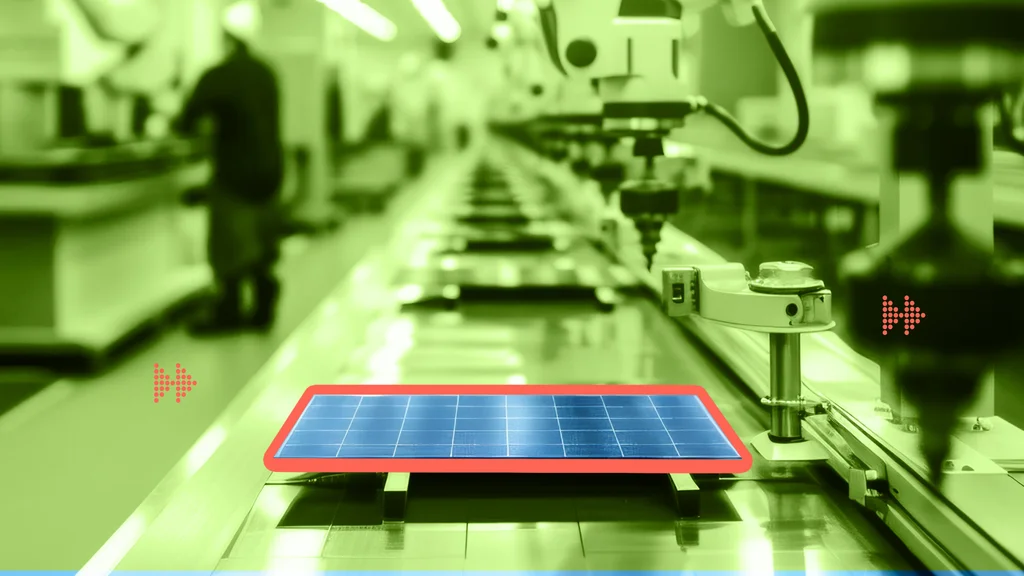

A significant resurgence is taking place in the U.S. manufacturing industry—one that the country has not seen in decades.
This is due in part to recent federal legislation encouraging the manufacturing renaissance that started during the pandemic. Incentives are available through the Inflation Reduction Act (IRA), the Creating Helpful Incentives to Produce Semiconductors (CHIPS) and Science Act, and the Infrastructure Investment and Jobs Act (IIJA), providing abundant opportunities for the sector.
As a result, manufacturers today are eager to embrace technology that can help them pinpoint projects that qualify for legislative tax credits and incentives, such as a 30% tax credit for clean energy projects if they meet prevailing wage and apprenticeship criteria.
The Institute for Supply Management (ISM) recently reported that U.S. manufacturing exceeded expectations in March 2024, reaching its fastest growth rate since September 2022. Timothy Fiore, chair for ISM said, “Demand was positive, output strengthened, and inputs remained accommodative.”
However, as manufacturing returns to American soil, some of the sector’s business leaders might be leaving thousands, if not millions of dollars, on the table by not taking advantage of these new incentives.
Let’s explore these three pieces of legislation, what they offer to manufacturing industry leaders, and how technology can help manufacturers reap these considerable rewards from each.
1. THE INFLATION REDUCTION ACT (IRA)
To reshape the business landscape, the IRA is offering $500 billion in new spending, tax incentives, grants, and loan guarantees. Under IRA section 48C(e), companies could potentially qualify for an investment tax credit up to 30% for qualified green projects. This includes projects that reduce emissions, capture carbon, or involve green, renewable technologies.
2. CREATING HELPFUL INCENTIVES TO PRODUCE SEMICONDUCTORS (CHIPS) AND SCIENCE ACT
The global pandemic showed how dependent the United States had been on goods produced in other countries. Supply chain snarls, especially in China and Taiwan, put America in a vulnerable position. Consider, for example, how many Americans paid previously unthinkable prices for new and used automobiles or could not purchase a refrigerator because of the microchip shortage, critical to their manufacturing. The government was quick to realize onshoring was necessary, so they wisely enacted legislation to quicken the pace of doing so.
Complementing the IRA, the CHIPS Act will provide $52.7 billion for research, development, manufacturing, and workforce development to support the manufacturing industry. This includes a 25% investment tax credit available for capital expenses for the manufacturing of semiconductors and related equipment in the United States.
3. THE INFRASTRUCTURE INVESTMENT AND JOBS ACT (IIJA)
The IIJA’s $550 billion investment is going toward building and improving the nation’s roads, bridges, water infrastructure, resilience, and internet, among other areas. Its focus is on nurturing the economy, creating more jobs, and making America more competitive.
USING THE RIGHT TECHNOLOGY TO QUALIFY FOR GOVERNMENT BENEFITS
The IRA, for example, helps manufacturers pinpoint projects that qualify for tax credits. Companies investing in eligible advanced energy projects with a focus on clean energy, emission reduction, and critical materials can qualify for a credit of up to 30% if they meet prevailing wage and apprenticeship criteria. Prevailing wage combines hourly wages and fringe benefits to ensure fair compensation.
However, trying to do this with spreadsheets or cobbled-together systems can be problematic, as this sort of recordkeeping often has errors. The right technology effortlessly tags and tracks associated costs related to labor, equipment, and materials.
The right contractor labor-specific technology can drill down and provide wage-rate benchmarking to simplify applying for the IRA’s tax credits. It can also point out the ratio of apprentices used versus more experienced journeymen—eliminating any guesswork. Such software allows manufacturing contractors to input their hourly rate, which management can compare against prevailing wages.
Further, since domestic factory construction has almost doubled in one year, manufacturing leaders will want to scrutinize their capital expenditures (CapEx). This is because a tax credit from the CHIPS Act is available to those companies producing semiconductors and their associated equipment.
The same technology that tracks labor, equipment, and materials uses automation to track CapEx and delivers real-time insights and comprehensive transparency to reduce costs.
KEEPING GOODS AMERICAN-MADE
The IRA also offers a material credit stipulating that manufacturing processes for iron and steel products must occur onshore, excluding metallurgical processes for refining steel additives. It’s important to keep material receipts, including those for iron, steel, and solar panels, to prove products are made in America and audit-ready to prove so. Once again, uploading these receipts into a contractor and spend management platform can help manufacturers comply with IRA requirements and even benefit from other tax credits for using U.S.-made materials.
So why not get tax credits where tax credits are due? Let technology simplify what would otherwise be the complex job of unraveling the nuances of the IIJA, IRA, and CHIPS Act to benefit from their tax credits.
These credits and other incentives are available, which is why manufacturers are increasingly relying on the right technology to track their efforts related to labor, CapEx, American-made materials, and so much more.