
Wherever you are when you read this, whenever you read it, you are likely to be listening to recorded music or to have heard it recently. You were in line at the supermarket, in the car on the way home, or at your desk with headphones on.
You are likely, too, to know one thing about artificial intelligence (AI): it may put many people out of their jobs. Their skills may not be in demand once it’s integrated. They may become obsolete. The newly enlightened machines will perform some tasks faster than people can, and without ever calling in sick. You yourself may soon have to find a new line of work.
Such projections come across like prophecies of an impending apocalypse, as if the onset of AI means the end of the world. But while changes are on the way, we must remember that the end of one thing marks the start of another.
The changes to come will indeed test every organization. Some will fail the test, others will pass—and actions can be taken to ensure you and your business survive. If we study the history of similar changes, and the revolutions they brought on, we can better navigate the sharp turns ahead of us.
As we think of how these changes may play out, we can turn to the history of recorded music. The ebbs and flows of the industry show how many react to innovations that affect them, and how they almost never see the benefits of the new. From the phonograph all the way to AI song generators, innovations are resisted and then absorbed, like waves crashing on a beach in endless succession. These innovations teach lessons that are rarely ever learned as we brace for the next oncoming wave and somehow forget that, while the last one threw us off balance, we are still here.
THE ANXIETY OF RECORDED MUSIC
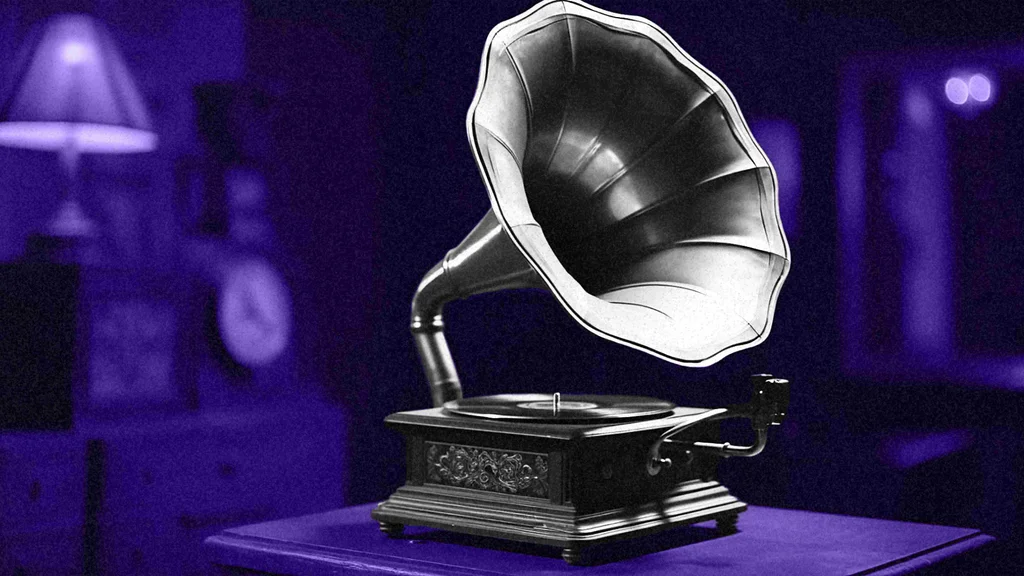
Before Thomas Edison invented the phonograph, in 1877, recorded music was hard to access. If you wanted music, you needed to hear it played live—unless you sang or played it yourself. When the phonograph arrived, music could be recorded, distributed, and played over and over again, ad infinitum, or until the record wore out.
This new thing was met with resistance. Performers worried that the sound of a record playing was their death knell and that no one would need them anymore. But while there is no doubt some truth to that, with the number of people today who can’t sing outnumbering those who can, performers could reach far vaster audiences through recorded music than they could before. Local musicians lost work, surely, but the phonograph meant the birth of the recorded music industry, which went on to employ scores of people over many years.
With the twentieth century came the radio. As this new medium grew in popularity, record producers worried that it would reduce sales, only to learn that it increased them, since listeners wanted to purchase records after hearing them on the radio.
It seems absurd that they would not anticipate that, but the same panic was born again years later, with the founding of Napster. At a time when radio stations played the same few dozen songs on repeat, curious listeners turned to this technology that allowed for the discovery of new things, with free access to songs and albums that otherwise had to be bought on CDs.
The music industry responded in the way that industries tend to respond to innovations they perceive to be disruptive: They ignored it, shamed people for using it, and pushed for strict regulation. Having worked at Napster, I recall well the knee-jerk shaming and the demand for regulation as industry leaders mistook a promising innovation for an existential threat.
Users were sued for downloading songs. Artists sued Napster, demanding their music be removed from the platform. It wasn’t long before Napster shut down and I had to look for another job. But the music innovation didn’t stop; streaming services took the place of Napster. Now we find ourselves in the era of AI song generation, and what is the most recent news? Major record labels are suing the most popular song generators for copyright infringement.
THE CYCLE REPEATS
The song remains the same. Innovation is met with panic, but the benefits outweigh the drawbacks by wide margins. New jobs replace old ones. Industries are democratized, with more people gaining access to both reception and distribution.
Releasing music today is as simple as uploading a new song to Spotify. No one has to be in the right place at the right time, hoping to play a gig within earshot of a scout for a major record label. Making it big isn’t easy, but putting the work out there is.
We can take the lessons history teaches us and adjust our attitude to the latest innovations, like song generation by AI, and many other things AI can do. I have three things in mind:
- Change Will Happen: It’s important to acknowledge that change is inevitable. AI is not a typhoon that will destroy everything, but neither is it a ripple. It is one wave in an endless series. It is better to swim with it than against it, and if you pretend it’s not coming, you’ll be knocked over.
- Stay Informed: Many of the people I’ve met who are against AI have never used it. At least have an informed opinion. Be skeptical, but give ChatGPT a try. It may not convince you, but it will surprise you. It’s the fastest-growing app of all time for a reason.
- Inaction Has A Cost: Resistance is an active pushback; inaction is ignorance. Doing nothing with AI, but letting others use it, is like standing at the starting line after the pistol goes off. Opting out of running the race means even the slowest runners have a great advantage.
Change will happen no matter what. We have two choices: resist change or embrace it. I strongly urge the latter route—I even used AI to produce a song about it.