
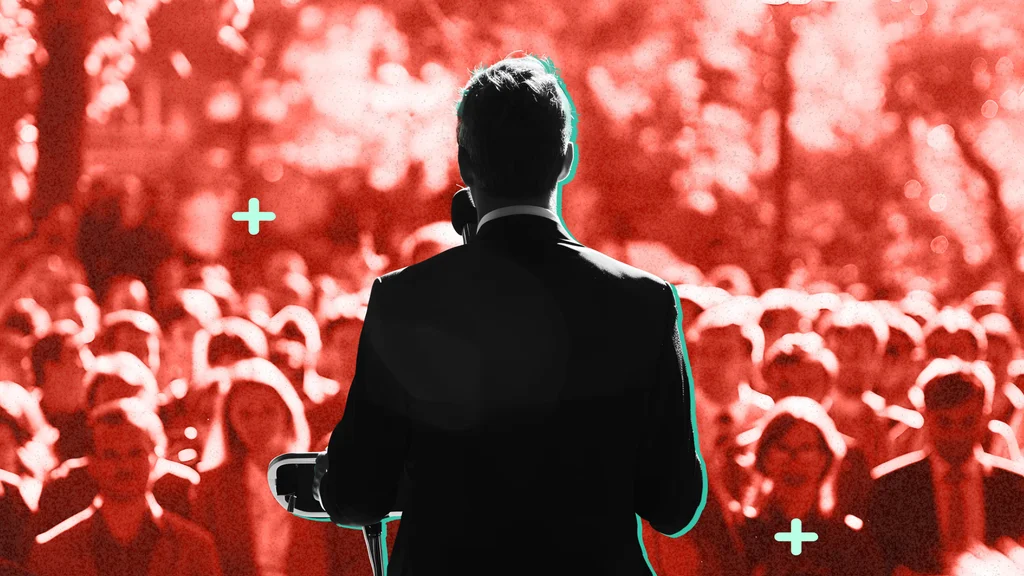
We are living in a lightning rod moment in time. Not only is half of the world going to the polls this year, but in the U.S. and across the world, we are seeing a cultural and political landscape that is evolving if not daily, then on a nearly hourly basis. This puts brands at the center of a critical tension of doing more to deliver positive change in the world, yet walking the tightrope to not go too far and run the risk of a boycott.
Welcome to this new and worrying context. If you are in brand marketing, you are now in the business of politics.
When examining the modern-day collision of brands and politics, we see that politics is now completely integral to the business of brands. New data finds that 8 in 10 people see brands as political. This isn’t just party politics (although they do feature, too) but also the politics that surrounds identity, values, and societal impact. Whether you like it or not, the world of politics can have an impact on your brand marketing decisions, consumers are expecting marketers to step up, and doing nothing isn’t an option as silence itself is a stance.
In previewing the data with CMOs in London, New York, and Cannes, I have learned that there is a gap between what CMOs would love to do and what they fear may happen. Brands use culture as their sandbox and right now, politics has become part of our culture and has changed the shape of that sandbox. Six in 10 people are buying, choosing, or avoiding brands based on their political beliefs. In the conversations with the CMO pilot groups, our insights around the “permission space” and how to navigate being compelling, impactful, and creative without a backlash, stirred the most debate.
The framework to this is that if you look at brands that consistently stand up with meaning, they have a firm handle on what their values are, matched with total clarity on what the audience and stakeholder values are. The space in between these two effective axes is all about the political and social context, which is ever evolving and needs to be understood and constantly reviewed to ensure there is no contextual naivety. This anchors where the brand action can take place, with credibility and relevance to that brand. It takes courage to act, but the courage comes from the clarity of understanding the unique permission space that each brand has.
The other common response from CMOs was the instinct to just “keep their head down.” That’s not an option either though—in the face of political pressure, we see that brands with the permission to stand for something cannot hide—71% of consumers say brands must take a position. When brands say nothing, 1 in 2 assume the worst and this is most acutely felt with Gen Z, with nearly 6 in 10 feeling that the brand has something to hide. Silence is effectively seen as being political.
So, the question isn’t, “How do I stay out of politics,” but, “How do I navigate this new political landscape?”
Shared values are key here for consumers and a protection for the brands. Eighty-four percent of respondents say that they need to share values with a brand in order to buy it, with the most important areas being those closest to our lives: personal health, food and beverage, fashion, finances, and pharma. Again, this increases for Gen Z who are more values-driven in their purchase behavior than any other generation.
Understanding the permission space, having clarity on the stakeholder and brand values, and sharing values with your consumers can all be nailed and yet it can still go wrong. Our rapidly changing world means that the cultural zeitgeist and environment can change in an instant. We talked about ensuring marketing teams map out a landscape of options with issues and crisis experts as part of their brand teams now. Even creative work can be hijacked by a community, so understanding how to react in the moment for optimum response and protection is essential.
Where some of our clients felt particularly challenged was around the data that shows that 61% are less likely to trust a brand that surrenders when under attack versus defending its values. This statistic is true across the world, regardless of political affiliation. In the face of division, the need for values unites us to help us overcome our fears.
Today, to know your audience is to know their politics. This is a fundamentally different approach to brand marketing. But given that 59% say that when given the choice between two identical brands, they would pay more for the brand that does good in the world, there’s still a big reward for brands that navigate this risky space well.
Sitting quietly on the sidelines doesn’t remove risk but rather adds to it. So don’t be paralyzed by politics—know your brand, your audience values, and your permission space. Good business is powered by action and every brand has the opportunity to act.