
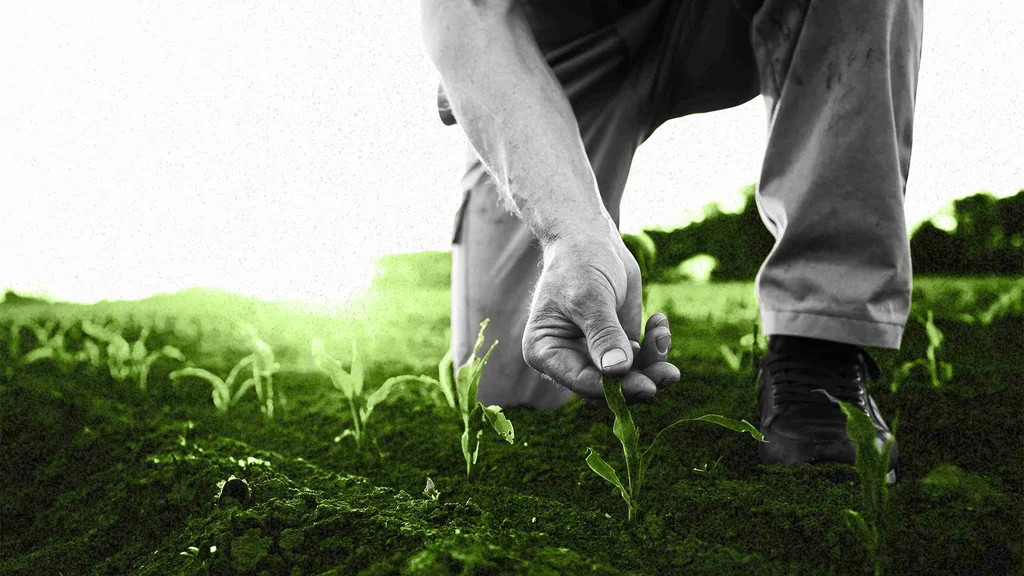

Agriculture literally gave birth to human civilization. It feeds nations and drives economies. In recent years, the industry has undergone a profound transformation due to groundbreaking technological innovations. From precision agriculture to nanotechnology, these advancements are not only enhancing productivity but are also paving the way for more sustainable and resilient farming practices.
Let’s explore five technological innovations that are revolutionizing the agricultural landscape and shaping the future of food production:
1. NANOTECHNOLOGY
One of the most impactful applications of nanotechnology in agriculture is in the development of nano-fertilizers. Traditional fertilizers often suffer from inefficiencies, with a significant portion of nutrients lost to the environment due to leaching, volatilization, and runoff.
Nano-fertilizers can increase nutrient use efficiency by up to 50%, resulting in healthier plants and higher productivity. At Nano-Yield, our nano-fertilizers such as NanoK are engineered to release nutrients in a controlled manner, directly to the plant roots. This precision delivery system minimizes waste that can damage the environment and ensures plants receive the exact amount of nutrients they need, thereby enhancing overall crop yield.
2. PRECISION AGRICULTURE
Precision agriculture uses GPS technology, IoT sensors, and big data analytics to optimize farming practices. By gathering real-time data on soil conditions, weather patterns, and crop health, farmers can make more informed decisions about planting, watering, and fertilization. This leads to increased efficiency, reduced waste, and higher crop yields—helping to make farming much more sustainable and profitable.
3. DRONES IN AGRICULTURE
Drones have become a game-changer in a lot of industries, and agriculture is no exception. Drones can provide aerial views of fields to monitor crop health, assess damage following storms, and even apply fertilizers and pesticides from the air.
Equipped with advanced imaging technology, drones can quickly cover large areas, helping farmers identify issues such as pest infestations or water stress that would be difficult to detect from the ground.
4. AUTOMATED MACHINERY
The introduction of automated machinery, such as self-driving tractors and robotic harvesters, is transforming the way farms operate. These machines can work longer hours and perform tasks with precision, reducing labor costs and minimizing human error. This innovation is particularly beneficial in areas where labor shortages are a challenge.
5. VERTICAL FARMING
Vertical farming is a revolutionary method of growing crops in vertically stacked layers, often in controlled indoor environments. Vertical farming is certainly not new: Ancient civilizations such as the Inca in Peru, the Chinese in the mountainous regions, the Babalynians and their famous hanging gardens, and others developed terraced farming techniques.
By creating stepped levels on hillsides, they maximized the use of vertical space to grow crops, prevent soil erosion, and efficiently manage water resources. As the world grapples with climate change and disappearing farmable land, vertical farming could be the answer.
FEEDING THE FUTURE
The global demand for food continues to rise, and these technological innovations offer promising solutions to some of the most pressing challenges in agriculture. By embracing these technologies, farmers can boost efficiency, reduce environmental impact, and ensure food security for future generations.