
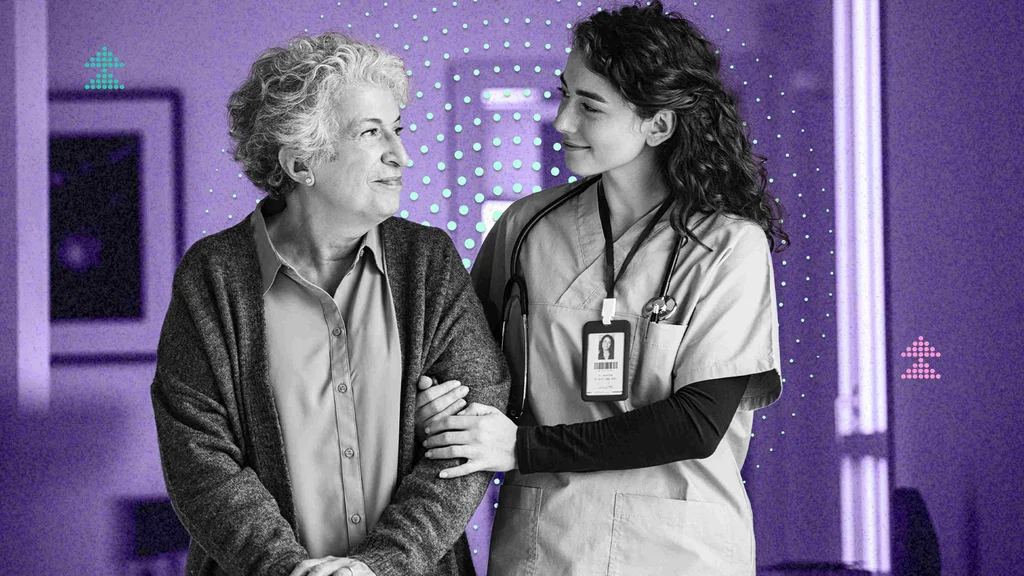

Our aging population is expected to increase by 25 million, and over 75% express a strong desire to age in place. This approach challenges the long-standing belief that hospitals are the optimal setting for care.
Hospital readmissions drive up healthcare costs, with Medicare spending over $17 billion annually—12% higher than typical readmission costs—due to patients’ advanced age and chronic conditions. Costs are especially high for patients in their 80s, many managing six or more chronic conditions and medications.
Without solutions, costs will keep rising, exacerbated by a fragmented system that struggles to provide continuous care, leading to frequent, costly admissions. The industry must adopt innovative technologies and care models to lower costs and improve outcomes. Furthermore, when combined with technology, in-home care can offer more efficient, patient-centered care, improving outcomes and saving costs. Here is what leaders in the healthcare space should know.
THE ROLE OF TECHNOLOGY IN REDUCING HOSPITAL READMISSIONS
Evolving technologies can ease readmission rates and their associated costs. The following applications are already yielding results:
Telemedicine And Virtual Care
Through virtual care platforms, clinical teams can help identify potential issues before they escalate into costly episodes. Virtual care also improves the quality of interaction between patients and providers by providing a familiar environment where both can confidently share and receive information.
As a result, we’re witnessing a shift toward virtual care that enables a patient-centered, convenient, and supportive experience. For example, travel is avoided, addressing social determinants of health (i.e., driving limitations and barriers that hinder access to in-person care).
Wearable Technologies
Remote patient monitoring (RPM) via wearable devices continues to grow in popularity. Patients and clinicians all benefit from this technology. Using wearables, patients are more engaged and compliant with treatment. Real-time insights allow providers to prioritize care and streamline workflows, and applied data can help reduce hospital admissions by identifying and addressing health concerns before they worsen.
While wearable technology is still in its relative infancy, its potential to reduce hospital readmissions is poised to grow. One study found that patients with cardiovascular disease had a 43% lower likelihood of being readmitted to the hospital when wearable devices were used for monitoring blood pressure, oxygen saturation, respiratory rate, and other vital signs. As more research emerges, we can expect wider adoption of this technology in managing other chronic conditions.
Artificial Intelligence (AI)
AI can identify patients at high risk of readmission, allowing care teams to take preventive measures to keep them safe. Imagine a future where AI analyzes data to assign risk scores, enabling clinicians to prioritize follow-up care and determine the optimal time to reach out.
AI can also recommend intervention strategies, including scheduling for follow-up appointments, reviewing discharge instructions, and delivering the right support to reduce readmissions. By improving communication among clinical teams, AI can ensure smoother transitions of care for at-risk patients.
Additionally, AI can enhance patient education, helping patients and caregivers manage chronic conditions at home while improving medication management by ensuring timely delivery and clear instructions for use.
MORE THAN TECH: EMBRACING EMERGING CARE MODELS
In addition to adopting innovative technologies, embracing new care models—such as in-home acute and transitional care—is essential to reduce hospital admission rates. In-home care is especially advantageous for at-risk patients who are medically frail or have complex conditions that frequently result in hospitalization. An in-home care model focuses on delivering right-sized care within the comfort of patients’ homes, allowing them to sleep in their own beds, surrounded by loved ones and caregivers. This alleviates the stress and anxiety often associated with a hospital stay by generating a preferred, timely, and effective care environment.
This model also allows healthcare providers to serve at the top of their licenses, allowing each care team member to contribute fully. This maximizes the efficiency and effectiveness of care by letting specialists focus on tasks that require their expertise, while other team members handle complementary aspects of care.
POTENTIAL BARRIERS TO WIDESPREAD ADOPTION
In-home care is proven to lower the rate of hospital readmissions by up to 60%. However, despite its potential, some obstacles must be overcome before the in-home care model becomes standard. Challenges include:
Regulatory Concerns
One of the primary obstacles to widespread adoption of new care models is the regulatory environment. Regulations vary from state to state, particularly regarding authorizations for care provision in the home. Additionally, powerful lobbying groups influence regulations, making broad implementation of new care models difficult.
Advocating for federal standardization of home care regulations is key to its success. A unified set of guidelines overriding state-specific regulations would enable healthcare providers to deliver consistent, high-quality care nationwide.
Workforce Shortages
The healthcare industry is facing a significant shortage of providers, with a projected shortfall of 124,000 physicians by 2033. This shortage creates substantial challenges for the extensive implementation of new care models. The strain on existing resources makes it increasingly difficult to allocate staff for training, deployment, and ongoing support—all of which are critical for successfully adopting innovative care approaches.
To alleviate this burden, education and training must be implemented to enable providers to operate at the top of their licenses and better share the demands of evolving care practices with interdisciplinary care team members. Tuition reimbursement programs, some covering the cost of medical degrees entirely and others providing student loan forgiveness programs after graduation, can also generate excitement for those entering the workforce.
Technology’s Learning Curve
There is often a learning curve before technology is fully adopted. Patients, providers, and caregivers may be hesitant to embrace new technologies, particularly if they are overwhelmed by learning something new. To minimize this hesitation, it is important to introduce technology gradually and in a manner that is accessible, non-threatening, and does not add unnecessary stress or anxiety.
While in-home acute and transitional care is still a relatively new concept, it’s already proven, particularly in the face of soaring hospital readmission costs. By embracing innovative care solutions, especially those that allow patients to age in place with dignity and comfort, healthcare can become more sustainable and affordable.