

Outsourcing is not a new concept in the footwear industry. For decades, the world’s largest footwear brands have relied on independent contractors, especially in Southeast Asia, to make their shoes for export back to the U.S. and other markets. But a new start-up called World Shoe is flipping that script by pioneering a new model: The company views its first factory, based in Ghana, as a catalyst for transformative economic development in the region.
In 2023, World Shoe opened the doors to its first factory, which it established in Akosombo, a town in one of the poorest districts in Ghana. The company has a two-pronged mission: to manufacture and distribute high-quality shoes that improve health outcomes for hundreds of millions of people around the world living without shoes; and to advance professional and economic opportunities in local communities. World Shoe’s footwear line is made with biodegradable EVA foam and contains antibacterial agents to protect against disease. Its factory in Ghana employs hundreds of local residents and provides ongoing employee training and community education and health services.
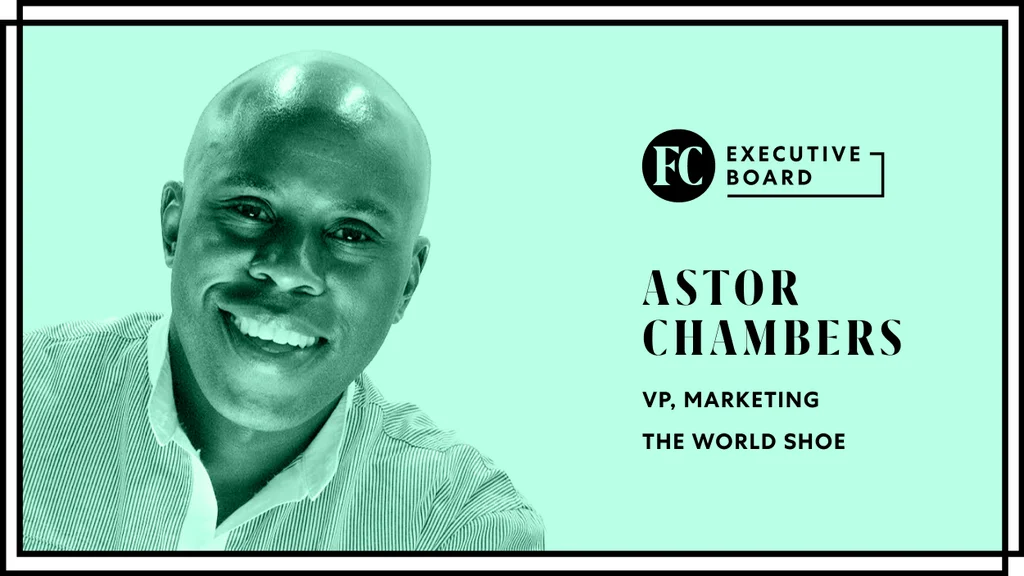
“One of our primary goals was to invest first in developing manufacturing capacity for our shoes as close as possible to the African markets where they would be in greatest demand. We saw an opportunity to create a vertically integrated supply chain in Africa and develop partnerships with national governments and multilateral health agencies to buy our shoes to complement ongoing humanitarian programs in the region,” says Astor Chambers, a footwear industry veteran and vice president of marketing at World Shoe.
Establishing the first World Shoe factory in Ghana puts it at the epicenter of one of the most important future markets for footwear and allows the company to make high quality shoes that meet the twin needs of style and durable functionality. “We’re creating a new model that prioritizes investment in local communities and product manufacturing for humanitarian needs that can scale to produce shoes for our retail channels,” says Chambers.
KEY ELEMENTS OF A PURPOSE-DRIVEN BUSINESS MODEL
World Shoe’s business model centers on three key components: factory ownership, employee training and professional development, and community investment. Unlike traditional brands that focus primarily on market share and sales revenue, World Shoe has different measures for success.
“Every pair of shoes we make truly matters in a much bigger proposition than market share,” explains Chambers. “The more shoes we’re able to put in the marketplace, the more income we are generating that will stay in Africa and help build economic stability.” In the midst of significant upheaval among wealthier nations that typically provide development assistance, including the U.S., many of the health programs that provide a pathway to prosperity for people in lower income countries are now in jeopardy. Shoes are the first line of defense for many preventable diseases, and World Shoe’s goal is to help fill the vacuum in global health programs.
World Shoe aims to contribute to both individual and community development with its business model. Many of the company’s leaders have worked with the world’s largest footwear brands and have deep expertise in manufacturing processes and standards to share with the production team. Chambers explains that World Shoe’s philosophy for investing in employee training and development can be summarized by the proverb: “Give a man a fish, and you feed him for a day. Teach a man to fish, and you feed him for a lifetime.” As individual team members grow their knowledge and experience, they have access to more professional opportunities—which also benefits their community as a whole.
“We were very intentional about building our factory in Akosombo, one of Ghana’s poorest counties,” says Chambers. “We want to provide the training and opportunity for individuals in this community to thrive. That’s a significant game changer, not just now but in the future. From a generational standpoint, these individuals are able to support their families in a very abundant way and serve as an example for the next generation to see and feel what’s possible.”
FOCUSING ON THE TRIPLE BOTTOM LINE: PEOPLE, PLANET, AND PROFIT
World Shoe’s purpose-driven focus expands beyond the traditional bottom line to encompass the triple bottom line, measuring its social, environmental, and economic impact.
“We’re looking at economic sustainability, investing money into a community, and providing critical jobs,” says Chambers. “For environmental sustainability, we’re using biodegradable materials in the product and taking the environment into account when selecting machinery and construction methods. On the health sustainability side, we add an antimicrobial agent to the product. Everyone who puts this shoe on minimizes exposure to neglected tropical diseases.”
Because World Shoe is building a new manufacturing model, Chambers and other company leaders have had to become adept at navigating uncharted territory.
“We are at the precipice of a remarkable transformation in African innovation and manufacturing excellence, and we want to be at the forefront of product creation in the footwear industry,” says Chambers. “As a leader, at times you have to step out in a space where there hasn’t really been something done like this as a reference, and you have to be comfortable with doing it. But we also look at examples from other industries, like Afrobeats, a genre of music from Africa that is now a prominent part of music genre conversations.”
Afrobeats music, a genre that combines diverse musical styles, including R&B, jazz, and funk, was streamed 13.5 billion times on Spotify in 2022, a jump from 2 billion in 2017. The Grammy Awards debuted “best African music performance” as a new category in 2024.
Groundbreaking demographic changes across the African continent are driving growth and innovation in the arts and industry. The population is expected to nearly double in the next 25 years, and 70% of people in Sub-Saharan Africa are under 30.
World Shoe’s leaders see this shift as an opportunity to develop innovative approaches to manufacturing that can serve as a blueprint for other companies interested in moving their operations into African markets. Chambers advises other business leaders to “lead fearlessly” and focus on their purpose to be successful.
“Remember your ‘why,’ be confident, and push through regardless of the challenges,” he says. “For us, this is not about charity. It’s about creating a pathway to economic development that improves health and prosperity for all.”