
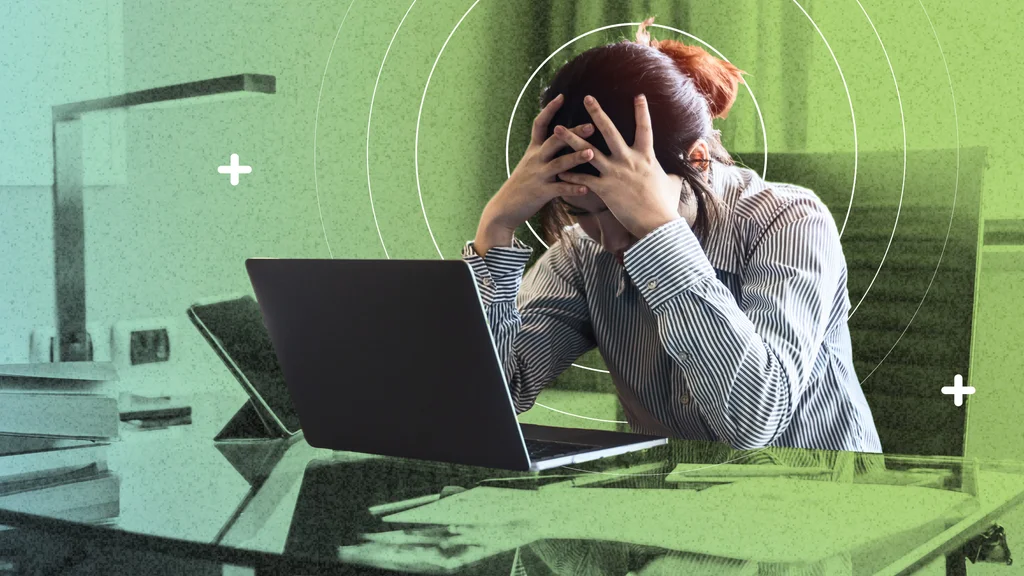
It’s official: The era of remote work flexibility is over. From Fortune 100 companies to federal agencies, employees are being summoned back to office towers and cubicles under sweeping return-to-work (RTO) mandates. According to a January 2025 survey by Resume Builder, nine in ten companies will require workers back in the office by the end of the year, with 30% already enforcing full five-day, in-office schedules.
The problem? We’ve failed to consider what employees lose when they leave their home workspaces behind. The office doesn’t just move—it takes away employees’ control over their environment.
At home, employees discovered something revolutionary: control. They could adjust the lighting. Lower the noise. Choose their chair, temperature, background music, and even the scent of their workspace. For the first time, people could truly customize their environment to optimize their productivity.
And it worked. Studies show employees working from home report lower stress, better focus, and higher productivity. But when they return to standardized open layouts complete with bright overhead lights, echoing voices, and a one-size-fits-all desk, they don’t just lose flexibility; they lose the ability to perform at their best.
For neurodiverse individuals, the consequences are even more acute. People with sensory sensitivities and learning differences such as ADHD, autism, anxiety, and dyslexia may find traditional offices overwhelming, disorienting, even paralyzing. In fact, 40% of neurodiverse individuals remain unemployed, often because the workspace itself is the barrier.
A MOMENT THAT CHANGED MY PERSPECTIVE
A few years ago, I walked into a client’s office and saw rows of open desks, bright overhead lighting, people chatting all around, and I instantly thought, “There’s no way I could work here.”
As someone with dyslexia and ADHD, these environments have always been a challenge. I used to spend hours trying to find quiet corners, using noise-canceling headphones just to focus, or even working odd hours at home where I could control my space.
That was a lightbulb moment for me: The modern office isn’t designed for everyone—and certainly not for people like me.
SENSORY FEATURES ARE THE UNSUNG HEROES OF WORKPLACE DESIGN
We talk a lot about square footage, seating charts, and collaboration spaces, but rarely do we talk about airflow, acoustics, texture, or privacy control. Yet these are the levers that most directly affect how people feel and perform at work.
And research backs this up:
- Biophilic design—the integration of natural elements like plants, wood textures, and natural light—reduces stress by 30% and boosts cognitive function by 15%.
- Adjustable lighting and noise levels help people maintain focus, especially those with sensory sensitivities.
- Personalized workspaces help employees stay more engaged, more productive, and twice as likely to stay with their employer.
These aren’t luxury features. They are performance infrastructure that unlock human potential.
IF YOU WANT A PEACEFUL AND EFFICIENT TRANSITION BACK TO OFFICE, GIVE EMPLOYEES CONTROL
Return-to-office doesn’t have to be a loss. It can be a gain. But only if we rethink how the office functions.
It’s time to move away from rigid, standardized layouts and instead design environments that adapt to the employee—not the other way around. That means letting go of the idea that more desks equals more work, or that open layouts naturally lead to collaboration. In reality, employees need environments that help them stay focused, manage stress, and feel comfortable being themselves.
We’ve spent the last five years learning what people need to be productive. They need flexibility, sensory awareness, and control over their space. Ignoring those lessons now won’t bring back the old office culture—it will just breed resentment and churn. Let’s stop asking workers to leave their best work conditions behind. Instead, let’s meet them halfway with offices that reflect what we’ve learned: Control is not a perk—it’s a prerequisite for performance.
As we usher in a new era of work, let’s not default to old environments. Let’s create spaces where everyone—not just the neurotypical, not just the extroverts—can thrive. Because when we design for the extreme, we uplift the mean.