
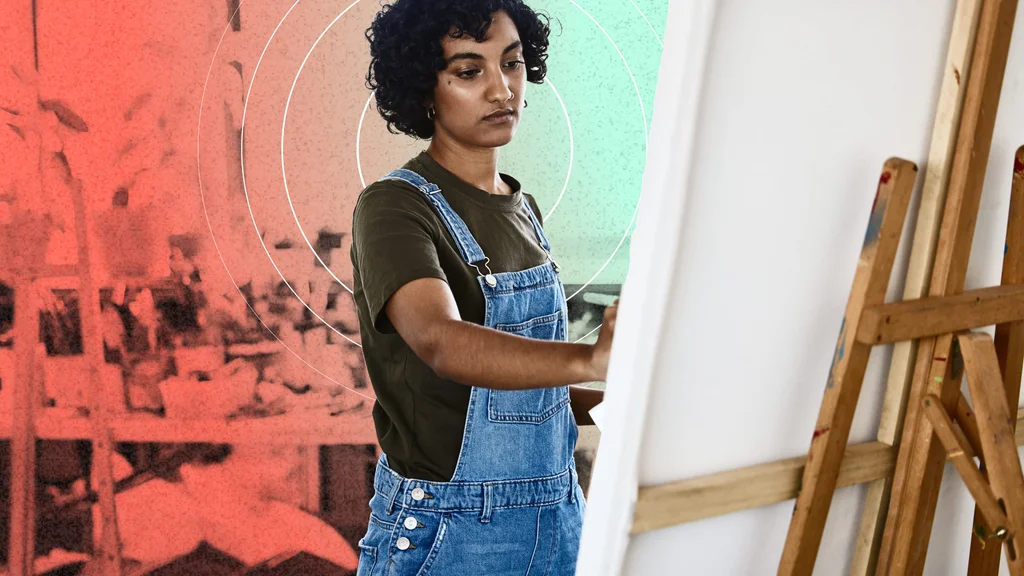

If you’ve spent more than a few quarters in the software world, you know we move fast. Agile sprints, continuous delivery—we’re always optimizing. But in the rush to automate, scale, and code our way to market dominance, we often forget a powerful source of competitive advantage: the arts. It’s the A in STEAM, and it’s what separates excellence from adequacy.
That’s right. Painting, baking, music, writing, theater—these aren’t just leisurely pastimes. They are potent engines of innovation, empathy, and long-term resilience in a tech ecosystem that rewards novelty and emotional intelligence just as much as it does technical prowess.
THE SCIENCE BEHIND ART AND INNOVATION
Creativity is no longer a soft skill—it’s a differentiator. A 2024 study conducted by Statista, based on data from over 11 million employees across 803 organizations globally, found that more than 70% of companies consider creative thinking the skill most expected to rise in importance over the next five years. As the report highlights, “Creative thinking is expected to grow in importance for 73% of companies by 2027, making it the most highly ranked core skill in the survey.”This underscores the growing emphasis employers place on creativity as a critical skill in the evolving workplace landscape.
Michigan State University found that Nobel laureates in the sciences were more likely than their peers to have artistic hobbies—including music, acting, writing, and visual arts. The arts, it turns out, don’t just make us more interesting—they make us more innovative.
Apple Inc. serves as a prime example of the successful integration of arts into technology. Steve Jobs famously stated, “It’s in Apple’s DNA that technology alone is not enough. It’s technology married with liberal arts, married with the humanities, that yields us the results that make our hearts sing.” This philosophy led to products that are not only technologically advanced, but also aesthetically pleasing and user-friendly, demonstrating the value of incorporating artistic sensibilities into software and hardware design.
FOUR WAYS TO INCORPORATE CREATIVITY INTO WORKPLACE CULTURE
1. Encourage Cross-Disciplinary Collaboration
Foster an environment in which software developers work alongside designers, artists, and writers. This collaboration can lead to more holistic and innovative solutions.
2. Implement Creative Workshops And Hackathons
Organize events that challenge employees to think outside the box and apply their skills in new, creative ways. Host a maker day or do a collaborative art project as an activity at an offsite. You could even do something as simple as hosting a lunch-and-learn with someone sharing about their art experience. These can stimulate innovation and team cohesion.
3. Support Continuous Learning In The Arts
Provide resources and opportunities for employees to engage in artistic pursuits, such as painting, music, or creative writing. This not only enhances individual creativity, but also brings fresh perspectives to problem-solving in software development.
4. Practice What You Preach
Set the standard. Actively engage your team with creative outlets and share how they have shaped your journey as a leader. Spark conversations around the role of the arts in personal and professional growth, and be sure to highlight your own experiences, celebrate colleagues who are exploring their creative sides, and elevate those stories. You never know who you might inspire or what magic it could unlock.
WHY THIS MATTERS FOR YOUR TEAM
As a leader, I’ve witnessed the impact of the arts firsthand. Teams that embrace creativity don’t just produce better designs—they communicate better, solve problems faster, and cultivate higher morale. When engineers write poetry or dabble in improv, they start seeing multiple solutions instead of one. They pitch better. They listen better.
In the software world, we pride ourselves on being logic-driven. But the truth is, our users are emotional beings. Whether we’re building an app to manage diabetes or a platform to deliver government programs at scale, the way we solve problems must be as human-centered as it is data-driven.
The arts teach us how to be human—how to understand nuance, embrace ambiguity, and connect deeply with others. Magic isn’t found in spells or stars—it’s found in the moment someone dares to see possibility beyond the ordinary.