
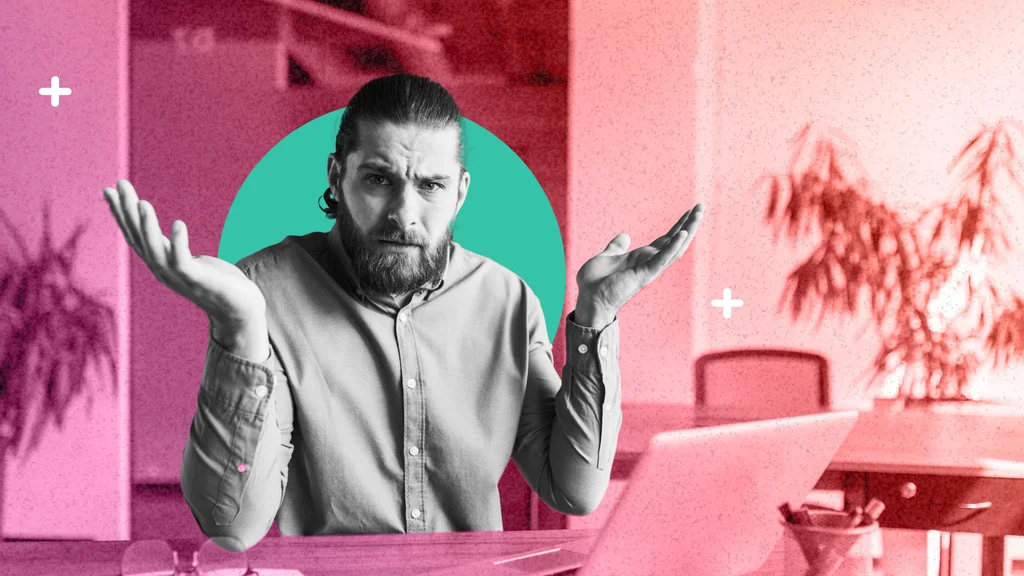
It is easy to presume the responsibility of leadership is clarity, direction, vision… and yet, sometimes the greatest “challenge” we face as leaders is our capacity to sit in and be with all that is uncertain. But what if uncertainty isn’t the problem? What if the defining edge, the real opportunity for transformation, is in our capacity to stay still and present in the space between?
For many high achievers, this hits differently. Everything looks perfect on paper—the team, the metrics, the trajectory. Yet something feels off. That baseline energy that used to fuel you? Gone. Success feels increasingly flat, even as you check every box.
Uncertainty lives in the in-between. It’s that stretch where we’ve let go of the familiar but haven’t yet found footing in the new. It’s liminality the moment after the leap and before the landing. It’s the part where we don’t know, can’t control and can’t force our way forward with logic or brute force. It can be deeply disconcerting, and yet, as leaders, this space is where our deepest evolution begins.
Too often, we believe that the work of leading is about decision-making: make the call, take the step, move forward. And that’s often a clever disguise for something deeper. Our bias toward action can be our greatest defense, not always because it’s right, but because it’s easier. And all too often, this is unconscious. Movement gives us the illusion of progress. Busyness helps mask the discomfort of not knowing.
This drive forward, towards doing, is often disguised as self-advocacy or agency. And sometimes, it’s our own inner resistance to be still. Activation masks avoidance: Intense activity, bordering on hyperactivity, is not always agency; it’s avoidance. Doing, stress-related, addicted to stress.
We crave clarity, certainty, and a path to follow. We crave fewer options because too many degrees of freedom can be terrifying. And so, we contract. We make quick decisions. We force an answer rather than waiting for the truth to emerge.
Recently, I had a work stretch that pushed me to confront this head-on. In the lead-up to a high-stakes book launch, I hired a collaborator, a deeply intuitive, highly recommended expert. We had two meaningful conversations, and I knew we needed to work together. I hadn’t seen a single portfolio item. I had no clear work plan. And yet, something in me said yes.
This partnership disrupted my usual way of working. I didn’t want another round of busyness or frantic marketing sprints. I wanted aligned, strategic clarity. I wanted to reposition not just the book, but myself.
To work with him, I had to bring forward old scar tissue from past collaborations—share the bruises and the hopes, the mistakes and the vision. There was vulnerability and transparency unlike anything I’d experienced in prior engagements. Our mutual connection, someone I trust deeply, acted as a guide and grounding force. He read my transcripts, explored two decades of my work, and surfaced patterns I had never seen myself.
But here’s what caught me off guard: I didn’t anticipate how uncomfortable it would be to slow down. To step into and sit in the uncertainty.
Once I stepped away from the old, activated (hyperactive!) way of being—but hadn’t yet landed in the new—I found myself stuck in the messy middle. It was deeply disorienting. I was no longer doing what I knew, but I wasn’t yet sure what would replace it. I was immersed in uncertainty. And I realized just how conditioned I had become to equate movement with progress.
We laughed, because of course, I was living exactly what I ask of my clients: to surrender, to slow down, to sit in discomfort and not rush through it. In preparing to launch the book, I had to walk the path. I was embodying the message: Let go. Sit with it. Wait. Breathe. Trust.
The irony wasn’t lost on me.
As a business psychologist, I’ve spent decades helping leaders navigate this exact territory. I have frameworks, tools, and methodologies that create real shifts—the Altitude work, the Priority Maps, the strategic planning instruments. What I’ve learned: tools only work when we’ve done the deeper work first. When we’ve learned to embrace the both/and of being successful and struggling, achieving and uncertain, leading and learning.
The problem isn’t uncertainty itself. The problem is waiting for uncertainty to go away before we act. What if we could hold both the not-knowing and the moving forward? What if presence and progress weren’t opposites, but partners?
What emerged from my own messy middle was unexpected: a systematic approach born from surrender. By sitting in the discomfort long enough, patterns revealed themselves. A unique positioning crystallized. The very uncertainty I’d been avoiding became the crucible for clarity, the kind that rises when you stop pushing.
So here’s what I’m still learning—and perhaps what you need to hear too:
• Uncertainty isn’t a problem to solve. It’s a space to occupy with grace.
• Slowness isn’t weakness. It’s where wisdom has space to speak.
• Not knowing isn’t failing. It’s the gateway to deeper alignment.
• The transformation happens in the tension—in holding the “both/and” of stillness and action, uncertainty and clarity, being and doing.
If you’re in the in-between right now, don’t run. Don’t numb. Don’t busy yourself with low-leverage motion. The fear beneath all that activation? It’s often this: “What if I’m not there for the moments that matter most?”
But rushing guarantees you’ll miss them. Presence ensures you won’t.
Instead, ask yourself:
• Can I be still long enough to hear what wants to emerge?
• Can I trust without evidence?
• Can I let this moment refine me rather than define me?
• Can I act from this place of not-knowing, rather than waiting for false certainty?
The edge isn’t in the action. The edge is in the presence. What awaits on the other side isn’t just new strategies or better outcomes. It’s you—changed. The same tools, the same challenges, the same opportunities. That’s what it means to live and lead real.