
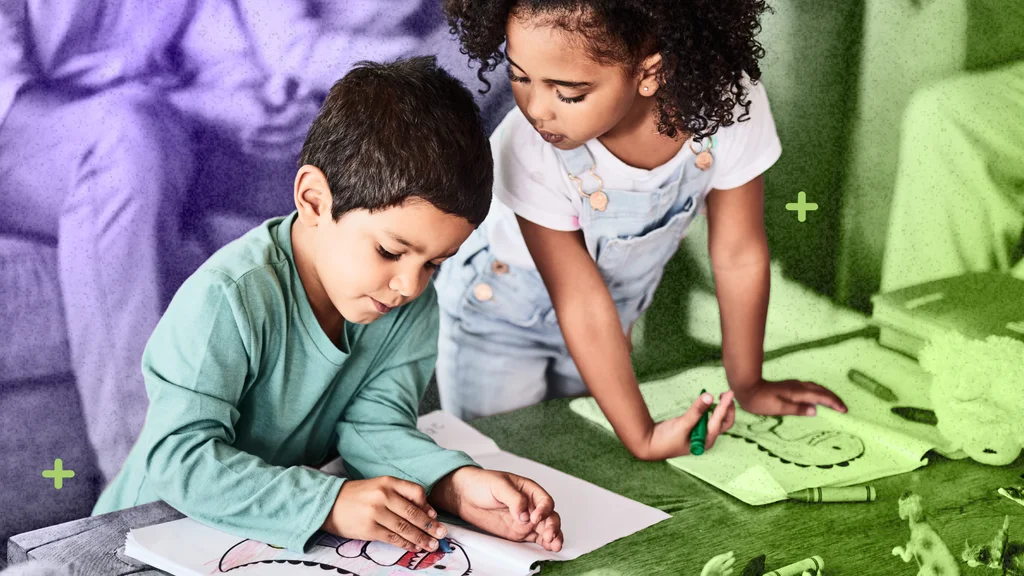

A few years ago, I stood on stage in front of 3,000 university students and asked a simple question: “How many of you consider yourselves creative?” Maybe a dozen hands went up. Same question to a room full of first graders? Every single hand went up.
If we’re all born wildly imaginative, why do so few of us still believe it? And more importantly, why does it matter?
Here’s the truth: Imagination and play aren’t just for kids. They’re fundamental to human creativity. The problem isn’t that we lost our creativity, but rather that we were taught to stop using it. To reclaim it, we have to re-learn how to play, how to be curious, and how to nurture ideas without judgment. That’s where the real breakthroughs happen.
And make no mistake: Breakthroughs are no longer a “nice to have.” Our world is changing fast. Gen Z is altering the rules of work. Climate change is reshaping our priorities. AI is rewriting everything. In this moment of compounded disruption, creativity isn’t a luxury, but survival. And the future? It belongs to those brave enough to ask,“What if?”
Let’s explore how we lost our creative spark—and how to get it back.
WHAT’S HOLDING US BACK?
When I ask company leaders why they struggle to innovate, the answers are alarmingly consistent:
“We don’t have time.”
“We don’t have the resources.”
“We’re too risk-averse.”
“New ideas get stuck in the process.”
All valid. But none of these are the real reason.
At Disney, I once ran a survey of over 5,000 employees. Those same excuses came up again and again. But the real villain wasn’t lack of time or money. Rather, it was what I call the “River of Thinking”—that mental groove we get stuck in after years of doing things a certain way.
Expertise is valuable, but it can also blind us to new possibilities. And let’s face it: Most companies are designed for efficiency, not creativity. They reward predictability, not play. Worse? Many claim to encourage innovation, but then quietly punish failure. And nothing kills creativity faster than fear of being wrong.
WELCOME TO THE AGE OF DISRUPTION
Let’s talk about what’s changed. We’re not just in an era of transformation—we’re living through five at once:
- COVID-19 blew up our assumptions about where and how we work.
- Gen Z is entering the workforce with radically different values, including purpose over profit and flexibility over hierarchy.
- Climate change is creating urgent global challenges that demand new thinking.
- AI is automating tasks faster than we can rewrite job descriptions.
- Trust in institutions is eroding, meaning companies must be bolder, faster, and more human.
Here’s the thing: You don’t get to iterate your way out of this. You innovate or you die. Take Stanley Black & Decker. They discovered Gen Z wasn’t excited about power tools, but they were fired up about building dreams. So, they reframed their message from selling tools to enabling creators. That’s innovation born of listening, not legacy.
WHAT KIDS KNOW (THAT WE FORGOT)
Let me tell you about Christmas at the Wardle house. My kids tear open their gifts…and five minutes later are playing with the boxes. Why? Because to a child, a box is anything: spaceship, submarine, secret lab. It’s pure, unfiltered imagination. Kids are masters of:
- Curiosity: They ask “why?” until you go cross-eyed.
- Play: Everything is an experiment.
- Empathy: They instinctively include others.
- Intuition: They follow their gut, not spreadsheets.
- Creativity: They don’t know the rules, so they break them beautifully.
One Halloween, I asked a 10-year-old how we’d make edible cobwebs for ice cream sundaes. Her answer? “Cotton candy.” Genius.
So, here’s a radical idea: To be true innovators, maybe we need to grow back into the traits we had at age six.
TOOLS TO SPARK CHILDLIKE INNOVATION
One of my favorite tools is also the simplest: “What if?” It disrupts the River of Thinking. It challenges assumptions. It opens doors. Try these:
- What if we had no offices?
- What if we gave our product away for free?
- What if we hired our customers?
- What if we partnered with our biggest competitor?
These questions seem absurd at first, but that’s the point. They unlock new perspectives and challenge assumptions, which is exactly what innovation needs. At Disney, during the SARS and Ebola outbreaks, someone asked: “What if this kind of virus went global?” That “crazy” question led us to reimagine our business model—and eventually to the birth of Disney+.
THE MOST VALUABLE SKILLS OF THE NEXT DECADE? THE MOST HUMAN ONES
Today, as AI takes over the repetitive stuff, the spotlight shifts to the skills machines can’t replicate: curiosity, creativity, empathy, critical thinking, intuition. These aren’t “soft” skills—they’re survival skills! And guess what? We’re all born with them.
But traditional education—and most corporate cultures—slowly condition them out of us. We learn there’s one right answer, that mistakes are bad, that we should color inside the lines.
Let’s unlearn all of that.
Most people will say they don’t have time to be creative. But AI can change that. Imagine this: no more hours lost on scheduling, expense reports, or endless decks. AI can automate the doing, so we can spend more time on the dreaming.
RECLAIM YOUR CREATIVE SPARK
We were all born creative. The world just convinced us otherwise. But in a future where AI runs the numbers, climate shifts the landscape, and new generations rewrite the rules, your imagination is your greatest asset.
So, here’s your invitation:
- Ask bolder questions.
- Make space for curiosity.
- Play more. Worry less.
- Build cultures where it’s safe to be wrong.
- And for heaven’s sake—stop coloring inside the lines!
The future doesn’t belong to the efficient. It belongs to the imaginative.
Ready to stop iterating and start imagining? Good. Because the world needs your wild ideas now more than ever.