

From the emotionally intelligent AI companion in Her to Tony Stark’s omniscient digital assistant J.A.R.V.I.S. in The Avengers and even the immersive virtual agents in Ready Player One, science fiction has long teased a future where AI knows us intimately, anticipates our needs, and seamlessly integrates into our lives.
This once-futuristic vision is now taking shape through the rise of agentic AI. And as its systems evolve, they will redefine how humans interact with technology by delivering deeply personalized, private, and secure experiences.
WHAT IS AGENTIC AI?
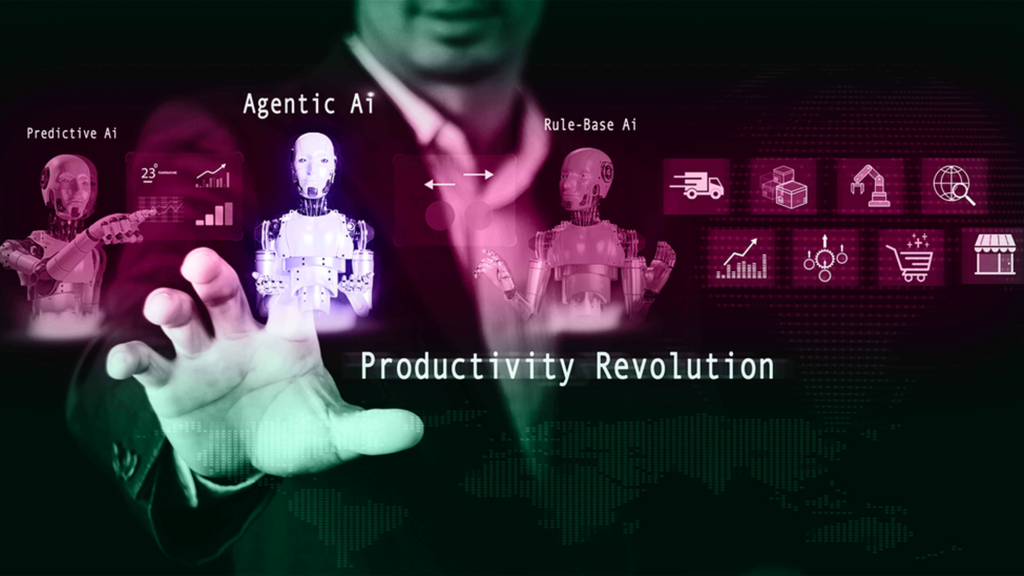
Agentic AI refers to AI systems designed to operate autonomously to solve complex tasks with minimal human intervention. Unlike the traditional conventions of generative AI, which follow predefined instructions or respond reactively to single-turn user prompts, agentic AI exhibits goal-driven behavior, adaptability, and proactive decision-making. It leverages investments in the generative AI space like large language models, multimodal processing, and orchestration frameworks to perceive, reason, act, and learn in dynamic environments.
For example, generative AI tools with function-calling capabilities can help plan out a travel itinerary when prompted. However, an agentic AI system could autonomously plan the trip end to end: booking flights, reserving hotels, and adjusting plans based on real-time delays, all without needing constant user input.
This shift from passive assistance to active agency represents a significant leap forward.
AI AGENTS TAKING SHAPE IN THE INDUSTRY
Real-world applications of agentic AI have already deployed, including in multimedia creation, field operations, finance, legal, and personalized customer support. Gartner predicts 33% of enterprise software will use agentic AI by 2028, compared with just 1% in 2024. This belief suggests agentic AI is quickly becoming a must-have for staying competitive.
For example, industrial IOT can now use agentic systems to assess infrastructure damage during natural disasters and coordinate repair efforts efficiently. These systems operate with minimal human intervention, autonomously analyzing real-time data, such as satellite imagery, drone footage, or IoT sensor inputs to assess damage to infrastructure like power lines, water systems, or roads. Another example is Salesforce’s Agentforce, a platform with autonomous agents that businesses can use to simulate product launches or orchestrate marketing campaigns across workflows.
My company, Qualcomm Technologies, enables personalized agentic AI experiences through Qualcomm AI Orchestrator and Qualcomm AI Stack. This software acts as a “conductor,” and is built upon four key pillars: sensory inputs spanning multiple modalities (voice, image, video, audio, text, and positioning), support for a rich set of on-device Gen AI multimodal models, a personal knowledge graph, and the ability to interface to apps. The Qualcomm AI Orchestrator processes the sensory inputs using on-device AI models, and personalizes responses with the knowledge graph and apps to provide enhanced autonomy. Just one example: The agent could access your chat history stored on the device—not synced to the cloud—and use this data to understand contextual prompts. A personalized agentic system could use your chat history to create a personalized travel itinerary. If a friend texts you about an upcoming trip to New York, the local AI model can analyze the chat to extract key details, such as dates, locations, and preferences. It could then coordinate between different apps, such as hotels near the mentioned attractions, suggest restaurants based on your dining history, and propose activities aligned with your interests.
While the signs point to an agentic future, the true potential lies in personal applications. In our daily lives, where devices are essential and store a wealth of private and contextual information, AI agents must tap into a personal knowledge graph to deliver truly personalized and secure experiences. This integration allows AI to understand and anticipate individual needs, making it a seamless and trusted part of our daily routines.
EMBRACING THE AGENTIC ERA
The future of AI is no longer just reactive—it is proactive and deeply personal. Agentic AI has become a cornerstone of modern technology. By combining autonomous decision-making with privacy-focused design principles, these systems promise to make human-AI interactions more intuitive and secure.
But it can also be intimidating.
To embrace the agentic era, start by understanding how agentic AI operates proactively by anticipating needs and making decisions autonomously. Then, experiment with tools that streamline tasks and complement human-centric skills like strategic thinking and creativity. Shift your mindset to view these systems as collaborators that enhance productivity and free up time for higher-order thinking. And finally, stay informed about privacy practices and ethical considerations to build trust and confidence in this transformative technology. As we enter this new era of intelligent agents capable of orchestrating our digital lives with precision and care, one thing is clear: The future will not just be automated—it will be deeply personal.