
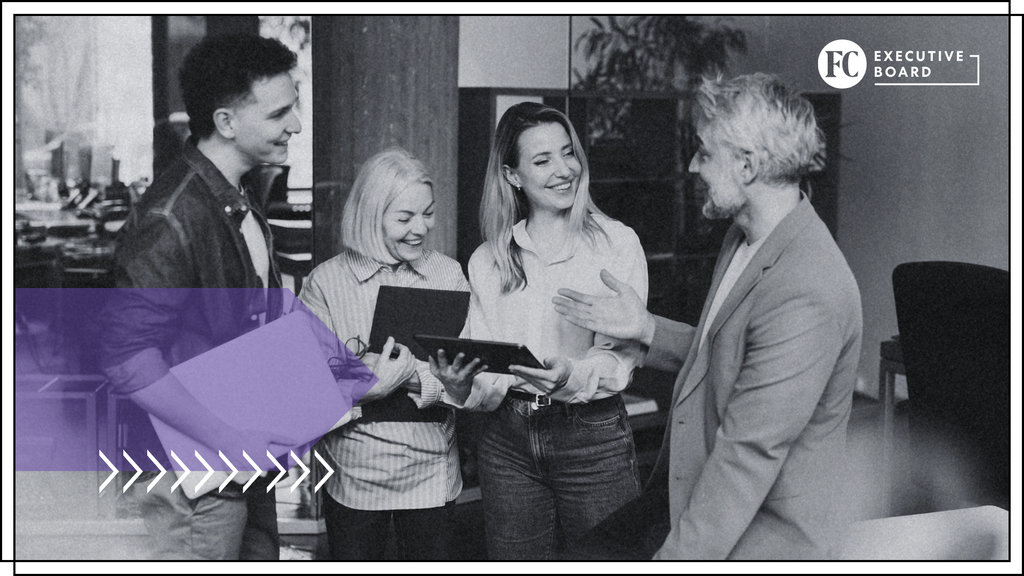

In today’s workforce, the convergence of five generations —traditionalists, baby boomers, Generation X, millennials, and Generation Z—presents challenges and opportunities for organizations.
As companies implement new technologies, restructure workflows, or evolve performance management processes, they must navigate how these diverse generational cohorts assimilate change. While fair, equitable, and uniform processes remain foundational to organizational integrity and compliance, engaging employees cannot be “one size fits all.”
Instead, tailored approaches should consider generational preferences, learning styles, and motivational factors to achieve cultural alignment and sustained adoption.
The generational context for change assimilation
Each generation brings distinct experiences and expectations to the workplace:
- Traditionalists (born before 1946): Value hierarchy, formality, and institutional loyalty.
- Baby boomers (1946–1964): Emphasize work ethic, team orientation, and structured communication.
- Generation X (born 1965–1980): Known for its independence, pragmatism, and adaptability, having navigated the transition from analog to digital.
- Millennials (born 1981–1996): Prioritize purpose-driven work, feedback loops, and collaboration.
- Generation Z (born 1997–2012): Digital natives expect rapid information access, continuous innovation, and authentic leadership.
These preferences affect how each group responds to organizational change. For example, Boomers may be more comfortable with incremental transitions and structured rollouts, while Gen Z may favor agile experimentation and real-time feedback.
As a result, change assimilation must account for differentiated onboarding, communication, and reinforcement strategies.
Design systems for usability across generations
Implementing new technology systems—whether enterprise software, collaboration platforms, or performance dashboards—can cause friction in multigenerational workplaces.
For example, in my experience, it seems AI user adoption increases when systems are intuitive, customizable, and supported with robust training. However, generations define “intuitive” differently.
In addition, seasoned workers may prefer detailed manuals, formal training sessions, and step-by-step instructions, while younger employees might gravitate toward short videos, sandbox environments, and self-guided learning modules.
To bridge this gap, adopt multi-modal training strategies and layered support, including:
- On-demand tutorials and knowledge bases
- Virtual and in-person help desks
- Peer-led demos and “learning circles”
- Personalized walkthroughs during onboarding
Furthermore, ensuring alignment with accessibility standards benefits all generations. As visual acuity and cognitive processing can shift with age, interfaces should be designed with contrast, font scalability, and minimal cognitive load in mind.
Support emotional and cognitive readiness in people
Resistance to change is often rooted not in defiance but in uncertainty and a lack of psychological safety. According to Kotter’s model, successful change depends on building urgency and forming guiding coalitions.
Managers need to acknowledge and validate generational differences in emotional response and support needs. For instance, Gen X may seek data-driven rationales for change, millennials may request inclusive conversations and impact assessments, and Gen Z may require validation that their feedback is incorporated. Meanwhile, boomers may benefit from the opportunity to share historical context or perceived risks.
Managers should employ tailored strategies such as:
- Generationally diverse focus groups to surface concerns
- Two-way mentoring programs for cross-generational learning
- Generational group change champions to promote peer engagement
- Regular pulse checks with targeted follow-ups
Adapt performance management processes during change
Performance management is one of the most visible and sensitive organizational processes during times of change. It communicates values, expectations, and accountability. However, if poorly managed, performance management can exacerbate generational divides.
Uniform processes uphold fairness, particularly within legal and policy. However, uniformity does not require uniform delivery. Offer structured consistency while differentiating support.
For example, when implementing a new performance management system or evaluation rubric, organizations might ensure that documentation, tools, and expectations are clearly communicated across multiple formats and channels.
Consider:
- Detailed job aids and SOPs for Gen X and Boomers
- Interactive workshops or “ask me anything” sessions for Millennials
- Mobile-optimized resources and quick-reference guides for Gen Z
Equally important is the documentation of support mechanisms. Employees need clarity around expectations and resources available to help them meet those expectations. This includes:
- Training schedules and access links
- Guides to using feedback and goal-setting tools
- Access to internal coaching or HR business partners
Documenting and communicating these resources reduces ambiguity and increases cross-generational employee confidence.
Buddy systems and peer learning
Buddy systems are an underutilized tool in change assimilation. Traditionally used during onboarding, buddy programs can effectively smooth transitions during organizational change. In a multigenerational context, cross-cohort buddy systems or mutual mentoring enhance knowledge sharing and cultural cohesion.
For example, pairing a millennial or Gen Z employee with a Gen X or boomer counterpart allows for reciprocal mentoring. The younger employee offers insights on new digital tools or ways to navigate agile feedback loops, while the senior colleague provides an institutional perspective and strategic context. This mutual exchange builds trust, accelerates adoption, and deepens engagement.
Organizations should formalize buddy system processes by:
- Clearly defining roles and expectations
- Offering light-touch training for buddies
- Rotating pairings to expand networks
- Including buddy check-ins in performance or engagement reviews
One framework, multiple pathways
While equitable systems and processes are foundational, it’s ineffective and inequitable to assume uniform delivery can meet the needs of a five-generation workforce. Change assimilation must be structured and flexible, designed with fairness in mind but delivered with adaptability.
Systems must be usable for all generations, as people engage with emotional intelligence. Sensitive processes such as performance management must be supported with documentation, peer coaching, and transparency.
By investing in change strategies that account for generational needs and strengths, organizations improve adoption outcomes while fostering a culture of inclusivity, collaboration, and continuous learning.
As the future of work becomes increasingly multi-modal and multigenerational, those building for difference rather than conformity will emerge more agile, resilient, and human-centered.
Britton Bloch is VP of global talent acquisition strategy at Navy Federal Credit Union.