
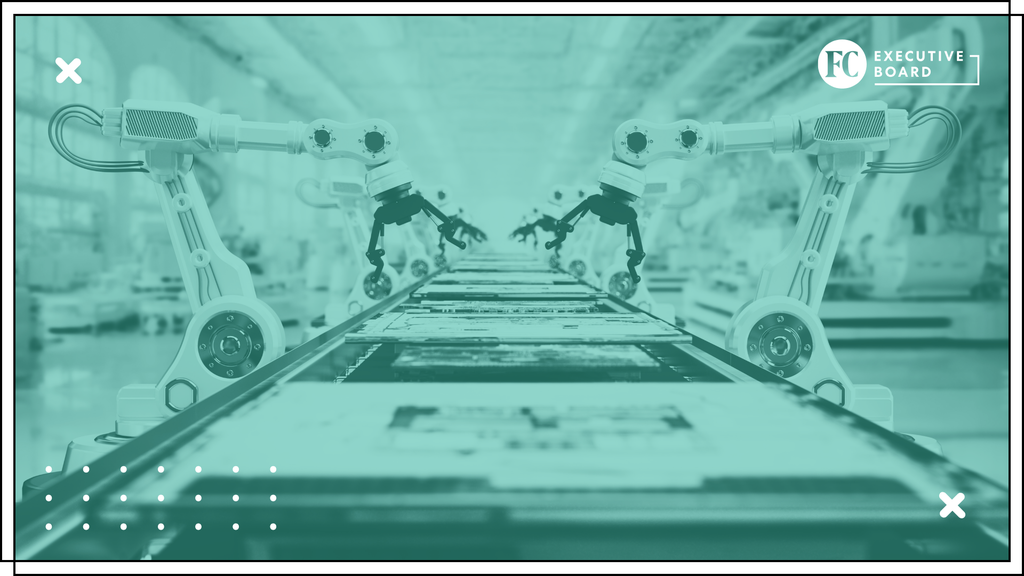

As robotics and automation continue to transform the modern supply chain, a powerful concept has emerged as both a safeguard and a strategic asset: human-in-the-loop (HITL). This idea isn’t just about manual override or emergency intervention—it represents a nuanced partnership between people and machines. Humans are able to solve problems that aren’t mathematical with our own “wetware” in a way that algorithms are currently unable to perform. Human inputs in this process also help train and refine machine learning (ML) models to reduce the margin of error.
HITL also provides a framework for integrating collaborative robot (cobot), robot, and human labor in a way that preserves human enjoyment of work. The “automate everything” mindset brings a risk of removing satisfactory labor from the equation, whereas true innovation lies in designing systems that respect efficiency, security, and the human experience.
THE RISE OF ROBOTIC PRECISION
We’ve come a long way since the early 2000s, when large retailers attempted to mandate RFID tags to improve supply chain visibility, only to walk back those expectations due to complexity and cost. Since then, IoT sensors, automation, and robotics have matured significantly. Today, cobots and automation platforms are responsible for moving raw materials from bins to shop floors, assembling products, palletizing them, and preparing them for shipment. Not very long ago, many of these tasks were fully human-led. They have since been streamlined through robotic control systems, which are now made smarter with the integration of machine learning and prescriptive analytics as well as vision guided robots and light detection and ranging vision.
However, many automated systems still must feature critical human labor when a key decision needs to be made or a breakdown occurs. Loading a truck, for example, requires an optimal arrangement of pallets based not only on space but also on delivery routes—a complex 3D mathematical problem. Specialized systems now use multidimensional cameras and algorithms to calculate the best stacking configuration, which is then executed by robots or cobots, with human workers intervening if there is a breakdown or malfunction. This isn’t a failure of robotics; it’s a sign of the subtle and critical role humans still play. The robot might optimize task execution, but humans ensure things get completed properly, especially in environments that aren’t always predictable.
THE CRITICALITY OF HITL FOR ROBOTIC UPTIME
Robots don’t take sick days, and they don’t complain, but they do break down from time to time—and when they do, supply chain efficiency gets disrupted. For example, envision a robot designed to load trucks becoming stuck mid-operation. Due to safety protocols and tight quarters, human workers aren’t able to easily intervene. In the meantime, the workflow is bottlenecked. The cost efficiencies of that automation infrastructure are temporarily halted.
This is where HITL becomes mission-critical. Smart companies embed real-time response strategies into their robotic systems. In some cases, remote operators can take control using augmented reality interfaces, guiding the robot out of the jam from thousands of miles away. In others, a human operator might assume the role the robot was supposed to fill. But for that to happen, safety infrastructure, spatial design, and permissions must already be in place. Otherwise, downtime starts to eat away at valuable margins.
DESIGN FOR COLLABORATION, NOT REPLACEMENT
A successful robotic implementation isn’t one that replaces all human labor—it’s one that augments it. HITL allows enterprises to scale efficiency while building resilient workflows that adapt to exceptions. In day-to-day reality, every supply chain contains edge cases that machines struggle to process. A robot might flawlessly move a pallet under normal conditions, but a slightly askew load or variable lighting might bring it to a halt.
Advanced robots, like those that use suction to pick garments, require nuanced calibration and fail-safes to prevent damage, injury, or operational breakdowns. A seemingly minor fault—like a robotic arm moving unpredictably—can result in lost product or even danger. That’s why sensory intelligence, real-time monitoring, and robust fallback systems are as important as the robotic hardware itself.
We also can’t overlook the value of preserving human joy in the workplace. Replacing every manual task with automation risks eliminating meaningful labor from the equation. Instead, HITL encourages us to reserve repetitive, mundane, frustrating, or dangerous work for machines—freeing humans to focus on tasks that require empathy, creativity, and judgment.
BUILD THE HITL-READY SUPPLY CHAIN
To future-proof operations and maintain efficiency amid disruption, supply chains must integrate HITL into both design and crisis response. Success hinges not just on the robot’s uptime, but on how quickly and effectively a human can intervene when it falters.
Here are the key practices organizations should adopt to effectively harmonize robotics and HITL:
- Design warehouse and production environments for flexible movement, allowing both humans and robots to operate safely and interchangeably.
- Invest in real-time monitoring and alerting systems to detect robot failures instantly and trigger human intervention protocols with prescriptive guidance.
- Enable remote operation capabilities, particularly for high-risk or constrained environments where on-site intervention is limited.
- Define and test fallback workflows so that when automation fails, human teams are able to step in without disrupting the workflow.
- Incorporate human feedback loops into ML training models to continuously improve robotic decision making.
- Treat HITL as a core KPI, measuring not just robotic performance, but the speed, safety, and effectiveness of human overrides.
Automation is not an endpoint; it fosters continuous improvement opportunities. The next frontier of innovation isn’t found in machines replacing us—it’s in machines working with us, and for us, in ways that elevate the entire supply chain.
Guy Yehiav is president of SmartSense by Digi.