
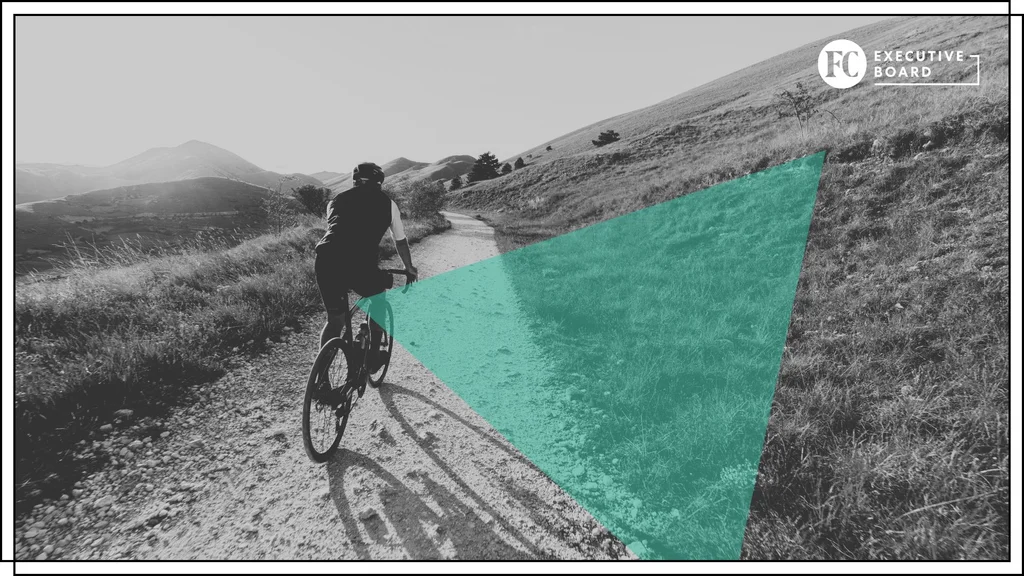

As the leader of a company operating in the high-stakes world of cybersecurity, everyday leadership decisions can mean protecting critical infrastructure or facing a devastating breach. Outside the boardroom, I like to clear my head by gravel biking. While I’m on the trail, many bike safety lessons have translated into valuable leadership lessons I bring directly to my work. That includes how we manage our teams, navigate crises, and build resilient organizations.
Gravel biking is a unique discipline blending the technical demands of mountain biking with the sustained intensity of road cycling. This hybrid nature of riding teaches us great lessons that easily carries over into the complexities of modern leadership. Here are four of those lessons.
1. The art of preparing for the unknown
Unlike other forms of cycling where trails are marked and rescue is relatively accessible should something go wrong, gravel biking can often take you deep into remote backroads and mountains with no immediate rescue options available. This can be a terrifying prospect if you’re unprepared. The sometimes-sobering reality demands meticulous planning before you even arrive at your trailhead. Every good gravel rider learns to study maps, identify bail-out points, understand weather patterns, and plan for mechanical failures when you’re 50 or 60 miles from the nearest sources of help.
To be successful and complete our business “ride,” we plan not just for success under pressure, but also for systems and workflows robust enough to function when external support isn’t available. Just as I spend hours planning routes and identifying contingencies before heading into remote terrain, effective leaders must engage in comprehensive scenario planning before launching initiatives or entering new markets and establish clear decision trees for when conditions change unexpectedly.
2. Read the terrain
Gravel biking uniquely requires the simultaneous reading of terrain while maintaining a high tempo on the trail. For example, one moment you could be flying across smooth gravel at road-bike pace, the next you’re navigating technical singletrack or a loose rock descent that requires mountain bike handling skills. While the terrain changes constantly, the pace rarely changes.
Inside the office, it’s also important for an organization to maintain its strategic momentum while continuously adapting to changing conditions. Just as gravel riders must instantly adjust their line, body position, and power output, effective leaders must constantly recalibrate their approach while keeping their teams moving forward at a competitive speed. It’s a delicate balance for many: Fixating too intensely on immediate obstacles can cause you to miss the sweeping turn or be unprepared for an approaching steep climb. So in business, the best executives maintain what cyclists call a “soft focus” or a relaxed awareness that processes immediate threats while keeping sight of the bigger goals ahead.
3. High-tempo endurance under pressure
One thing that truly sets gravel biking apart from other rides is that sustained high intensity we talked about earlier, over truly enormous distances. These rides can regularly span 4-8 hours, burning thousands of calories while maintaining speeds that would be respectable on pure road bikes. It’s a discipline that demands exceptional physical conditioning paired with mental resilience—the ability to maintain focus and decision-making capability even when your body is under extreme stress.
This conditioning aspect has become perhaps my most valuable leadership tool as I fine-tuned my body to fit both roles: gravel cyclist and leader at Cyderes. In our cybersecurity field, we face scenarios requiring sustained high-level performance under intense pressure. Incident response can stretch across days of critical decisions while managing client communications, coordinating technical teams, and maintaining operational stability. But the mental and physical stamina I’ve built through those long gravel sessions—learning to think clearly while my body is depleted—directly translates to maintaining leadership effectiveness during those extended crisis periods.
4. Recovery as competitive advantage
Every biker at one point in their experience suffers a crash. It’s an inevitable part of the hobby and while we can’t control when or how it happens, what we can control is when and how gracefully we recover. When a crash begins, experienced riders don’t waste energy trying to prevent it; instead, they focus on minimizing damage and positioning for the fastest possible recovery. That could mean something as simple as going limp on the fall to cushion the blow.
This mindset also serves my company in cybersecurity; breaches, errors, or missteps are often inevitable despite best efforts. The organizations that emerge strongest aren’t necessarily those that never experienced these kinds of issues. Those that respond most effectively can come out in the best positions possible to rebuild what was lost. To practice recovery, reflection and support during these difficult times can sharpen our responses to become automatic even under the intense pressure of a crisis.
For leaders willing to learn, both the biking trail and the boardroom share a surprising number of the same fundamental truths: Sustainable success comes from developing systems, instincts, and teams capable of navigating uncertainty with confidence and grace. The trails we choose to ride and the teams we choose to build both become part of our legacy. And those leaders who embrace a cycling mindset have a chance not just to reach the summit, but to create pathways for others to follow and tackle whatever lies ahead.
Chris Schueler is CEO of Cyderes.