
We’re living through a collapse of trust. Every swipe, click, and scroll makes us more skeptical that anything is real. AI-generated content is putting authenticity under pressure as it floods our feeds. Bots now act on our behalf, negotiating with other bots, often autonomously. And it’s happening fast.
The problem isn’t just AI-generated “slop.” It’s the weaponization of AI to misinform, deepen division, and mimic our likeness through deepfakes. AI-driven deception is testing the very fabric of trust—the essence of authenticity—is being tested. We’ve reached an inflection point. If everything can be faked, what—or who—can we trust?
THE CRISIS ISN’T AI. IT’S THE EROSION OF TRUST
AI itself isn’t the enemy. It’s an accelerant. It gives anyone the ability to deceive at scale—and to do it convincingly.
The result is dangerous in its simplicity: We no longer know who or what to trust.
I recently watched a beautifully produced short film about a desert octopus. The narration, visuals, and scientific detail were flawless. I fell for it… initially.
That may sound trivial, but it captures our new reality. At least online, seeing is no longer believing. The implicit trust we’ve given our eyes and ears has evaporated. Emails, messages, videos, and voices can all be faked—and if we don’t assume they can be, we’re naive. Trust, once the invisible lubricant of the digital economy, has become its friction.
THE DISAPPEARANCE OF DIGITAL INTENT
For two decades, we built systems on a simple assumption: that the person on the other side of the screen was human—with intent, ethics, and accountability.
That assumption is gone. Autonomous agents now research, purchase, recommend, and negotiate. Brands are being reduced to ChatGPT prompts.
So, who wins in a world where machines make the decisions? The answer: those who can be found, verified, and trusted—not just by people, but by machines.
Brands must evolve. They’re not just selling to humans anymore, but to algorithms that don’t care about design, story, or emotion. They care about verifiable identity, structured data, and credible signals. And that shift will disrupt nearly every organization we know.
In this new reality, trust can’t be treated as an outcome. It has to be a design principle.
Organizations must build for authenticity at every interaction—every handoff, every decision point—across humans, devices, and AI agents. The old playbook of “securing the login” or “verifying the user” isn’t enough. Trust must be continuous. Every actor, human or machine, needs to prove who they are and what they’re allowed to do, constantly.
If you’re not verifying every digital moment, you’re creating space for manipulation. When trust itself is being weaponized, the only defense is continuous verification.
HOW TO REDEFINE IDENTITY IN THE AGENTIC ERA
To stay in control, we must redefine what digital identity means. That starts with four fundamentals: lifecycle management for AI agents, transparent and consistent policy enforcement, continuous authentication, and verifiability at every touchpoint.
Just like human users, AI agents need boundaries, audits, and decommissioning when compromised. Rules must be machine-readable, interoperable, and explainable across systems. One-time logins don’t work in a world of always-on agents—verification must adapt to context and behavior. Every interaction should be checked to counter manipulation, impersonation, and adversarial attacks.
We’ve moved from building defenses to building credibility frameworks: systems that make authenticity tangible and verifiable at every moment.
TRUST IS A SHARED RESPONSIBILITY
The internet taught us to move fast. Now it’s teaching us to move deliberately. The future won’t belong to the loudest or the flashiest—it will belong to those who can be trusted, consistently, verifiably, and automatically.
The challenge is clear: design for trust at every moment. Verify everything. Never assume you’re talking to a human.
Resilient trust won’t happen by accident. It begins with design—and with us, the guardians of authenticity.
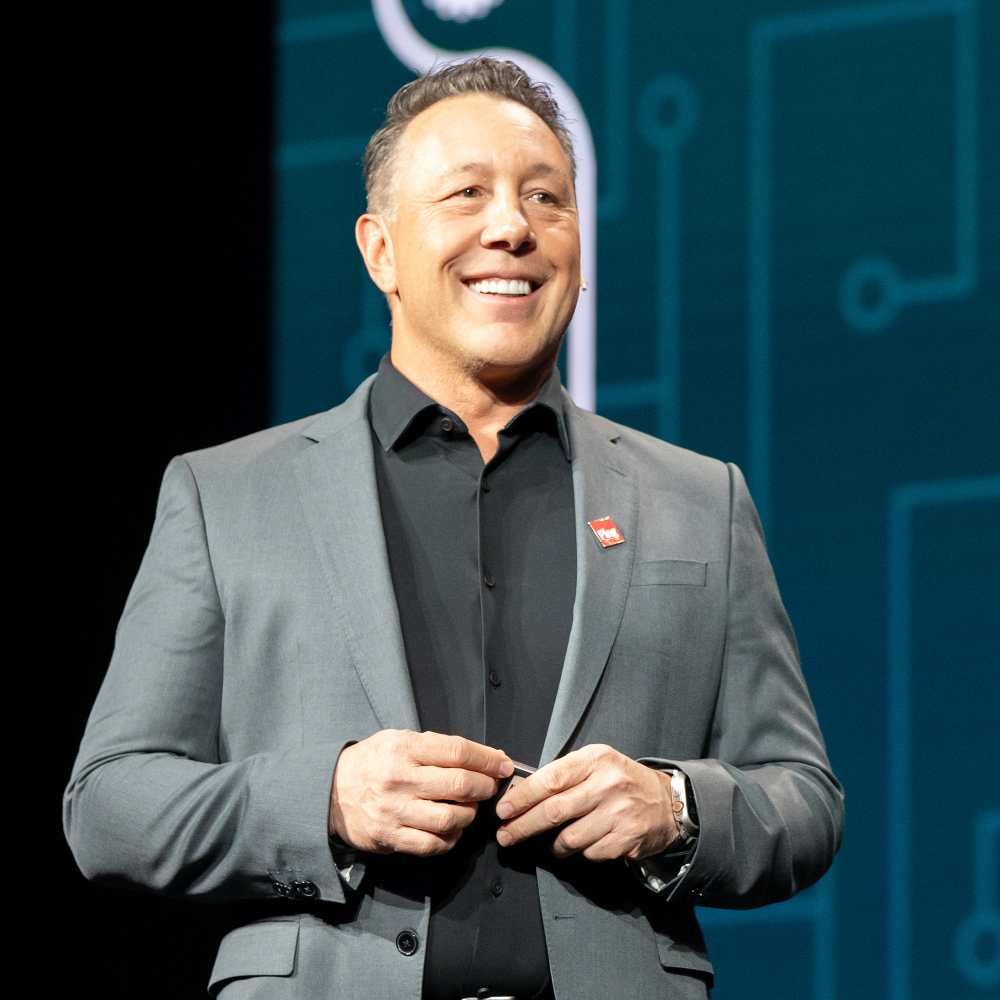
Andre Durand is the CEO at Ping Identity.