

Artificial intelligence is reshaping cybersecurity at extraordinary speeds, and nowhere is the pressure to keep up more intense than in the boardroom. Companies are deploying AI internally across business functions and security operations, but attackers now have access to many of the same tools: faster, cheaper, and at far greater scale. It’s no wonder many directors are wondering how to govern cybersecurity when AI powers both sides of the battlefield.
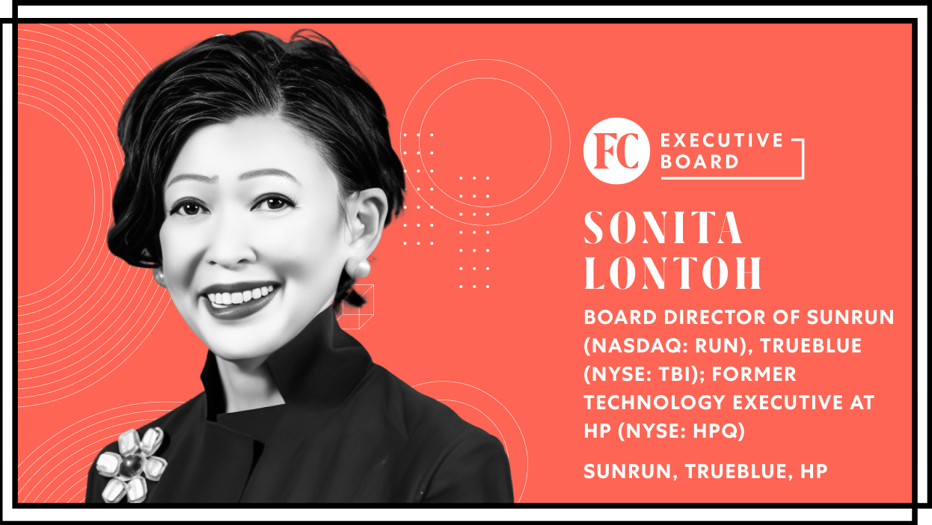
According to Sonita Lontoh, independent board director of Nasdaq-listed Sunrun and NYSE-listed TrueBlue and advisor to Silicon Valley VC firm Sway Ventures, the first step is recognizing that AI is a strategic risk management issue and laying the appropriate groundwork.
THE DOUBLE-EDGED SWORD OF AI
The benefits of AI-augmented defense are huge; tasks that once took hours—sorting logs, correlating alerts, analyzing anomalies—can now take minutes or less. But the same speed boost applies to attackers, Lontoh says.
“AI can accelerate and sharpen your capability to detect, triage, and respond to threats, but adversaries are also using AI to stage highly personalized phishing campaigns, deepfakes, and malware,” she says. “That’s why boards need to understand where the organization sits on the AI risk spectrum, what residual risk is still out there, and whether that risk is acceptable given the company’s posture.”
WHERE GOVERNANCE MEETS SECURITY
Whether companies build their own AI tools or rely on vendors, the governance challenges are similar. Internal models can be manipulated through data poisoning or misused if guardrails are weak. Vendor systems introduce additional exposure, since their AI behavior and data handling are both outside the organization’s direct control.
“Boards need to ask vendors: What is your governance? How are you monitoring the risk? What KPIs and service-level agreements govern your AI behavior and your use of our data?” Lontoh says. Without clear disclosures, companies may unknowingly inherit exposure from third-party tools embedded across their tech stack.
To address the problem, Lontoh highlights four governance pillars: transparency, vendor risk, governance maturity, and talent. Transparency matters because organizations have to feel comfortable that the AI systems they’re using are not black boxes. Vendor risk is important because many modern attacks originate from compromised third-party tools.
Governance maturity means having policies, procedures, and oversight across the AI life cycle. And talent is crucial, Lontoh says, because “even if you have the tools, you need the staff who understand how to govern, monitor, and respond when AI systems act unexpectedly.”
CYBERSECURITY BASICS STILL MATTER
One of Lontoh’s core messages is simple: Don’t let AI overshadow the fundamentals. A complete and accurate asset inventory is essential, she says, especially in distributed cloud environments where AI features can hide.
Vendor and supply chain visibility is equally critical. Boards need to understand which vendors use AI, how they monitor risk, and how the company coordinates with them when something goes wrong—because eventually, something will.
“Bad things happen; it just depends on how big,” Lontoh says. That’s why incident-response-ready processes must be real and in place, and boards must be clear on escalation paths, forensic capabilities, and continuity plans.
Lontoh warns against overrelying on AI tools without human oversight, since the technology is still prone to hallucinating or giving incorrect outputs with great confidence. “AI should not replace humans—it should augment them,” she says. Having a human in the loop is especially essential for workflows involving high-stakes or error-prone AI outputs.
KEY QUESTIONS EVERY BOARD SHOULD BE ASKING
If AI-augmented security feels overwhelming, Lontoh recommends anchoring board discussions around three areas: risk identification, governance, and talent preparedness.
First, boards should understand which AI tools are in the stack, whether internal or vendor-supplied, and map how adversaries might use AI against the organization. “Shadow AI,” where employees use unsanctioned tools, is a growing concern.
On governance, boards need clarity on who owns each model, how drift is monitored, how outputs are validated, and how transparent the AI systems are for audit. Vendor vetting becomes more important the more AI tools proliferate across departments.
“Finally, we should ask: Do we have the right skills to manage AI-augmented cybersecurity, and what is our incident response plan when the AI tools fail?” Lontoh says.
WHAT’S NEXT
Lontoh urges directors to get hands-on experience with new AI tools and to attend conferences focused on both governance and technology. “Otherwise, you might over-focus on risk and fall behind in how the technology is evolving,” she says.
Above all, boards should keep in mind that AI is an accelerant, in all senses of the word. It amplifies defensive power, offensive threats, strategic opportunity, and operational risk. “That’s why you have to have the fundamentals right first,” Lontoh says.