

AI is no longer a tool exclusive to data scientists. Every department in an organization has the potential to use AI to improve its KPIs, from efficiency and productivity to profitability and customer experience.
AI adoption is booming, and leaders are recognizing the importance of integrating AI governance into their business frameworks. In a global survey published in 2025 by the IAPP and Credo AI, 77% of respondents said they were currently working on AI governance projects. That percentage rose to almost 90% for organizations already using AI. Nearly half of respondents named AI governance as one of their organization’s top five strategic priorities.
Some businesses take a centralized approach to AI governance, giving a single entity the authority to manage and enforce policies. Others opt for a decentralized methodology that distributes responsibilities among multiple stakeholders.
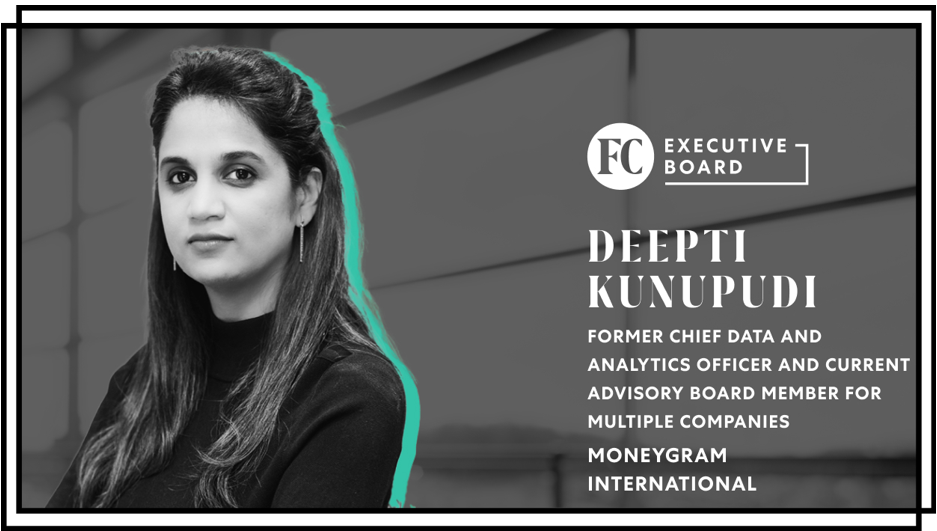
Deepti Kunupudi, former chief data and analytics officer and current advisory board member for multiple companies, advocates for a hybrid model in which executive leaders oversee governance strategy, and representatives from all departments using AI are involved in carrying it out. These stakeholders should work together in a cross-functional team that monitors how each department is using AI, training data, meeting regulations, and educating employees. In Kunupudi’s experience, a successful cross-functional compliance team is made up of “three lines of defense.”
1. Business unit teams and the data science team: AI tools are becoming an integral part of day-to-day business processes and operations. Sales teams are using AI to customize presentations, score leads emails and summarize market research. Marketing teams are using AI to brainstorm content ideas, personalize recommendations and optimize social media management. Customer service teams are using AI to answer FAQs, analyze customer trends and improve employee training. Every department with active AI use cases should have a representative at this level of the cross-functional team. Business unit leaders own their use cases. They are defining objectives, managing risks, and monitoring outcomes—while the data science team is responsible for building, validating, and improving the tools departments deploy.
2. Legal, compliance, and cybersecurity teams: The second level of a cross-functional team is focused on identifying and minimizing risk in AI. Legal, compliance, and cybersecurity teams ensure that the right infrastructure and technical controls are in place to protect customer data and align with compliance regulations in multiple countries.
3. The executive team: The C-suite has final accountability for how the organization is using customer data and AI to make decisions. Executive leaders must be prepared to answer the tough questions from their board of directors and other stakeholders with accuracy and transparency.
“You must have a clear leadership commitment to build an organizational culture around AI governance,” says Kunupudi. “You need to develop an AI code of ethics, defining and communicating what is right and what is wrong from the beginning. Responsible AI culture isn’t defined by having a governance body. An effective, ethical AI culture increases trust with your stakeholders—your customers, your team, and also the regulators who are always looking out for any misconduct around AI. You create culture from the top.”
Kunupudi encourages leaders to view AI governance as a business enabler, not an obstacle. When you shift from using a governance framework for risk mitigation to deploying it as a competitive advantage, you can reframe regulatory compliance as a foundation for innovation. She recommends taking the following actions to build robust cross-functional compliance teams.
• Prioritize use cases strategically: “People often make the mistake of starting with a pilot project. Instead, identify all of the use cases for a particular department and how AI could accelerate progress or add value for each of the pain point areas.”
• Categorize use cases based on risk: “All AI does not have equal risk, and each use case is different. Start with high-value, low-risk AI applications. If you’re just starting your AI journey, these use cases have more value. You can use them to improve your top line and customer retention. For example, in marketing, you can use AI-driven, hyper-personalized communications to help customers feel more connected to your brand with very low risk.”
• Eliminate fragmentation: “When you see silos developing within different departments, that’s where the danger begins. Everything needs to be integrated. Everyone needs to work together to stay aligned on AI governance, making sure there is a formal sign-off at each level to avoid any issues caused by AI.”
• Take a proactive, not reactive, approach to AI governance: “Set governance KPIs, and constantly monitor and evaluate ROI and impact. Are there any deviations? Are there any transparency or compliance issues? Who is accountable from a data and implementation standpoint? You’re never done with your AI governance strategy. You need to constantly reiterate it. Your cross-functional team should meet every two weeks to discuss issues, identify new projects, evaluate new data, and monitor your models. Keep data flowing from one department to another, and kepe asking the right questions.”