

It’s indisputable that the U.S. job market is strong, with the country’s unemployment rate nearing all-time lows.
This labor market is also highly globalized, particularly the tech sector. Top tech talent can demand competitive salaries and find employment opportunities here and abroad. This is no secret, with enterprises having long adopted talent acquisition strategies, understanding that these tech teams are a critical lever for growth.
India’s investments in education, a propensity towards STEM subjects, and a booming population combine so that today, India punches above its weight in producing the next generation of tech engineers.
In fact, it’s said that India is going to become the largest nation of software developers by 2027.
THE ECONOMY
For India, its talent is a key to growing its economy and it’s also a critical export. As Indian talent moves abroad, they make vital contributions to innovation hubs like Silicon Valley, strengthening the nation’s position as a valuable global partner.
To counter the brain drain on India’s labor market, we’re also seeing an increase in that success coming full circle, as Indian entrepreneurs working overseas bring investment dollars home.
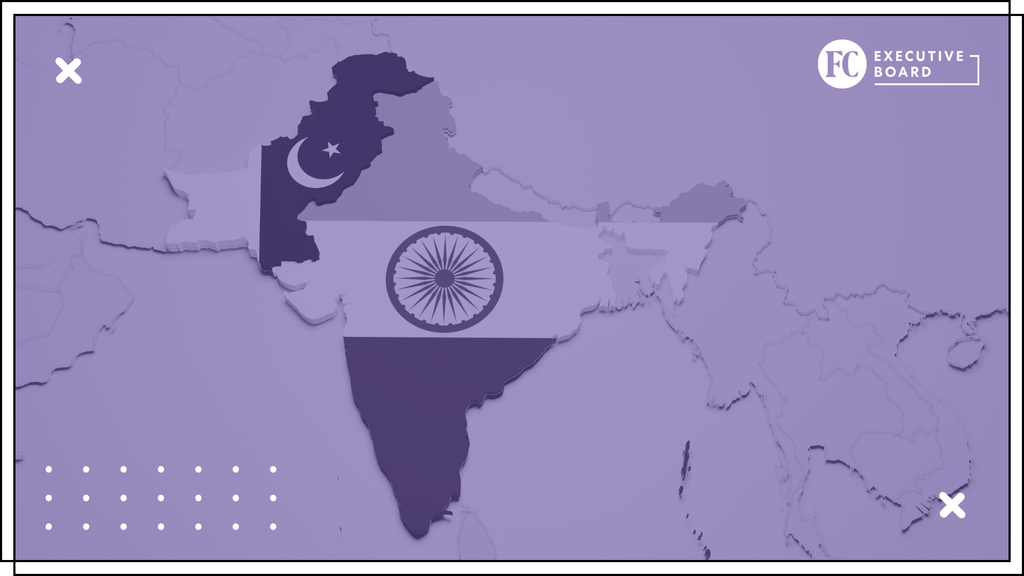
This dual dynamic between India’s strong labor market that companies can tap into through direct hiring and through subsidiaries is known as the India Corridor. Enterprises base part of their leadership teams in the U.S., in particular in Silicon Valley, and their technology and product teams are disproportionately in India.
Here’s why we should expect to see more of this in 2026.
A NATION OF SOFTWARE DEVELOPERS
When India’s Prime Minister Narendra Modi began his third term in June 2024, he set out an ambitious tech agenda to help make the country a digital leader.
This included initiatives to boost skills in areas from cybersecurity to data management, in addition to Skill India Digital Hub to promote and provide continuous learning in areas such as AI, machine learning, and automation.
India has 5.8 million software engineers in the country, which is the second largest in the world. Further, India’s IT industry is expected to hit $350 billion USD by 2026 and constitute 10% of the country’s GDP.
The volume of India’s labor market, coupled with the rate at which it produces tech and engineering graduates, makes this an important export for the country as it supplies a steady flow of top talent to businesses and research projects globally.
As AI becomes increasingly important, it’s in the best interest of tech enterprises in Silicon Valley and across global tech hubs to remember this increasingly large center for talent.
STRENGTHEN U.S. AND INDIA RELATIONS
With the increasing tensions between the U.S. and China, there has been a clear winner—India—and this will have positive implications for the India Corridor. This goes beyond Apple’s increased investment in India, with 60% more in iPhone value in 2025 than in the previous year.
Following Prime Minister Modi’s visit to Washington in 2025, the two nations detailed a range of initiatives for collaboration on AI, space exploration, and academic research.
Collaboration on tech and innovation will increase further, following the release of an earlier India-U.S. Joint Statement.
While migration is a sensitive subject for the Trump administration, the statement clearly highlighted the valuable contributions of the Indian migrant community, where it was noted that “more than 300,000 strong Indian student community contributes over $8 billion annually to the U.S. economy and helped create a number of direct and indirect jobs” and “flow and movement of students, researchers, and employees, has mutually benefited both countries.”
This is further highlighted in a report from Joint Venture Silicon Valley that highlighted how much of Silicon Valley’s innovation is fueled by foreign workers, with 23% coming from India.
SUCCESS BREEDS SUCCESS
In Silicon Valley, the “PayPal Mafia” has long been admired as a testament not only to entrepreneurship, but also to the power of collaboration. The founders continued to invest in one another’s ventures—from Tesla and SpaceX to LinkedIn, Yelp, and YouTube.
The list of companies continues growing to this day.
In a similar way, we are seeing this play out in the India Corridor, with successful Indian leadership teams, based in Silicon Valley with technical teams in India, also investing and mentoring the next generation of these technology enterprises.
Prezent is one of these companies. Many of our developers are based in India, where we employ local talent, and we also want to give back and provide advice to founders in the U.S.
We certainly aren’t alone here. For instance at legendary accelerator Y Combinator, India is second to only the U.S. in companies the organization has funded.
These are just a couple of examples of how success begets success.
THE POWER OF INDIA’S TECH TALENT
Today, India needs to ensure that a percentage of its tech talent remains there to boost India’s economy. Around 18 million people annually leave India for work, almost two times the number leaving any other country.
To stem this flow and control the brain drain, it’s important that successful companies of Indian founders bring their investments back home. At the same time, these same founders are playing an important role in the U.S. economy.
India’s tech talent is one of the most important resources that strengthen diplomatic ties, helps to forge new trade agreements, and boosts industry growth at home and abroad.
Rajat Mishra is CEO of Prezent.