
Forward-deployed engineers are among the most coveted roles in enterprise technology. They understand how to make software work in the wild, not just in demos. For that reason, product companies treat customer-side engineering as a core go-to-market capability, and venture capitalists seek founders carrying the role on their résumés.
These engineers—called FDEs for short—are in high demand because the status quo in building technology has become too slow. With competition rising in every sector, companies seek differentiation through true digital transformation, but on fast-forward.
Speed is the scarcest resource in enterprise transformation. The ability to learn quickly, understand core problems, and execute rapidly has become an essential skill. Organizations know technology offers the best leverage to drive business, but grow tired of 18-month roadmaps that deliver unused dashboards.
Organizations want working systems that solve real problems, and they want them fast.
The new FDE playbook
Large organizations spent decades buying transformation programs delivered in slide decks and measured in quarters or years. Several upstart technology providers popularized the new FDE model by treating speed as a discipline.
These upstarts bet on a different measurement. How fast can you solve a problem with working code? And how can you make it eminently usable?
Engineers spent all day on the factory floor talking to line workers, gaining a deeper understanding of operational problems, and then wrote code on the fly.
In this paradigm, a morning conversation about a bottleneck becomes an afternoon prototype. A working prototype becomes a production system by month’s end. This approach inverts traditional enterprise sales.
Instead of leading with capabilities and hoping customers imagine applications, FDEs lead with applications, allowing capabilities to reveal themselves through use. Working software cuts through procurement skepticism in ways that reference architectures cannot.
How to sprint without drowning in tech debt
Speed creates a potential tax in the form of technical debt. Field delivery encourages shortcuts, one-off scripts, and glue code that keeps a project moving but becomes a future burden. New FDE practitioners treated this tradeoff as an engineering problem rather than a reason to slow down.
The key was the separation of responsibilities. FDEs built fast for today. Platform and data teams converted FDEs’ work and insights into more durable, generalizable platforms.
In practice, field engineers identify that customers are struggling with a particular integration and develop a workaround. The workaround proves valuable across multiple deployments. Product teams abstract it into a platform primitive.
The next rollout will take days, not weeks, because the hard problem has already been solved in the infrastructure. Renewal conversations shift from promises about future transformation to evidence of compounding capability. What started as a few instances of FDE code solving discrete problems has evolved into systems and workflows that map perfectly to customer needs.
4 organizational applications of the FDE mindset
The forward-deployed model offers a fundamental shift in how organizations think about the relationship between building and selling, between speed and quality. Leaders looking to apply this mindset should focus on four principles:
1. Compress the proof cycle. FDE-driven organizations ask: What’s the smallest working thing we can ship to prove we solve a real problem? If the answer is “nothing for six months,” the organization is optimizing for the wrong constraints. Aim for proof in weeks.
2. Separate speed from sustainability. Accept that first-pass solutions will carry technical debt. Converting fast work into maintainable systems requires fast-moving engineers (despite ambiguous environments) and engineers who can harden and systematize. The FDE model works because both capabilities exist and coordinate.
3. Treat deployment as product development. Every customer engagement generates a signal about what works and what doesn’t. Build feedback loops that move field insights into platform capabilities. Make it someone’s job to spot recurring patterns and abstract them into reusable components.
4. Hire for ambiguity tolerance. Forward-deployed work attracts engineers who enjoy solving problems more than maintaining systems, thrive with incomplete information, and can build trust with non-technical operators. Create career paths that value fieldwork rather than treating it as a stepping stone to “real” engineering roles.
The broader lesson applies universally. Speed to value has become enterprise technology’s primary competitive dimension. Organizations that demonstrate impact quickly will outperform competitors still pitching transformation roadmaps.
The question for leaders is not whether to adopt the FDE model wholesale, but how to inject its core insight into their own delivery organizations. The FDE approach gained credence because it solved customer problems.
Today’s leaders must recalibrate their technology delivery to reflect the new reality and change their organizations to meet expectations for fast delivery, followed by solid durability and usability.
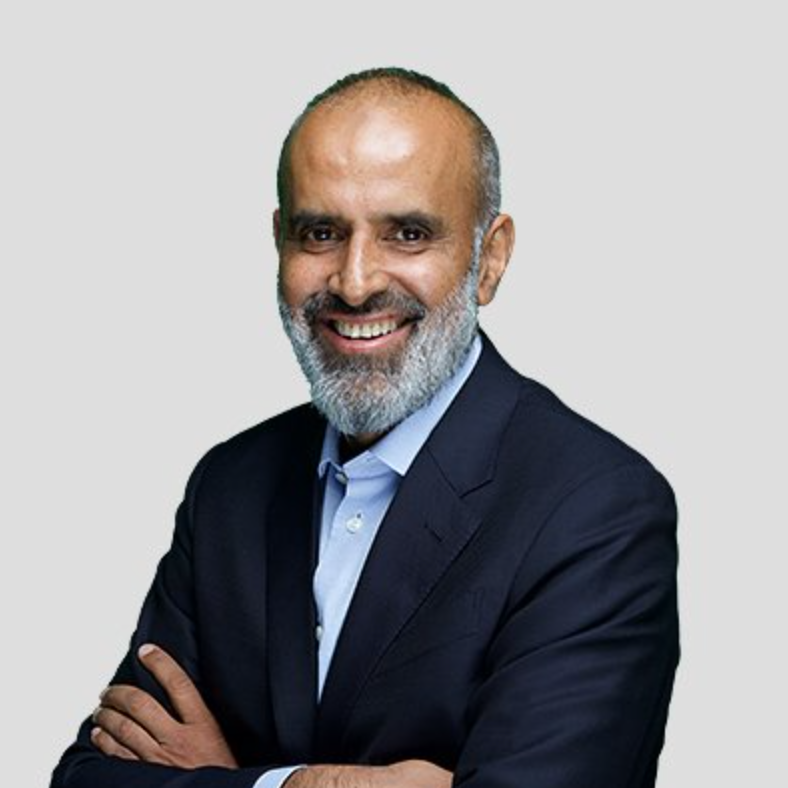
Ismail Amla is the senior vice president of Kyndryl Consult.